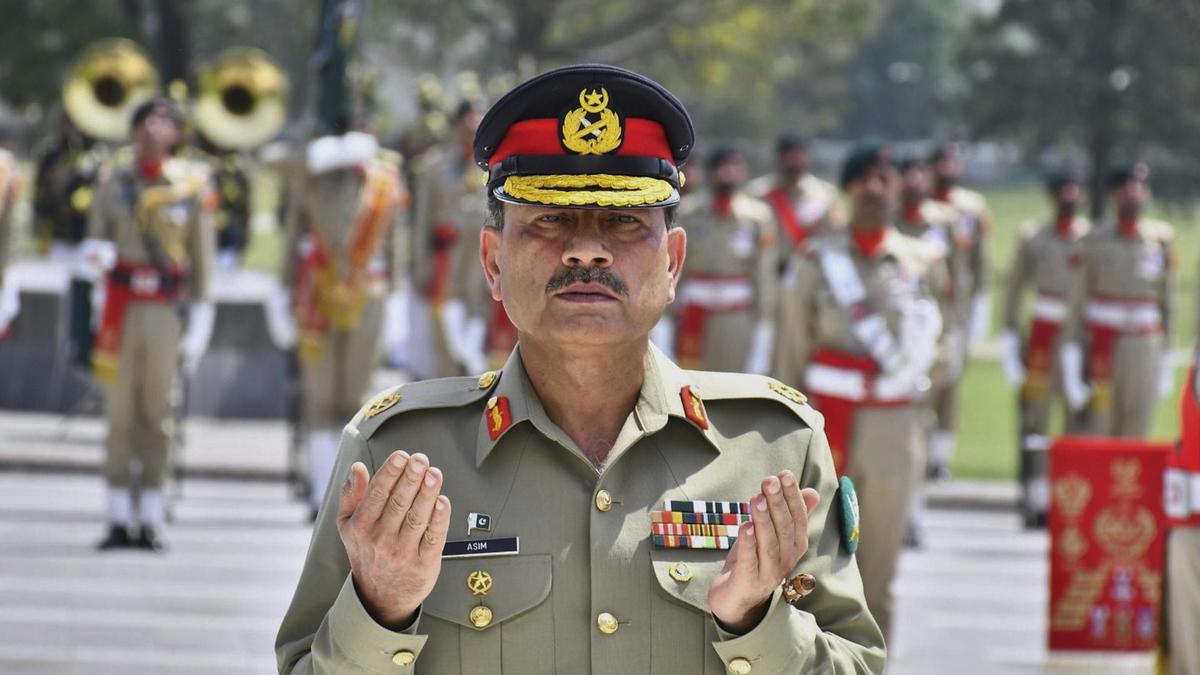
Pakistan Appoints First Chief of Defense Forces: A New Era for national Security
Pakistan has ushered in a meaningful shift in its military command structure with teh historic appointment of Field Marshal Asim munir as the nation’s first Chief of Defence forces (CDF). President Asif Ali Zardari approved the appointment for a five-year term, marking a pivotal moment in the country’s defence strategy. This move aims to streamline decision-making and foster greater unity within the armed forces.
A Landmark Constitutional Change
The creation of the CDF post stems from the recently passed 27th Constitutional Amendment. This amendment was designed to establish a unified command structure and accelerate responses to critical national security situations. Consequently, the position of Chairman Joint Chiefs of Staff Committee (CJCSC) has been abolished, consolidating authority under the CDF.
Field Marshal Munir’s Ascendancy
Field Marshal Munir previously served as the Chief of the Army Staff (COAS), initially appointed in November 2022 for a three-year term.His tenure was subsequently extended by five years in 2024, demonstrating confidence in his leadership. You can expect his experience as COAS to be invaluable in his new role.
Strengthening Air Force Leadership
Alongside the CDF appointment, President Zardari also approved a two-year extension for Air Chief Marshal Zaheer Ahmad Babar Sidhu, the Chief of Air Staff. This extension will take effect upon the completion of his current term on March 19, 2026. this ensures continuity and stability within the Air Force command.
Addressing Recent Speculation
The formal notification of Munir’s appointment puts to rest recent speculation regarding potential delays. The position had been vacant as the retirement of the last CJCSC, General Sahir Shamshad Mirza, on november 27th. Legal and political hurdles were previously non-existent, and the appointment process has now been successfully completed.
What This Means for Pakistan’s Future
This restructuring signifies Pakistan’s commitment to modernizing its defense apparatus. It’s a proactive step towards enhancing national security and ensuring a swift, coordinated response to evolving threats. You’ll likely see increased efficiency and a more unified approach to defense planning moving forward.
* Unified Command: Streamlines decision-making processes.
* Enhanced Coordination: Fosters better collaboration between branches of the armed forces.
* Rapid Response: Enables quicker reactions to emerging security challenges.
This appointment represents a new chapter in Pakistan’s military history, one focused on unity, efficiency, and a strengthened national defense posture. It’s a advancement that warrants close attention as Pakistan navigates a complex geopolitical landscape.
Related reading