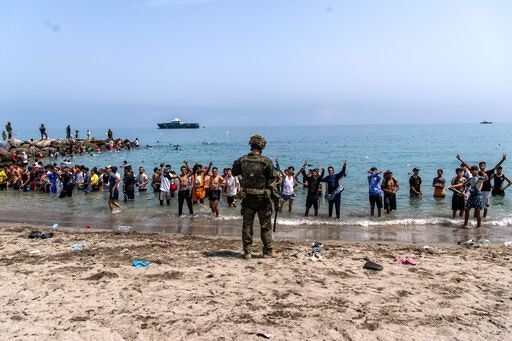
Spanish authorities in the North African enclave of Ceuta are conducting extensive search operations along maritime and coastal zones following a surge of migrant arrivals that has placed severe strain on local emergency services and forensic infrastructure. Local officials and humanitarian organizations report that recovery efforts are focused on locating individuals who attempted to swim or cross the maritime border amid dangerous sea conditions, prompting preparations to manage up to 200 fatalities as emergency teams sweep the coastline.
The latest recovery operations follow a massive wave of crossings involving thousands of individuals attempting to reach Spanish territory from neighboring Morocco [Reuters]. Ceuta, situated on the northern coast of Africa, shares a heavily fortified land and sea border with Morocco, making it a primary focal point for migration into the European Union. Emergency management agencies in the autonomous city have mobilized specialized diving units and naval assets to comb the waters surrounding the breakwaters and rocky shores where several bodies have previously been recovered.
Local authorities in Ceuta have coordinated with regional forensic medical institutes in Andalusia to expand temporary mortuary capacities. According to statements released by regional civil protection coordinators, contingency plans have been drawn up to accommodate up to 200 bodies should further victims be recovered from the coastal waters. The measure underscores the severity of the maritime risks faced by individuals navigating treacherous currents and cold Atlantic waters along the strait.
Humanitarian Response and Emergency Infrastructure
The surge in maritime crossing attempts has overwhelmed initial reception facilities managed by the Spanish Red Cross and local civil protection teams. Medical personnel stationed at the Tarajal border crossing and local health centers report treating dozens of individuals for severe hypothermia, exhaustion, and trauma resulting from prolonged exposure to rough seas. Non-governmental organizations operating in the region have called for enhanced rescue coordination between Spanish and Moroccan maritime rescue services to prevent further loss of life.
Spanish interior ministry officials have maintained a heightened security posture along the border perimeter while deploying additional Guardia Civil personnel to assist with shoreline monitoring and recovery operations. Search and rescue vessels equipped with thermal imaging technology continue to patrol the maritime boundary around the clock. The Delegación del Gobierno en Ceuta has emphasized that all recovered victims will undergo standard identification protocols through forensic fingerprinting and DNA profiling in cooperation with judicial authorities.
Diplomatic and Border Security Context
The events in Ceuta highlight ongoing migration pressures along the Western Mediterranean route, prompting bilateral discussions between Madrid and Rabat regarding border management and rapid response protocols. Spanish government representatives have repeatedly stressed the importance of joint security frameworks with Moroccan authorities to manage sudden influxes at the land and sea boundaries [El País]. European Union border agency Frontex has similarly monitored the situation, offering technical support and aerial surveillance assets to assist national authorities.
Human rights advocates have renewed appeals for safer, legal pathways to asylum, arguing that restrictive border policies consistently drive desperate individuals toward perilous maritime routes. Legal aid organizations based in southern Spain have established monitoring networks to ensure that arriving minors and vulnerable adults receive adequate legal representation and access to international protection procedures under Spanish and international law.
Next Steps and Official Updates
Search and recovery operations along the Ceuta coastline are scheduled to continue as weather conditions permit, with maritime patrols maintaining high alert levels across the strait. The Delegación del Gobierno en Ceuta is expected to release updated figures regarding search outcomes and forensic identifications through its official media portal as investigations proceed. Local authorities have urged families seeking information regarding missing relatives to contact dedicated consular hotlines established by the Spanish Ministry of Foreign Affairs.
Keep reading