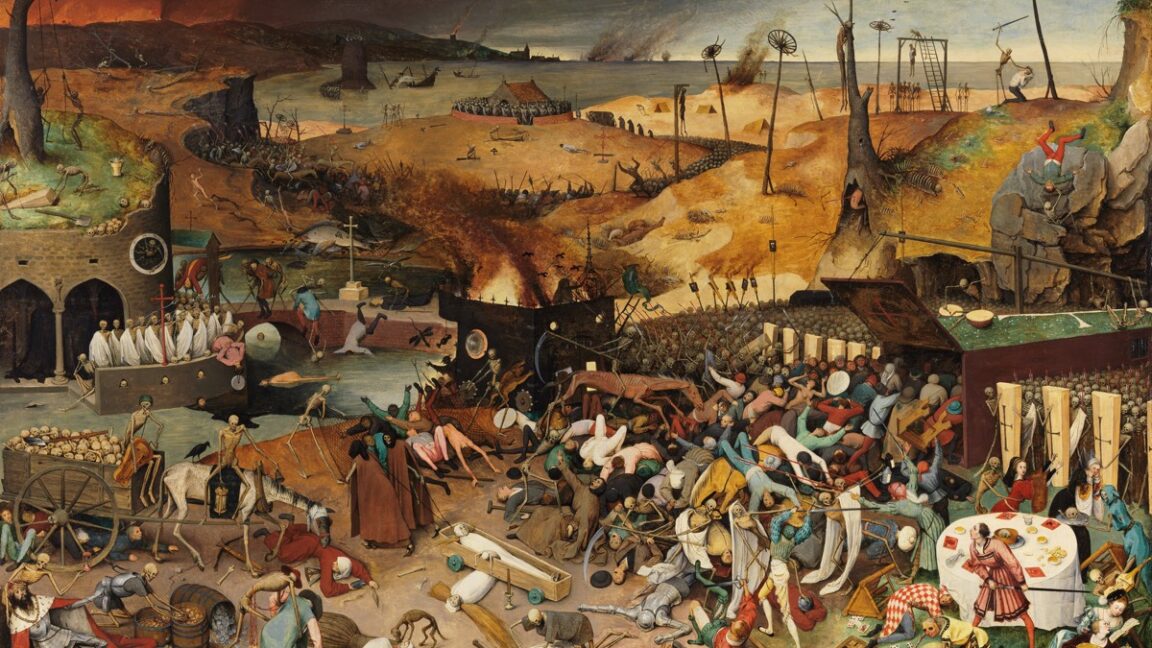
The Volcanic Eruption That Helped Unleash the Black Death
For centuries, historians have debated the precise origins of the Black Death, the devastating pandemic that swept through Europe in the mid-14th century.Recent research, however, points to a surprising culprit: a volcanic eruption – or series of eruptions – around 1345. This event, revealed through meticulous analysis of tree rings, created a cascade of environmental and economic factors that ultimately facilitated the spread of Yersinia pestis, the bacterium responsible for the plague.
Unearthing the Past in Tree Rings
Scientists examined tree ring data from the Pyrenees Mountains,identifying distinctive “blue rings.” These rings form during unusually cold or wet summers, and in this case, appeared consecutively from 1345 to 1347. This indicated a period of significant climatic disruption. Simultaneously, historical records corroborate these findings, detailing unusually cloudy skies and darkened lunar eclipses – telltale signs of atmospheric particles released by volcanic activity.
A Chain Reaction of Famine and Trade
the colder climate triggered widespread crop failures across parts of Spain, southern France, Egypt, and Italy.While larger cities like Milan and Rome were relatively self-sufficient, smaller urban centers faced a critical challenge. cities like Bologna, Florence, Genoa, Siena, and Venice heavily relied on grain imports from the Golden Horde via Black Sea trade routes.
Consequently, 1346 saw considerable price increases for cereals and the implementation of strict grain trade regulations. These measures, while intended to prevent starvation, inadvertently created a pathway for the plague. You see, the increased trade along these routes also facilitated the transportation of infected rodents and fleas – the carriers of Y. pestis.
Globalization and Pandemic Risk: Lessons from History
Even though the specific confluence of events leading to the Black Death was unique, this research underscores the inherent risks of a globally interconnected world. Consider this: climate change is increasing the likelihood of zoonotic diseases emerging and spreading rapidly.This is particularly relevant given our recent experiences with the COVID-19 pandemic.
As the study authors emphasize, a similar interdisciplinary approach – combining climate science, historical analysis, and epidemiological modeling – is crucial for preparing for future threats. Understanding the complex interplay between environmental factors, economic systems, and disease transmission is vital for protecting global health.
Ultimately, the story of the Black Death serves as a stark reminder that even seemingly distant events can have profound and devastating consequences. it’s a lesson we must heed as we navigate an increasingly interconnected and changing world.
DOI: 10.1038/s43247-025-02964-0
Related reading