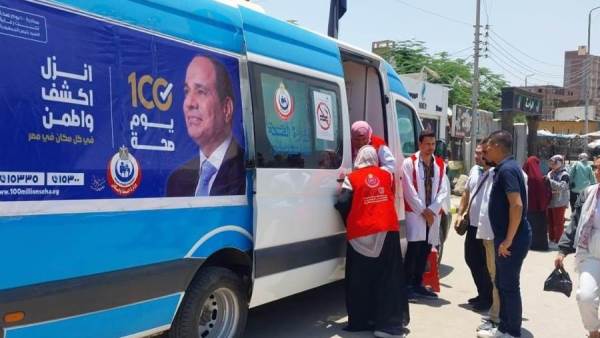
Egypt’s National Health Compact: A Deep Dive into Healthcare Reform & Universal Health Coverage
Egypt has taken a monumental step towards achieving universal health coverage (UHC), joining 14 other nations in launching a National Health Compact. This initiative,aligned with the World Bank Group’s ambitious goal of reaching 1.5 billion peopel with essential health services by 2030 (announced in April 2024), signifies a profound commitment to improving the health and well-being of its citizens. But what does this compact realy mean for Egypt,its healthcare system,and its people? This article provides an in-depth analysis of the compact,its key components,challenges,and potential impact,drawing on industry insights and global healthcare trends.
Did You Know? Globally, 4.6 billion people currently lack access to essential health services, and a staggering 2.1 billion face financial hardship due to medical expenses. Egypt’s participation in the National health Compact directly addresses these critical global health challenges.
Understanding the National Health Compact framework
The National Health Compact isn’t simply a pledge; it’s a detailed five-year reform plan designed to overhaul Egypt’s healthcare landscape. It’s built on three core pillars: strengthening primary healthcare, enhancing financial protection for citizens, and fostering job-rich economic growth within the health sector. This holistic approach recognizes that a healthy population is intrinsically linked to a thriving economy.
The compact’s foundation rests on addressing the growing pressures facing healthcare systems worldwide - aging populations, the increasing prevalence of chronic diseases (like diabetes and cardiovascular disease – a important concern in Egypt with a prevalence rate of 15.8% as of 2023, according to the International Diabetes Federation), and the escalating financial burden of medical care. These factors, coupled with regional instability, necessitate a proactive and sustainable approach to healthcare delivery.
key Initiatives & Technical Details
Egypt’s National Health Compact outlines several priority initiatives, each with specific technical components:
* Digital Health Transformation: Expanding digitally connected health facilities is paramount. This isn’t just about implementing Electronic Health Records (EHRs) – although that’s a crucial component. It involves leveraging telehealth platforms for remote consultations, utilizing mobile health (mHealth) applications for patient monitoring and education, and implementing robust data analytics to improve healthcare resource allocation. The Ministry of Health and Population is currently piloting a national unified health data system (UHIS) to facilitate data exchange and interoperability.
* Healthcare Workforce Advancement: Addressing the skills gap within the healthcare workforce is critical. The plan focuses on advanced training programs for medical professionals, incorporating digital literacy and specialized skills in areas like geriatric care and chronic disease management. Furthermore, it emphasizes the importance of continuous professional development (CPD) to ensure practitioners remain up-to-date with the latest medical advancements.
* Financial Risk Protection: Reducing financial barriers to healthcare is a central tenet of the compact. This involves widening health insurance coverage, particularly for vulnerable populations, and providing targeted financial assistance programs. Egypt’s existing health insurance system, primarily employer-based, needs significant expansion to achieve truly universal coverage. The government is exploring innovative financing mechanisms,including micro-insurance schemes and public-private partnerships.
* Local Pharmaceutical & Technology Production: Investing in local production of health technologies and pharmaceuticals is a strategic move towards self-sufficiency and economic growth. This includes establishing specialized Centres of excellence for research and development, providing training for local manufacturers, and incentivizing investment in the pharmaceutical sector.This aligns with Egypt’s broader industrialization strategy and aims to reduce reliance on imported medical supplies.
Pro Tip: Accomplished implementation of the National Health Compact hinges on strong stakeholder engagement. This includes collaboration between the government, healthcare providers, insurance companies, pharmaceutical manufacturers, and, most importantly, the citizens who will benefit from these reforms.
The Role of international Partnerships & Funding
Egypt isn’t navigating this complex reform process alone. The World Bank Group, Gavi, the Global Fund, and various philanthropic organizations are providing crucial support in the form of aligned financing, technical assistance, and capacity-building.
| Organization | Key Support Areas |
|---|---|
| World Bank Group | financial assistance, policy advice, technical expertise in health systems strengthening. |
| Gavi, the Vaccine Alliance | Support for immunization programs and strengthening vaccine supply chains. |
| The Global Fund |