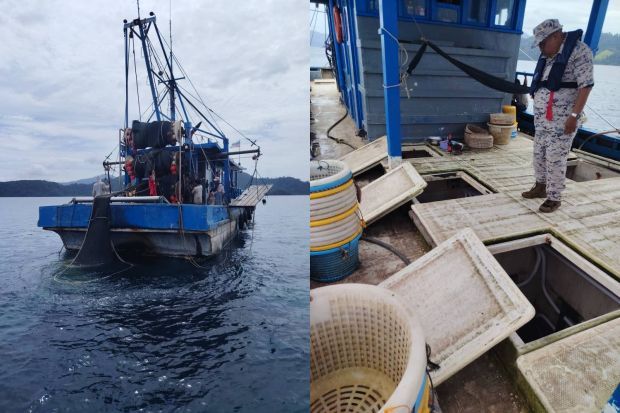
Illegal Fishing Operation Intercepted Off Lahad Datu: Protecting Sabah‘s Marine Resources
Have you ever wondered about the unseen efforts to safeguard our oceans and the livelihoods that depend on them? Recently, a meaningful operation by the Malaysia Maritime Enforcement Agency (MMEA) in Lahad Datu, Sabah, highlighted the ongoing battle against illegal fishing and the crucial need for marine resource protection.This incident, involving a vessel operating in prohibited waters, underscores the complexities of enforcing maritime law and ensuring enduring fishing practices.
The MMEA’s swift action serves as a potent reminder of the dedication to preserving Sabah’s rich marine biodiversity. Let’s delve into the details of this operation,its implications,and what it means for the future of fisheries management in the region.
The Interception: A Detailed Look
On December 6th, 2024, MMEA officials conducting routine patrols and crime prevention operations off the coast of Tabawan, Lahad Datu, detected a suspicious vessel. According to Dzulfikhar Ali, the MMEA director for Lahad Datu, the vessel was intercepted around 2:00 PM.
A subsequent onboard inspection revealed four individuals: three documented Indonesian nationals and one Malaysian citizen. Crucially, the vessel was found to be carrying over 800kg of fish. The suspects, ranging in age from 30 to 46, were instantly detained to facilitate investigations under the Fisheries Act 1985. The confiscated fish were transported to the Lahad Datu maritime jetty for further processing.
Key Facts at a Glance
| Date of Incident: | December 6th, 2024 |
|---|---|
| Location: | Waters off Tabawan, lahad Datu, Sabah |
| Suspects: | 3 Indonesian Nationals, 1 Malaysian Citizen |
| Confiscated Fish: | Over 800kg |
| Relevant Legislation: | Fisheries Act 1985 |
Why Prohibited Zones Matter: Understanding the Regulations
Initial investigations revealed the core violation: the suspects were fishing within 1.5 nautical miles of the shoreline.This area is designated as a prohibited zone for commercial fishing. But why are these zones established?
These restrictions are not arbitrary. They are vital for several reasons:
* Protecting Coastal Ecosystems: nearshore areas are often breeding grounds and nurseries for many fish species.Fishing in these zones can severely disrupt these delicate ecosystems.
* Supporting Local Fishermen: Prohibited zones ensure that small-scale, artisanal fishermen have access to resources close to shore, safeguarding their livelihoods.
* Preventing Overexploitation: Limiting fishing activity in vulnerable areas helps prevent the depletion of fish stocks.
* Maintaining Biodiversity: Protecting these areas contributes to the overall health and resilience of marine biodiversity.
Did You Know? According to the FAO (Food and Agriculture Organization of the United Nations), approximately 34.2% of global fish stocks are classified as overfished in 2022, highlighting the urgent need for sustainable fishing practices.[https://www.fao.org/fishery/statistics/en]
The Broader Context: Challenges in Combating Illegal, Unreported, and Unregulated (IUU) Fishing
This incident in Lahad Datu is part of a larger global challenge: IUU fishing. IUU fishing poses a significant threat to marine ecosystems, food security, and economic stability. Malaysia, with its extensive coastline and rich marine resources, is particularly vulnerable.
Recent data from the Pew Charitable Trusts indicates that IUU fishing costs the global economy an estimated $10-23.5 billion annually.[https://wwwpewtrustsorg/en/research-[https://wwwpewtrustsorg/en/research-[https://wwwpewtrustsorg/en/research-[https://wwwpewtrustsorg/en/research-
Worth a look