Lebanon’s Delicate dance: Rebuilding State Authority Amidst Shifting Alliances
Lebanon is navigating a complex period of rebuilding state authority, a process unfolding alongside evolving relationships with powerful non-state actors like Hezbollah. Recent developments suggest a subtle, yet important, shift in the dynamics between the Lebanese Armed Forces and groups that have historically operated with considerable autonomy. This article explores the current situation, the challenges ahead, and what it means for the future of Lebanon.
A Visible Shift in Public Messaging
The lebanese Army is actively working to bolster its public image and reinforce its role as the protector of the nation. You’ll now find billboards across southern Beirut displaying a Lebanese soldier saluting the national flag, accompanied by the message “We are all with you” in Arabic.
This isn’t limited to visual displays. The army is also employing modern tactics like distributing car stickers and QR codes at checkpoints to enhance public engagement. These efforts signal a intentional attempt to strengthen the perception of state presence and legitimacy.
Hezbollah’s Symbolic Adjustments
Interestingly, even Hezbollah appears to be subtly adjusting its public presentation. A recent banner displayed in Beirut depicts Hezbollah fighters as the roots of a tree symbolizing Lebanon. However, crucially, these fighters are shown hoisting the Lebanese flag, rather than the group’s traditional yellow banner.
This seemingly minor detail speaks volumes about a potential recalibration of Hezbollah’s relationship with the state. It suggests a willingness to present itself as an integral part of the Lebanese national identity, rather than a separate entity.
Maintaining Security in a Sensitive Climate
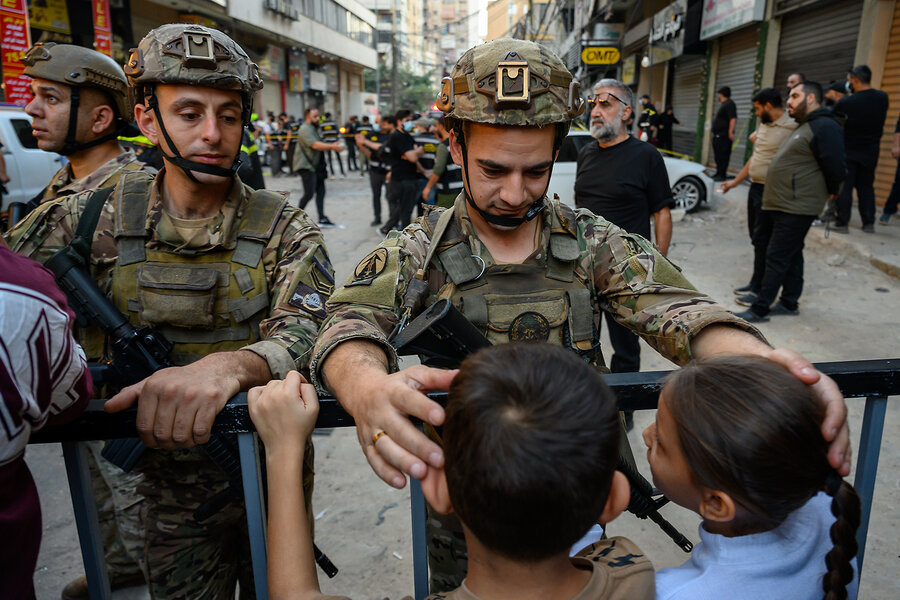
The shift in dynamics was especially evident following the November assassination of a senior Hezbollah military commander by Israeli drones in Beirut. Remarkably, Lebanese Army troops were granted access to secure the area with minimal resistance. This level of cooperation would have been unthinkable in the past.
This incident highlights a growing,albeit fragile,understanding between the army and Hezbollah regarding security protocols and the maintenance of stability. It demonstrates a willingness to avoid direct confrontation and allow the state to assume a greater role in maintaining order.
The Price of International Assistance
However, expanding state power is only one piece of the puzzle. Lebanon also needs to implement significant legal and economic reforms to unlock crucial international aid. The current government has made progress in enacting the economic reforms demanded by the International Monetary Fund (IMF).
Despite this progress, obstacles remain. There are still powerful interests resistant to the sweeping structural changes necessary to overhaul Lebanon’s deeply flawed system.
Navigating Entrenched Interests
As David Wood, a senior Lebanon analyst, explains, “There are clearly still outstanding bones of contention and outstanding pockets of resistance to those sweeping structural changes, which would change the face of how Lebanon works.”
The current system, while broken, has served the interests of political and financial elites for decades. These elites are unlikely to relinquish their power and privilege without a fight.
The Path Forward: Reform or Continued Crisis
Ultimately, Lebanon’s future hinges on its ability to implement meaningful reforms. Without these changes, the country will remain ineligible for the considerable financial assistance it desperately needs.
“this is the situation Lebanon finds itself in,” Wood emphasizes. “It needs a lot of help, and it’s not going to get that help for free.”
The path forward is clear, but challenging. Lebanon must demonstrate a genuine commitment to transparency, accountability, and good governance to secure its future and rebuild a stable, prosperous nation. The delicate dance between rebuilding state authority and navigating complex alliances will continue to define Lebanon’s trajectory for years to come.