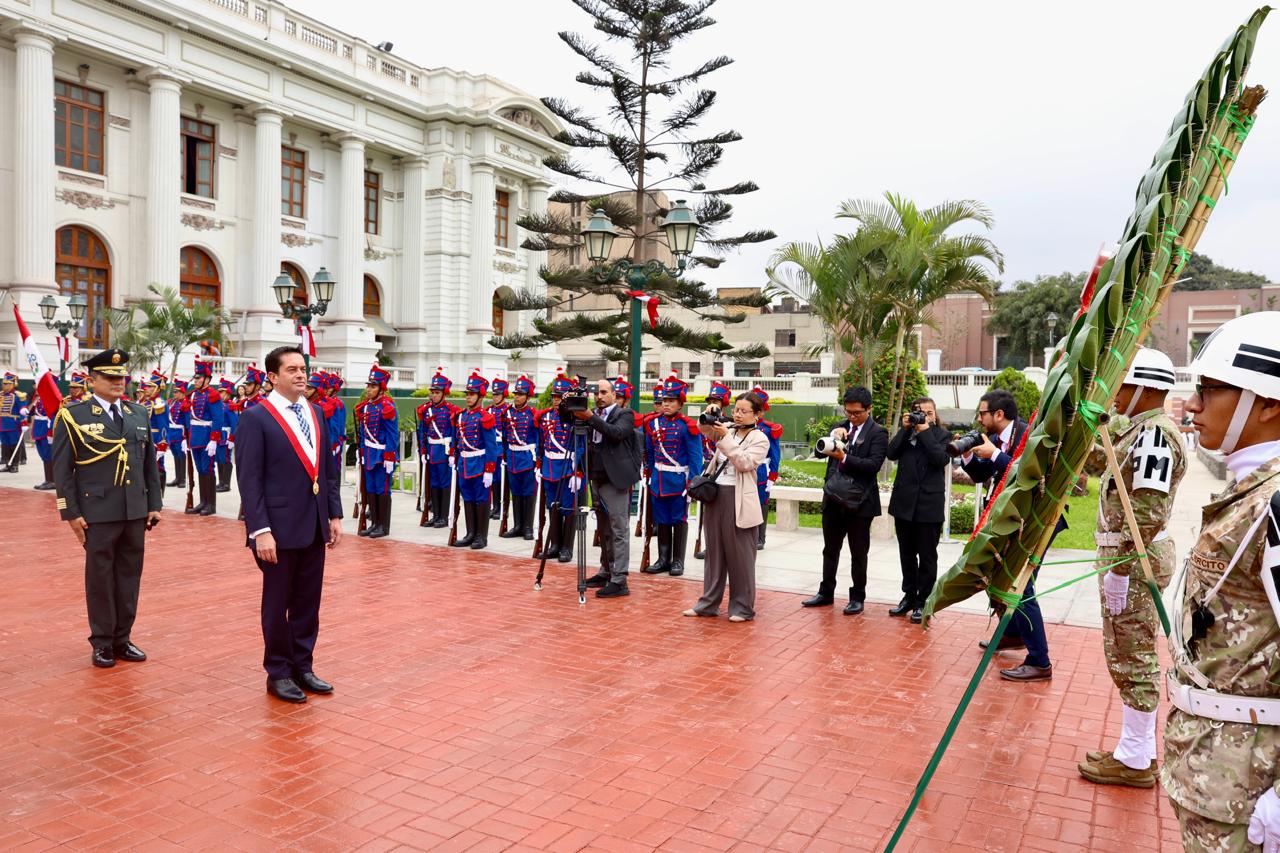
The president of Peru’s Congress participated in a formal ceremony marking the 205th anniversary of the establishment of Peruvian diplomacy and the founding of the Ministry of Foreign Affairs. The legislative leader joined executive officials, diplomats, and military representatives to observe the milestone, which highlights more than two centuries of international relations, statecraft, and the institutional evolution of the nation’s foreign service.
According to official state communications, the commemorative events focus on recognizing the historical trajectory of the Peruvian diplomatic corps and its ongoing role in protecting national sovereignty. The Ministry of Foreign Affairs, commonly known as the Cancillería, coordinates Peru’s bilateral and multilateral engagements, manages treaty negotiations, and oversees consular services protecting citizens abroad.
Legislative leaders and diplomatic officials gathered for the anniversary program to review the historical contributions of prominent Peruvian diplomats and statesmen. Official institutional records emphasize that the ministry has served as a central pillar of state stability since its inception in the early 19th century, navigating shifting geopolitical landscapes across South America and globally.
Historical Evolution of Peruvian Diplomacy
Peruvian diplomacy traces its formal administrative origins to the foundational period following national independence, when early state leaders recognized the necessity of establishing recognized channels for international engagement. The Ministry of Foreign Affairs was structured to manage boundary negotiations, secure international recognition for the newly formed republic, and foster commercial ties with foreign powers.
Over the past two centuries, the institution has adapted to major global shifts, including World Wars, regional integration movements, and the evolution of modern multilateral organizations such as the United Nations and the Organization of American States. Institutional historians note that Peruvian diplomats have frequently contributed to international law, particularly concerning maritime rights, regional mediation, and peaceful conflict resolution.
Legislative and Executive Collaboration on Foreign Policy
While the executive branch, through the Ministry of Foreign Affairs, holds primary responsibility for conducting foreign policy and negotiating international agreements, the Peruvian Congress exercises critical oversight. The legislative body reviews treaties, authorizes presidential travel abroad, and confirms ambassadorial appointments designated by the executive branch.
During anniversary addresses, participants frequently underscore the necessity of institutional harmony between the legislative and executive branches to maintain a consistent, state-level foreign policy. Observers note that bipartisan consensus on core national interests—such as territorial defense, international trade agreements, and regional cooperation—remains vital for Peru’s standing in global markets.
Current Strategic Priorities and International Relations
Today, Peru’s foreign service operates across dozens of embassies, consulates, and permanent missions worldwide, managing complex economic partnerships and multilateral agendas. Key areas of focus include attracting foreign investment, expanding export markets through free trade agreements, and addressing transnational challenges such as environmental protection, migration management, and security cooperation.
The Ministry of Foreign Affairs also oversees consular protection networks designed to assist millions of Peruvian nationals residing outside the country. Institutional modernization efforts center on digitizing consular services, improving emergency response capabilities for expatriates, and enhancing the professional training of career diplomats through the Diplomatic Academy of Peru.
Official public ceremonies commemorating the 205th anniversary will continue through the week with academic seminars, historical exhibitions, and diplomatic receptions hosted at the Torre Tagle Palace, the historic headquarters of the ministry in Lima. Further schedule details and institutional updates are published directly through the official portal of the Ministerio de Relaciones Exteriores del Perú.
Related reading