The Growing Burden of Healthcare and Long-Term Care Costs: What You Need to Know
Healthcare costs are a significant source of financial stress for many Americans. Recent data reveals a widespread worry about affording medical care, both routine and unexpected. This article breaks down the latest findings, explores who is most vulnerable, and offers insights into navigating these challenges.
Financial Worries are rising
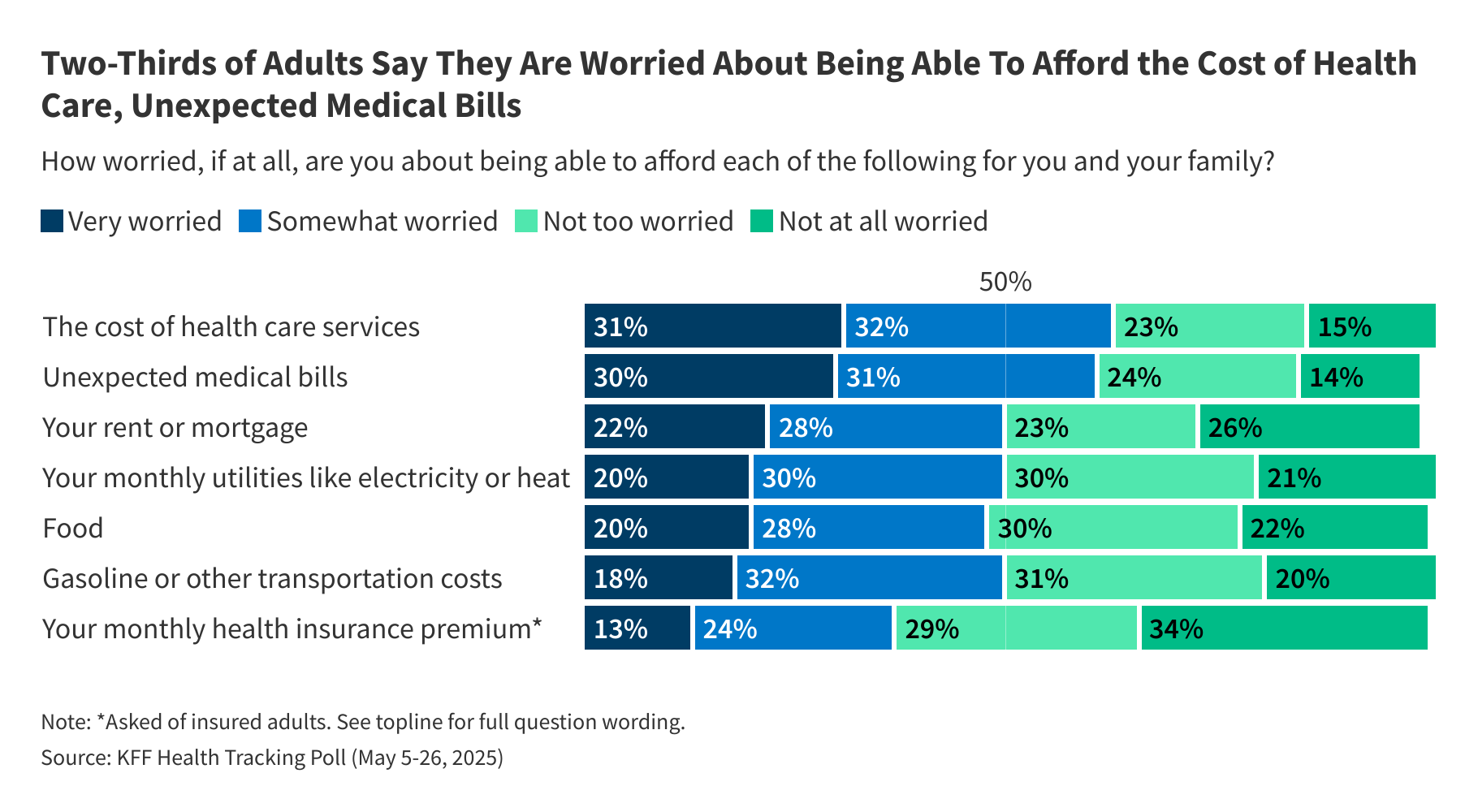
A recent KFF Health Tracking poll (May 2025) highlights the extent of these concerns. Approximately 62% of individuals are at least somewhat worried about covering the cost of healthcare services. Similarly, 61% express anxiety over unexpected medical bills.
These concerns surpass worries about other essential expenses, including:
* Housing (51%)
* Transportation (50%)
* Utilities (49%)
* Food (48%)
This demonstrates healthcare is a top-of-mind financial pressure for a large segment of the population.
The Uninsured & Those with Premiums Face Greater Risk
The burden is notably heavy for those without insurance. A striking 82% of uninsured adults under 65 worry about affording healthcare services. Moreover, 80% are concerned about unexpected medical bills.
Even with insurance, costs remain a worry.Roughly 38% of insured adults under 65 are concerned about their monthly health insurance premiums.

One Bill Away From Debt
Many Americans live precariously close to financial hardship when it comes to healthcare. About half of U.S. adults report they couldn’t afford a $500 unexpected medical bill without significant consequences.
Here’s how people would cope:
* 19% couldn’t pay it at all.
* 5% would borrow from banks, payday lenders, friends, or family.
* 21% would rely on credit card debt.
These statistics underscore the vulnerability of many households to even moderate medical expenses. Women, lower-income individuals, and Black and Hispanic adults are disproportionately affected.

Long-Term Care: A Looming Concern
As you age, the potential costs of long-term care become a significant worry.KFF research reveals significant anxiety among older adults.
* 57% of those 65 and older are anxious about affording a nursing home or assisted living facility.
* Half are concerned about covering the cost of in-home support services like nurses or aides.
These anxieties extend to those nearing retirement. Over 73% of adults aged 50-64 worry about residential care costs, and 72% are concerned about affording paid in-home care.
What Can You Do?
While these statistics are concerning, understanding the challenges is the first step toward proactive planning. Consider these strategies:
* Explore health insurance options: Understand your coverage and consider supplemental plans.
* Build an emergency fund: Even a small amount saved can help buffer unexpected bills.
* Research financial assistance programs: Many programs can help with healthcare costs.
* Plan for long-term care: Consider long-term care insurance or other strategies to protect your assets.
* Negotiate medical bills: Don’t hesitate to ask for itemized bills and negotiate with providers.
Sources:
* KFF Health Tracking Poll: May 2025: https://files.kff.org/attachment/kff-topline-health-tracking-poll-june-2025.pdf
* KFF Health Care Debt Survey: Feb.-Mar. 2022:[[[[