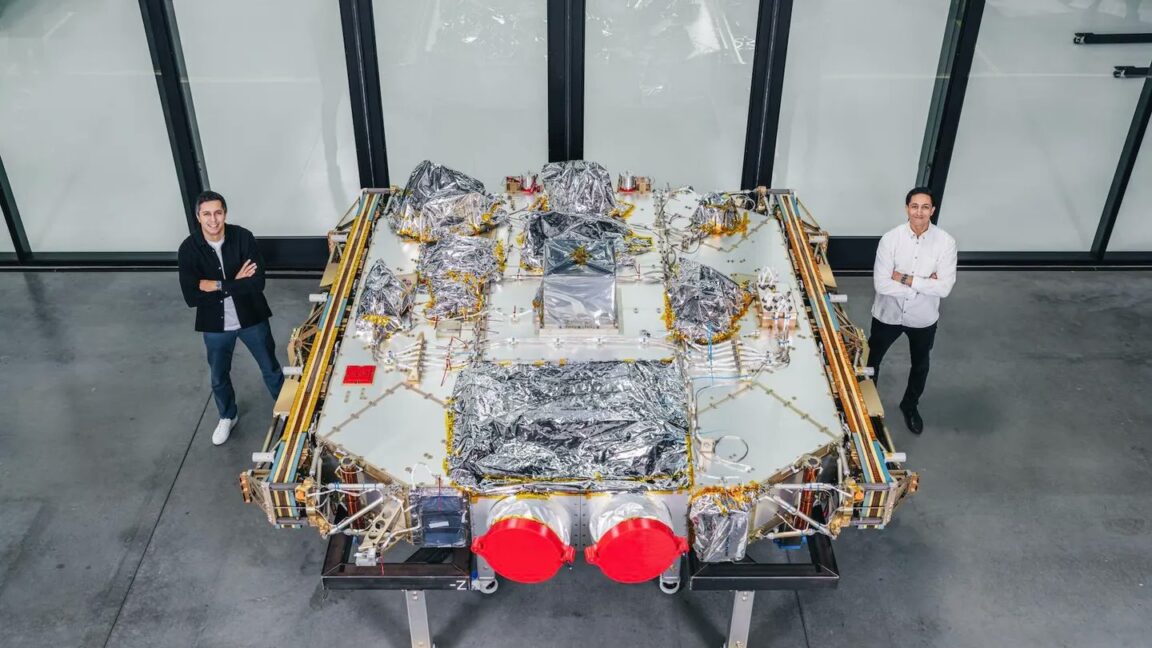
K2 Space Raises $250 Million to Build Next-Generation, High-Power Satellites
K2, a pioneering startup in the satellite manufacturing industry, has secured $250 million in Series C funding. This investment will fuel the expansion of its production capabilities at its Southern California facility, positioning the company to capitalize on the evolving landscape of space launch capabilities. Founded in 2022, K2 has now raised over $400 million, signaling strong investor confidence in its vision.
The Rise of Larger Satellites
For years, the trend in space has been toward smaller, more affordable satellites – often referred to as CubeSats. However,a shift is underway. The emergence of powerful new launch vehicles is creating an opportunity for larger, more capable spacecraft. You’re seeing this with:
* SpaceX’s Starship: Expected to begin satellite deployment as early as next year.
* Blue Origin’s New Glenn: Already launched twice in 2025, with further flights and an upgraded version planned for 2026.
* Existing Launchers: SpaceX’s Falcon 9 and Falcon Heavy, United Launch Alliance’s Vulcan, and vehicles from Rocket Lab, Relativity Space, and Firefly Aerospace are all contributing to increased launch capacity.
K2’s founders recognize this change and are strategically positioning the company to meet the growing demand for high-performance satellites. They believe these larger satellites are crucial for unlocking emerging markets like in-space computing and data processing.
K2’s Mega and Giga Class Satellites
K2 is developing two distinct classes of satellites – Mega and Giga – at its 180,000-square-foot factory in Torrance, California. These satellites are designed to deliver significantly more power and capability than current offerings.
The company’s first “Mega Class” satellite, named gravitas, is slated for launch in March 2026 aboard a Falcon 9 rocket. This mission is a critical step in validating K2’s core technologies and demonstrating its ability to deliver on its promises.
Key Features of Gravitas:
* High-Power Thruster: Gravitas will feature a 20-kilowatt Hall-effect thruster - four times more powerful than any previously flown. This will enable greater maneuverability and station-keeping capabilities.
* Large Solar Arrays: Twin solar arrays will generate 20 kilowatts of power, providing ample energy for onboard systems and payloads.
* Full-Stack Validation: The mission will test K2’s entire system architecture,including high-voltage power,guidance and control algorithms,and the performance of its advanced thruster.
“Gravitas brings our full stack together for the first time,” explains Karan Kunjur, K2’s co-founder and CEO. “We are validating the architecture in space, and we will scale based on measured performance.”
What This Means for the future of Space
K2’s investment and technological advancements signal a significant shift in the satellite industry. As launch costs decrease and launch capacity increases, you can expect to see a move toward larger, more powerful satellites capable of supporting increasingly complex missions. This will unlock new opportunities in areas like:
* On-Orbit Data Centers: Processing data in space offers advantages in latency and security.
* Advanced Earth Observation: Higher-resolution imagery and more frequent data collection.
* Space-Based Manufacturing: Creating products in the unique surroundings of space.
K2 is poised to be a key player in this new era of space exploration and commercialization, and its progress will be closely watched by the industry.
Worth a look