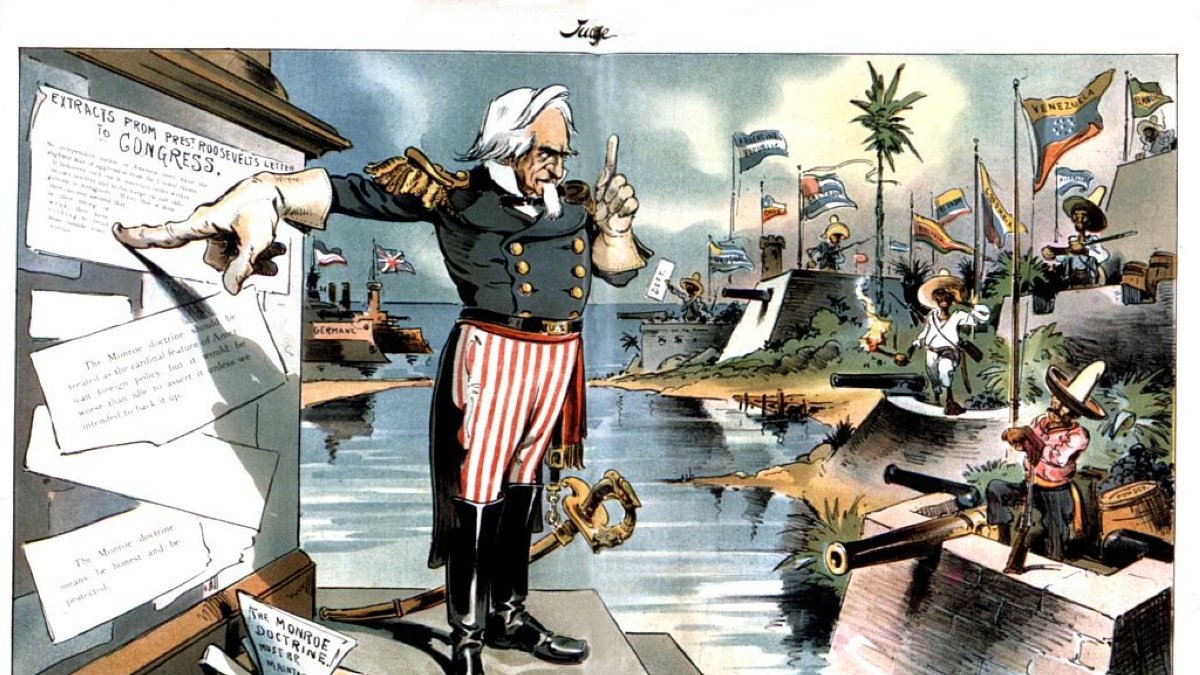
teh Resurgence of the Monroe Doctrine: A Hemisphere Defined by Anxiety, Not Ascendancy
The Monroe Doctrine, a cornerstone of U.S. foreign policy for over two centuries, is experiencing a notable revival. however, this isn’t the assertive declaration of dominance from its original iteration.Instead, it’s a response born from a growing sense of strategic vulnerability in a rapidly shifting global landscape.
For decades, the U.S. enjoyed a position of relative hegemony in the Western Hemisphere. This allowed for a proactive approach to regional influence, largely dictating terms and limiting external interference. Now, the situation is markedly different.You’re witnessing a reactive posture, one driven by the increasing presence of other global powers, most notably china.
A Hemisphere Transformed
The dynamics of power in Latin America have fundamentally changed. Consider these key shifts:
* Increased External Investment: China is heavily investing in critical infrastructure - ports, digital networks, railways, and energy grids – across the region.
* Evolving Partnerships: Latin American nations are no longer automatically aligning with U.S. policy. They are actively pursuing diversified partnerships and engaging in strategic hedging.
* Transactional Relationships: Governments are operating as pragmatic actors, prioritizing their own national interests in a multipolar world.
This isn’t a region passively accepting U.S. leadership anymore. It’s a collection of sovereign nations actively navigating a complex geopolitical surroundings.
Echoes of the Past, Realities of the Present
The current approach shares superficial similarities with Theodore Roosevelt’s “big stick” diplomacy. A strong presidential persona and assertive rhetoric are certainly present. However, the comparison largely ends there. Roosevelt focused on building robust institutions to project American power.
Today’s strategy relies heavily on:
* Personal Networks: Utilizing direct relationships between leaders.
* Bilateral Deals: Negotiating agreements on a country-by-country basis.
* pressure Tactics: Employing economic coercion as a primary lever of influence.
Consequently, the new doctrine feels both familiar and fundamentally transformed. It utilizes the language of primacy, but operates within a context where U.S. leverage is increasingly uncertain and contested.
A Doctrine Driven by Fear
The core difference between the original Monroe Doctrine and its modern counterpart is motivation. The 1900s version stemmed from a position of rising power. This current iteration is fueled by a fear of losing influence. Washington has seemingly abandoned the expectation that Latin America will naturally gravitate toward it.
Now, influence must be actively asserted, diligently defended, and, when necessary, forcefully imposed. this represents a meaningful departure from previous assumptions about regional dynamics.
What Does the Future Hold?
The success of this renewed doctrine remains to be seen. It could perhaps strengthen deterrence and reassert U.S. leadership in the region. Alternatively, it could accelerate the diversification of Latin American partnerships, potentially pushing nations closer to Beijing.
One thing is certain: the era of unchallenged U.S. dominance in the Western Hemisphere is over. You are witnessing a new chapter, defined not by ascendancy, but by a resolute effort to maintain a foothold in a rapidly changing world.
Related reading
- Bioforce Makes Largest Biomethane Investment in Baltics to Expand Operations in Latvia
- The Importance of Participation, Education, and Motivation in Succession Planning
- Philippe Strehlé: An Extraordinary Journey from China to France (archynewsy.com)
- GM and SAIC Extend China Joint Venture for 20 Years Through 2047 (time.news)