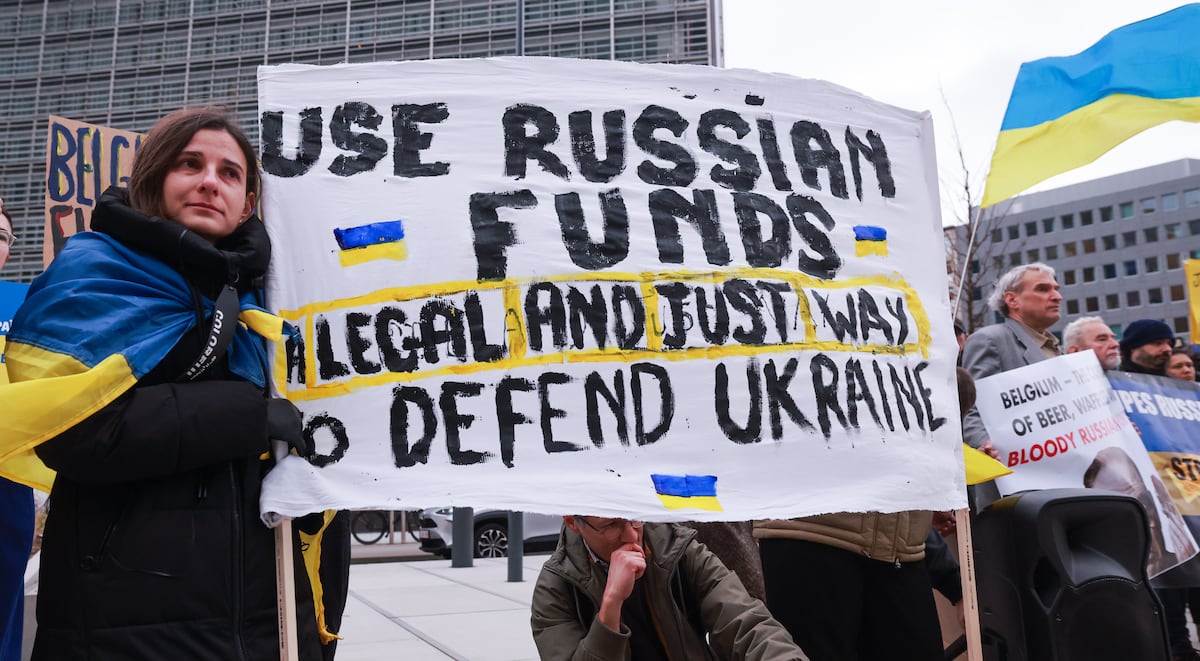
Europe Weighs a High-Stakes Gamble: Funding Ukraine with Frozen Russian Assets
The future of Ukraine hangs in the balance, and Europe is facing a critical juncture. Discussions are intensifying around a bold, and potentially controversial, plan to finance Ukraine’s defense and reconstruction using the vast reserves of Russian assets currently frozen within European financial institutions. This isn’t simply about money; it’s about sending a resolute message to Russia, solidifying Europe’s role on the global stage, and preventing a collapse that would have far-reaching consequences.
Several sources indicate the idea of bypassing traditional unanimous agreement and utilizing qualified majority voting for economic measures is gaining traction. A high-ranking official within European institutions reportedly inquired about this possibility during a recent meeting of Finance Ministers. While not universally accepted, the legal pathway appears increasingly viable.
This exploration itself underscores the immense stakes involved. For key players like Germany, and the institutions themselves, failure to support Ukraine is not an option. It’s about more then just providing financial aid; it’s about demonstrating unwavering commitment and responding to pressure from the United States. Washington is urging Europe to take the lead in funding Ukraine,positioning itself for a key role in shaping Europe’s future security architecture.
Here’s a breakdown of the core elements being considered:
* Unlocking Frozen Assets: the primary goal is to leverage Russia’s sovereign assets – funds held in European banks and financial clearinghouses – to provide Ukraine with much-needed financial support.
* A “Reconstruction Loan“: The proposed mechanism involves a zero-interest loan to Ukraine,payable only if Russia agrees to compensate Ukraine for the damages caused by its invasion.
* Bypassing Unanimity: Crucially, the plan aims to circumvent the usual requirement for unanimous approval from all EU member states, potentially utilizing qualified majority voting.
This potential shift away from unanimity is where the complexities truly begin. While a majority could theoretically override objections, the political sensitivities are immense. Ignoring a dissenting member state, notably one deeply concerned like Belgium, is a path few are eager to take – at least for now. Ursula von der Leyen has publicly emphasized the need for safeguards to protect all member states, acknowledging Belgium’s concerns. However, the situation remains fluid.
Currently, Belgium hosts the majority of these frozen Russian assets through Euroclear, a key financial institution in Brussels. The pressure on Belgium is therefore extraordinary. The Kremlin has explicitly warned that any use of these assets would be considered an act of war. This threat isn’t abstract; Euroclear’s Chief Financial Officer and their family now live under security protection due to credible threats. Moreover, U.S. credit rating agencies have begun hinting at potential downgrades, adding another layer of pressure.
You might be wondering why qualified majority voting is even being considered.Traditionally, decisions with significant financial implications require the consensus of all member states. Though, the urgency of the situation, coupled with the perceived need for decisive action, is driving the exploration of alternative pathways.
Here’s what this means for you and the broader geopolitical landscape:
* A Stronger Signal to Russia: Utilizing frozen assets sends a clear message that Russia’s aggression will not be tolerated and that its financial resources will be used to help the victims of its actions.
* European Leadership: Taking the lead on funding Ukraine allows Europe to demonstrate its strategic autonomy and assert its influence on the world stage.
* A Test of European Unity: This situation will undoubtedly test the cohesion of the European Union, forcing member states to confront their differing priorities and risk tolerances.
The coming weeks will be critical. Leaders will need to reach a political agreement at an upcoming summit, paving the way for detailed negotiations on how to implement this complex plan. It’s a high-stakes gamble, but one that many believe is necessary to secure Ukraine’s future and safeguard the stability of Europe. The world is watching,and the decisions made now will have profound implications for years to come.
Related reading