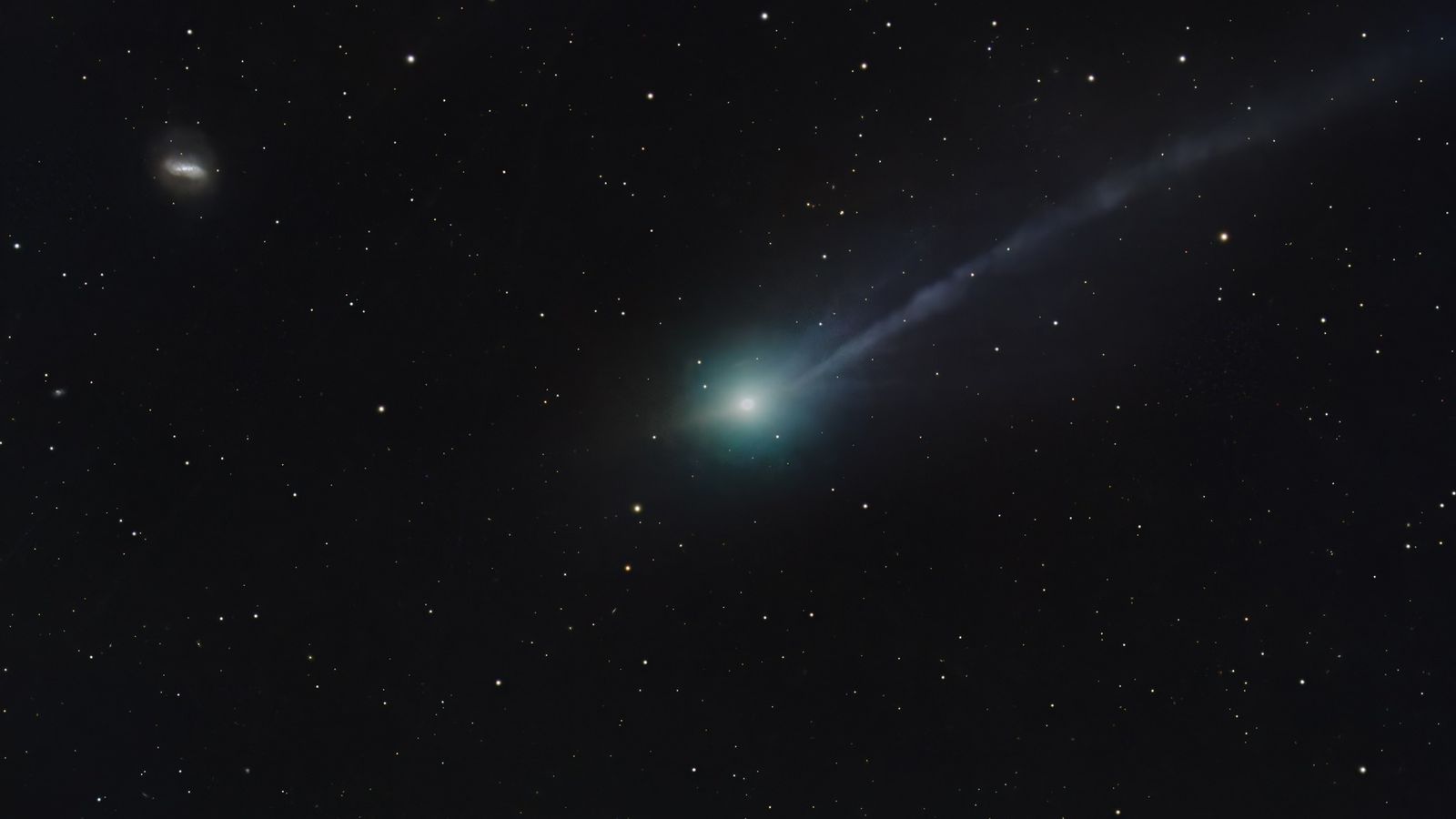
Interstellar Comet or something More? Examining the Mystery of 3i/ATLAS
A recently discovered comet, designated 3i/ATLAS, has sparked debate within the scientific community. Observations of the comet reveal unusual behavior, leading some to speculate about origins beyond the typical icy space rock. But what exactly is 3i/ATLAS, and why is it causing such a stir?
A Cosmic Time Capsule
Scientists estimate this comet is an amazing eight billion years old. This makes it twice as old as our sun and solar system,effectively a fossil from the early universe. It represents a remnant of a star system that formed long ago, offering a unique glimpse into the galaxy’s distant past.
The comet was initially spotted over Egypt‘s Black Desert by astronomer Osama Fathi, providing stunning visual confirmation of its presence.
The Debate: Natural Phenomenon or Something Else?
The comet’s changing color and brightness have fueled speculation. Some, like Professor Avi Loeb, suggest these anomalies could indicate something beyond natural processes. He proposes we remain open to the possibility of non-conventional explanations.
Though, many scientists dismiss these claims as unfounded. Professor Chris lintott,an astronomer from the University of Oxford,emphasizes the lack of evidence supporting extraordinary theories. He likens the speculation to suggesting the moon is made of cheese – a possibility, but one lacking any rational basis.
Understanding the Comet’s Behavior
The observed changes in 3i/ATLAS are likely due to a common phenomenon. As the comet approaches the sun, solar radiation heats pockets of ice and various materials accumulated during its long journey. This heating causes changes in its composition and appearance, explaining the shifts in color and brightness.
* The sun’s energy vaporizes volatile substances.
* Different materials react to heat at varying rates.
* This process creates the observed changes in the comet’s appearance.
Essentially, there’s nothing this comet is doing that hasn’t been observed in other comets before. It’s a natural process, well-understood by astronomers.
The Importance of Scientific Rigor
It’s crucial to approach scientific inquiry with both curiosity and skepticism.while exploring unconventional ideas is valuable, it must be grounded in evidence.Jumping to conclusions without supporting data can be misleading and even detrimental to scientific progress.
professor Lintott cautions against the dangers of promoting unsubstantiated theories. He believes it’s important to focus on seeking signs of intelligence in the cosmos, but to begin with observations that are genuinely anomalous.
A History of Speculation
Professor loeb previously made similar claims regarding Oumuamua, another interstellar object that passed through our solar system in 2017. He suggested it might be an alien craft, a proposition met with widespread skepticism from the scientific community.
The core of scientific advancement lies in humility and a willingness to learn. Experts should be open to new possibilities, but not at the expense of rigorous analysis and evidence-based reasoning.
What Does This mean for You?
The story of 3i/ATLAS highlights the engaging and frequently enough mysterious nature of space exploration. It reminds us that while we’ve made meaningful strides in understanding the universe, there’s still much to discover.
You can stay informed about this and other exciting space discoveries by following reputable sources of astronomical news and research. Remember to critically evaluate facts and rely on evidence-based explanations.
Ultimately, 3i/ATLAS serves as a reminder of the vastness and complexity of the cosmos, and the importance of maintaining a balanced approach to scientific inquiry.
Keep reading