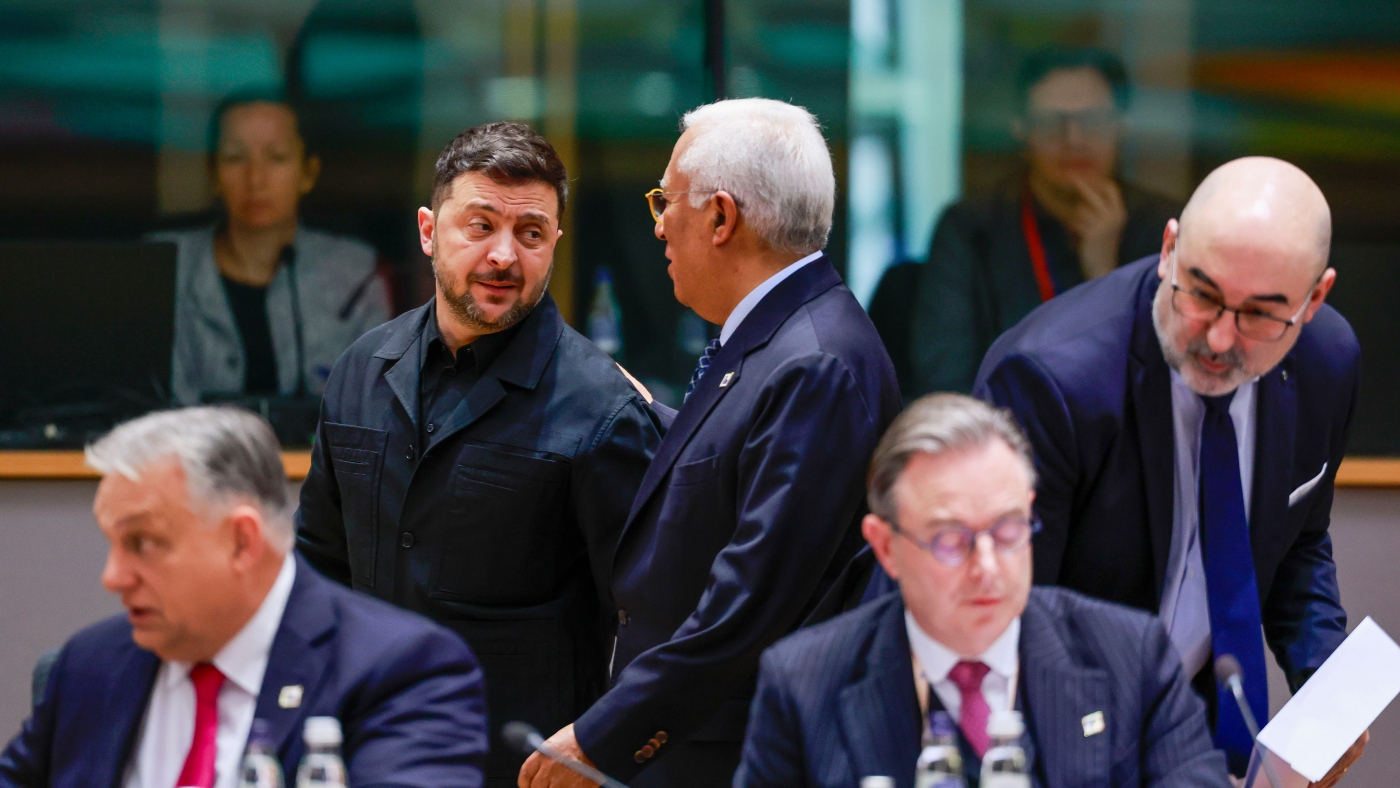
EU Secures €90 Billion Aid Package for Ukraine, Avoiding contentious Russian Asset Seizure
Brussels, Belgium – After intense negotiations stretching late into the night, European Union leaders have reached a landmark agreement to provide Ukraine with a €90 billion ($106 billion) financial lifeline for 2026-2027. The deal, finalized today in Brussels, represents a crucial commitment to supporting UkraineS defense and economic stability amidst ongoing conflict with Russia, but was achieved only after navigating significant internal divisions and legal concerns.
The path to agreement was fraught with challenges. Initially, a plan to leverage the approximately €193 billion ($226 billion) in frozen Russian assets held within the EU – specifically at the Brussels-based Euroclear – was considered. This “reparations loan” concept aimed to directly utilize Russian funds to finance aid for Ukraine, a move championed by many as a demonstration of accountability and a potential source of future war reparations. However, this approach ultimately proved too legally risky and faced staunch opposition, particularly from Belgium.
Belgium’s Concerns and the Shift to Capital Markets
Belgian Prime Minister Bart De Wever voiced serious reservations, warning that using frozen Russian assets could expose Euroclear to legal challenges and undermine the principle of legal certainty. His concerns where amplified last week when Russia’s Central Bank filed a lawsuit against Euroclear,attempting to prevent any use of its frozen funds for Ukrainian aid.
“For me,the reparations loan was not a good idea,” De Wever explained following the summit. “There are a lot of loose ends…and if you start pulling at the loose ends in the strings, the thing collapses.” He emphasized the importance of upholding the rule of law, even under pressure.
Ultimately, leaders opted for a more conventional approach: borrowing the funds on capital markets. French President Emmanuel Macron hailed this as “the most realistic and practical way” to fund Ukraine, while German Chancellor Friedrich Merz confirmed the package would be a zero-interest loan.
A Deal reached, But Not Without Compromise
The agreement wasn’t unanimous. hungary, Slovakia, and the Czech Republic formally opposed the aid package, reflecting ongoing skepticism about the strategy for Ukraine. However, a compromise was reached whereby these nations agreed not to block the deal, and were promised protection from any potential financial repercussions.
Hungarian Prime Minister Viktor Orbán, a known ally of Russian President Vladimir Putin, expressed his opposition to providing financial assistance, stating, “To give money means war.” He also dismissed the idea of utilizing frozen Russian assets as a “dead end.” Despite his reservations, Orbán acknowledged the importance of avoiding a wider European conflict.
future Use of Frozen Assets Remains on the Table
Despite abandoning the immediate use of frozen Russian assets for the current loan, the EU has not ruled out leveraging them in the future. Chancellor Merz clarified that the assets will remain blocked until Russia provides reparations to Ukraine, estimated by Ukrainian President Volodymyr Zelenskyy to exceed €600 billion ($700 billion).
“If Russia does not pay reparations we will – in full accordance with international law – make use of Russian immobilized assets for paying back the loan,” Merz stated. EU Council President António Costa echoed this sentiment, confirming the EU “reserves its right” to utilize the assets for loan repayment.
Broader Context and Urgent Need for Aid
The agreement comes at a critical juncture for Ukraine. President Zelenskyy,who traveled to Brussels amidst protests by farmers concerned about trade deals with South American countries,urgently appealed for a swift decision to ensure Ukraine’s financial stability. Polish Prime Minister Donald Tusk underscored the stakes, warning that failure to provide aid would result in “either money today or blood tomorrow.”
The finalized financial package is deemed sufficient to cover Ukraine’s military and budgetary needs for the next two years. This support is vital as Ukraine continues to defend its sovereignty against Russian aggression and rebuild its economy.
A Signal of European Solidarity
The EU’s decision sends a powerful message of solidarity with Ukraine. As Prime Minister De Wever concluded, the agreement “delivered a strong political signal. Europe stands behind Ukraine.” While the path to this agreement was complex and required significant compromise, it ultimately demonstrates the EU’s commitment to supporting Ukraine’s future and upholding international law.
Key Takeaways:
* €90 Billion Aid Package: The EU has approved a €90 billion financial aid package for Ukraine for 2026-2027.
* Capital Markets Funding: The aid will be financed through borrowing on capital markets, avoiding the immediate
Worth a look