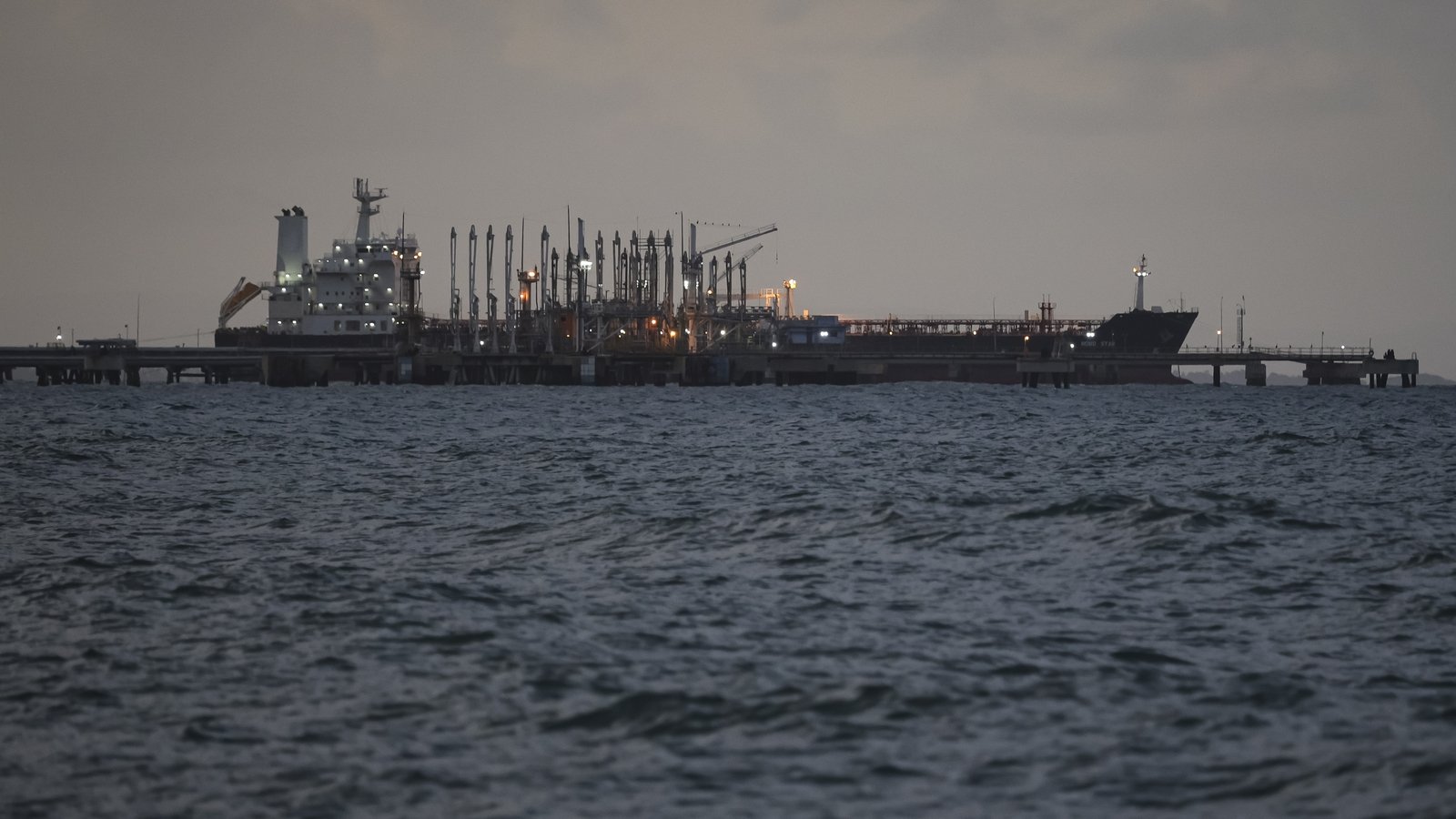
US Interdicts Second Oil Tanker Near Venezuela Amidst Escalating Pressure Campaign
Updated December 20, 2025
The United States has significantly escalated its pressure on Venezuela, ”apprehending” a second oil tanker in as many weeks. This latest action, confirmed by US Homeland security chief Kristi Noem, underscores a broadening effort to disrupt the flow of Venezuelan oil and counter what Washington alleges is funding for regional “narco-terrorism.” The move follows President Trump’s recent announcement of a blockade targeting sanctioned oil vessels traveling to and from Venezuela, raising questions about the legality and potential ramifications of these actions.
what Happened?
Early this morning, December 20th, the US Coast Guard, supported by the Department of Defense, intercepted a tanker recently docked in Venezuela.Noem announced the apprehension on X (formerly Twitter), accompanied by aerial footage depicting a helicopter positioned above the vessel at sea. While the identity of the tanker remains undisclosed, the action signals a clear intensification of US enforcement efforts in the Caribbean.
According to reporting from The New York Times, citing anonymous US officials and sources within Venezuela’s oil industry, the intercepted vessel is a Panamanian-flagged tanker carrying Venezuelan oil. It was reportedly operating in Caribbean waters after departing Venezuela. Crucially, it remains unclear whether the tanker itself was directly sanctioned.
A Pattern of Interdiction
This incident builds upon a similar action taken on December 10th, when US forces seized another large oil tanker off the Venezuelan coast. That vessel was allegedly involved in transporting sanctioned oil from Venezuela to Iran. These back-to-back interdictions suggest a intentional strategy to choke off Venezuela’s oil exports, a critical source of revenue for the Maduro regime.
US Military Buildup in the Caribbean
The increased enforcement activity is occurring alongside a significant US military deployment in the Caribbean. Currently,eleven US warships are stationed in the region,including the world’s largest aircraft carrier,amphibious assault and transport dock ships,cruisers,and destroyers. The US Coast Guard is also actively involved, though specific numbers of deployed vessels are being withheld “for operational security reasons.”
While the stated objective of this military buildup is to combat Latin American drug trafficking, the focus has demonstrably shifted towards Venezuela. The US government views President Nicolás Maduro as illegitimate and seeks to pressure his administration.
Venezuela’s Response & International Implications
Caracas vehemently condemns the US actions, characterizing them as a campaign to overthrow Maduro and “steal” Venezuelan oil. Defense Minister Vladimir Padrino Lopez, speaking on state television, asserted that Venezuela is “waging a battle against lies, manipulation, interference, military threats, and psychological warfare,” and vowed that these tactics “will not intimidate us.”
The legality of these interdictions, and the accompanying air strikes against alleged drug trafficking boats (which have resulted in over 100 reported fatalities since September), are facing increasing scrutiny. Critics argue that the US actions may violate international law and raise concerns about the use of force in the region.
Understanding the Broader Context: Sanctions and Venezuelan Oil
The US has imposed extensive sanctions on Venezuela’s oil industry, aiming to cripple the Maduro government’s financial resources. These sanctions,however,have also contributed to a severe economic crisis in Venezuela,exacerbating humanitarian concerns.
The US strategy appears to be predicated on the belief that cutting off Venezuela’s oil revenue will force a change in leadership. However, this approach has proven controversial, with critics arguing that it disproportionately harms the Venezuelan population.
Key Takeaways & What to Watch For:
* Escalating Tensions: The US is demonstrating a willingness to take increasingly assertive action against Venezuela.
* Legal Challenges: The legality of the interdictions and related military operations remains a significant point of contention.
* Humanitarian Impact: The sanctions and enforcement actions are contributing to the ongoing economic and humanitarian crisis in Venezuela.
* Regional Stability: The situation has the potential to destabilize the Caribbean region.
* Future Actions: Expect continued US enforcement efforts and potential further escalation of tensions.
Resources:
* RTE News Report on Previous Tanker Seizure
* The New York Times reporting on the latest interdiction (source cited within article).
Related reading