Hamas‘s Pursuit of a Negotiated Resolution: A Deep Dive into Recent Proposals and Historical Engagement
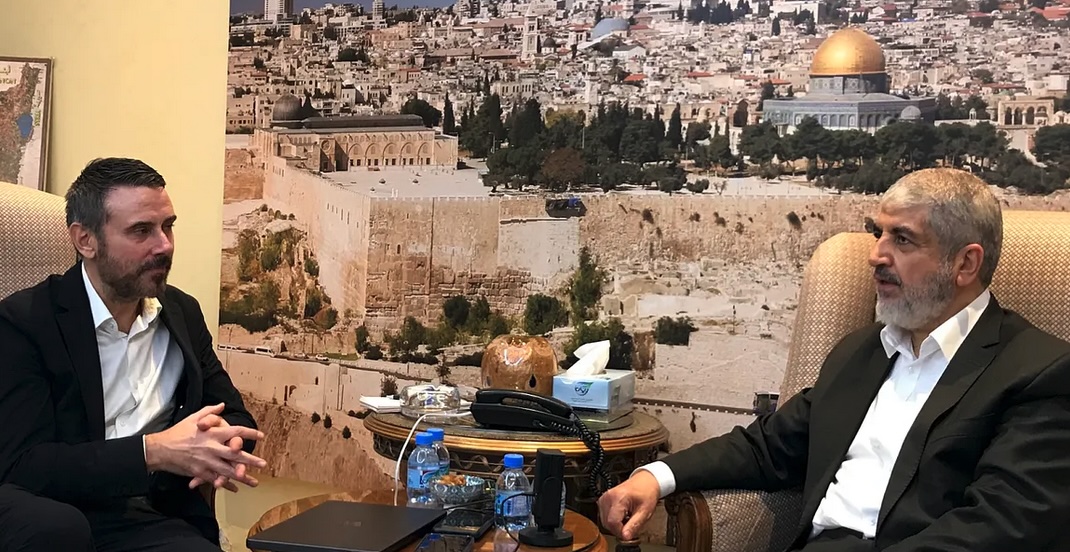
For decades, Hamas has been portrayed through a narrow lens, often defined solely by conflict. However, recent statements and a revealing interview wiht Khaled Meshaal, coupled with a deeper look at the movement’s history, demonstrate a consistent, though often overlooked, willingness to engage in political negotiation and seek a lasting resolution to the Israeli-Palestinian conflict. This analysis delves into Hamas’s current proposals, its historical attempts at political engagement, and the challenges it faces in achieving a peaceful outcome.
A firm Stance Against Forced Disarmament, But Open to Guarantees
Recent negotiations, as outlined by Meshaal, reveal a clear red line: Hamas will not accept forced disarmament. “We do not want to clash with anyone or confront anyone,but we will not accept being forcibly disarmed,” Meshaal stated. This position isn’t rooted in intransigence, but in a demand for reciprocal security and a realistic path forward. Hamas proposes a framework built on guarantees, specifically outlining a commitment from its armed wing and other resistance forces to refrain from using, displaying, or parading weapons. Crucially, this commitment would be self-imposed, demonstrating a level of internal discipline and credibility that often goes unacknowledged.
This proposal isn’t simply a tactical maneuver.meshaal emphasizes Hamas’s track record of adhering to commitments, stating, “Hamas has a record of commitment and high credibility.” The core of the proposal hinges on establishing a system of mutual guarantees, a point repeatedly stressed throughout the discussions.
Key Proposals for a Lasting Peace
Beyond the issue of disarmament, Hamas has presented several concrete proposals aimed at achieving a sustainable peace:
* International Stabilization Force as Separators: Hamas accepts the deployment of an International Stabilization Force, but only as a separating force between Palestinian and Israeli territories. They explicitly reject the Israeli preference for a force deployed within Gaza, fearing it would be used to disarm Palestinian factions and incite conflict.
* Long-Term Truce (Hudna): A central tenet of Hamas’s approach is the offer of a hudna - a long-term truce. Meshaal proposed truces ranging from five to ten years, emphasizing that a hudna carries a notable weight of commitment.He points to past periods of calm, which Hamas consistently upheld, while accusing Israel of repeatedly violating those agreements. This highlights a perceived asymmetry in commitment and a desire for a binding,mutually respected agreement.
* Guarantor Nations: Hamas seeks a network of guarantors, including Qatar, turkey, and Egypt, alongside other Arab and islamic nations with strong ties to Palestinian resistance groups. This multi-layered guarantee system aims to provide assurance to both Israel and the United States that any agreement will be honored by the Palestinian side.
Reaching Out to the United States: A Pragmatic Appeal
In a notable attempt to broaden the scope of potential mediation,Meshaal directly appealed to the United States,specifically to President Trump,invoking “the pragmatic American mindset” and appealing to a desire for stability in the region.He framed Gaza as a “continual bleeding wound” that negatively impacts global stability and the human conscience, suggesting a shared interest in finding a resolution.
This outreach underscores a strategic understanding of the geopolitical landscape and a willingness to engage with all relevant actors,even those with whom Hamas has historically had strained relations.
A History of Political Engagement – Frequently enough Met with Resistance
The narrative surrounding Hamas often overlooks its long history of political engagement. Meshaal highlighted the movement’s decision to participate in the 2006 Palestinian legislative elections, despite its initial opposition to the Oslo Accords. Hamas won those elections decisively, demonstrating a clear mandate from the Palestinian people.
Though, this democratic outcome was met with a concerted effort by the United States and Israel to undermine the results, impose a crippling siege on Gaza, and attempt to overthrow the elected government. This historical context is crucial for understanding hamas’s current skepticism and its insistence on robust guarantees.
As detailed in Understanding Hamas And Why That Matters (Khouri & Landis, 2023), Hamas’s engagement with political processes extends far beyond 2006. The book, and the experts contributing to it, provide a comprehensive overview of the movement’s evolution and its consistent attempts to navigate the complex political landscape. The recent interview with Meshaal, the authors suggest, provides further valuable insight and warrants inclusion in future editions.
Further Exploration: Access to Primary Source Materials
To gain a deeper
Worth a look