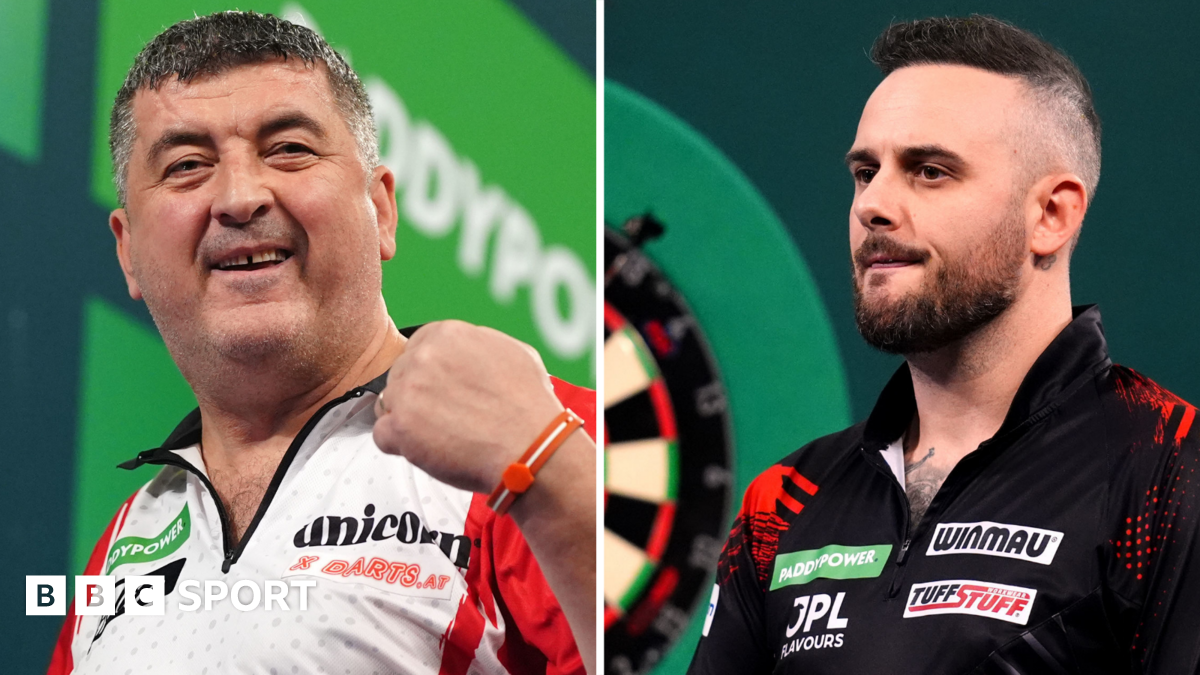
Joe Cullen vs. Mensur Suljovic: Controversy Erupts Over Slow Play at teh PDC World darts Championship
The 2024/2025 PDC World darts Championship has already delivered drama, but a recent clash between Joe Cullen and Mensur Suljovic has ignited a fierce debate about sportsmanship and the pace of play. Following Suljovic’s 3-1 victory over the 32nd seed, Cullen publicly accused his opponent of employing tactics akin to “cheating” due to his deliberately slow approach. but what exactly happened, and is slow play a legitimate strategy or a breach of the game’s spirit?
The Match and the Accusation
The tension was palpable as suljovic secured his spot in the third round, defeating a visibly frustrated Joe Cullen. While Cullen initially took the first set, Suljovic rallied, ultimately winning three consecutive sets. It wasn’t the Austrian’s accuracy, but how he played that drew Cullen’s ire.
Promptly after the match, Cullen took to X (formerly Twitter), stating, “If that’s darts, I don’t want no part of it.” He further elaborated, suggesting that Suljovic’s intentional slowing down was a calculated move, and not simply part of his game. Despite expressing personal respect for Suljovic off the oche, Cullen firmly believes the tactic crosses a line.
Suljovic, for his part, vehemently denied any malicious intent.He explained his approach as a personal strategy, stating he doesn’t use it to provoke opponents.”I do it only for my game,” he said, offering an apology to Cullen while maintaining his innocence.
Is Slow Play Cheating? The Debate Rages On
Cullen isn’t alone in his concerns. manny fans and players believe that excessively slow play disrupts the rhythm of the game and provides an unfair advantage. But where does legitimate strategy end and unsportsmanlike conduct begin?
Here’s a breakdown of the key arguments:
* Proponents of allowing slow play argue that players shoudl be free to employ any legal tactic to gain an edge. They see it as a mental game, designed to disrupt an opponent’s focus.
* critics, like Cullen, contend that deliberately slowing down isn’t about skill or strategy, but about manipulating the game’s flow. They believe it undermines the spirit of competition and can be incredibly frustrating for both players and viewers.
Currently, the PDC doesn’t have a strict, timed rule governing pace of play. However, deliberately slow play intended to disrupt an opponent is considered unsportsmanlike and could be penalized. The challenge lies in proving intent.
What’s Next for Suljovic and Cullen?
Mensur Suljovic now faces a daunting challenge: a third-round matchup against defending champion Luke Littler. This promises to be a clash of styles, with littler known for his blistering pace and Suljovic’s more deliberate approach.
For Joe Cullen, the loss is a bitter pill to swallow. While he’s out of the tournament, his outspoken criticism has undoubtedly fueled the conversation surrounding pace of play in professional darts.
Meanwhile, other players are progressing through the tournament. Rob Cross secured a 3-1 victory over Ian White, avoiding a deciding set. Krzysztof ratajski and Luke Woodhouse also advanced to the third round with wins over Ryan Joyce and Max Hopp, respectively.
Evergreen Insights: The Psychology of Pace in Sports
The debate surrounding Suljovic’s play highlights a broader phenomenon in sports: the strategic use of pace. Across various disciplines, athletes and teams often manipulate the tempo of a game to their advantage.
* Basketball: Teams might slow down the offence to control the clock and protect a lead.
* Baseball: Pitchers vary their delivery speed to disrupt a batter’s timing.
* Tennis: Players adjust the pace of rallies to exploit an opponent’s weaknesses.
The key difference lies in the intent and the impact on the game. When pace manipulation is used to genuinely gain a strategic advantage without being overtly disruptive, it’s generally accepted. However, when it’s perceived as a deliberate attempt to frustrate or undermine an opponent, it often draws criticism
Keep reading