Teh Human Family Tree Just Got a Lot More Complex: What New Fossil Discoveries Mean for Your Ancestry
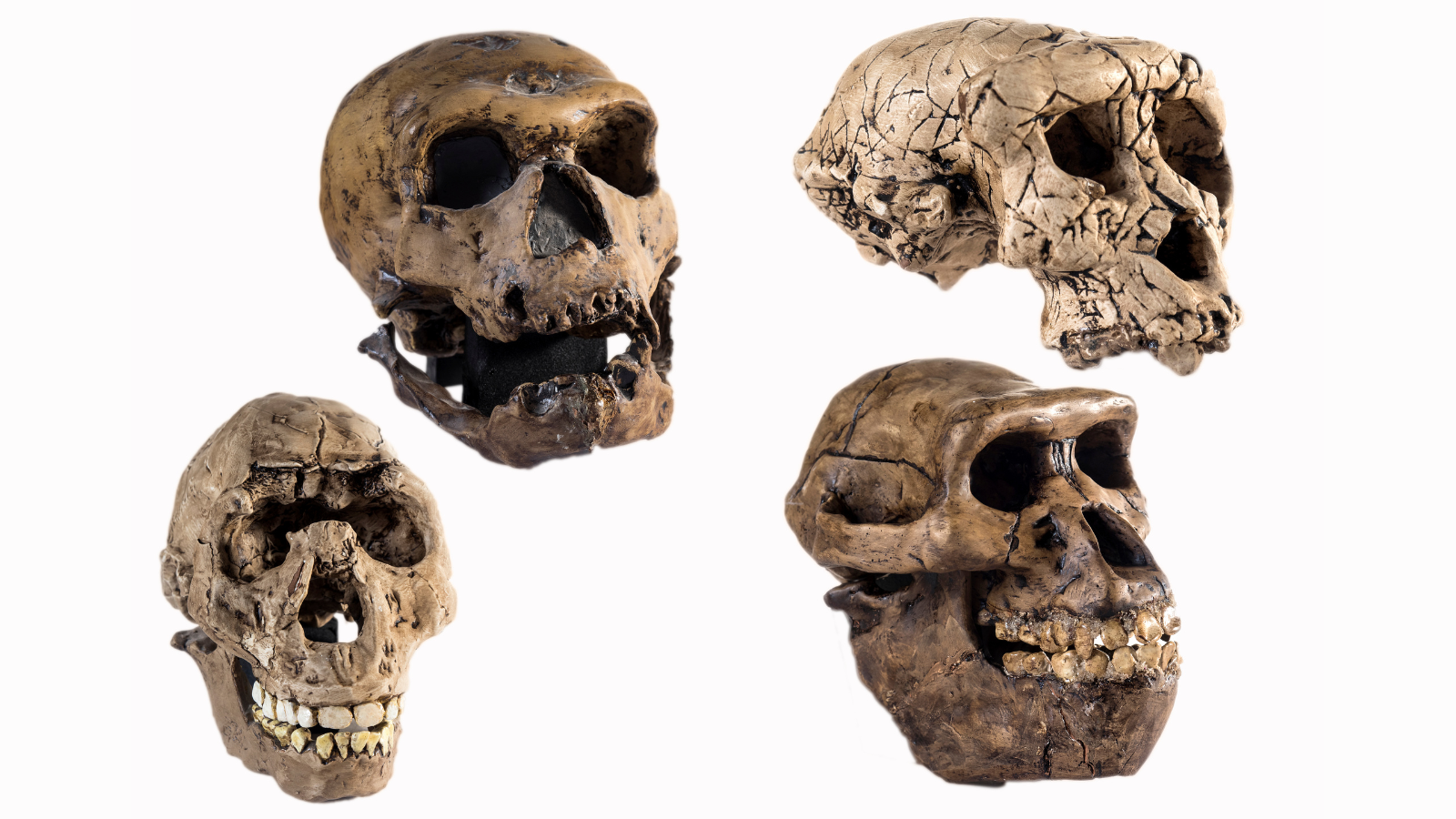
For decades, “Lucy” – the remarkably complete Australopithecus afarensis fossil discovered in Ethiopia in 1974 – has held a prominent position in the story of human evolution. She was widely considered a direct ancestor to Homo, the genus that includes modern humans. Though, recent fossil discoveries are challenging this long-held belief, suggesting a far more intricate and branching evolutionary history than previously imagined.
This article dives into the latest findings, explains why the “straight-line” view of human evolution is outdated, and explores what these discoveries mean for understanding your origins.
A Braided Stream, Not a Simple Line
Traditionally, paleoanthropologists envisioned human evolution as a linear progression – one species neatly giving rise to the next. But the reality, as increasingly clear from fossil evidence, is much messier. Lauren Schroeder, a paleoanthropologist at the University of Toronto Mississauga, explains that between 3.5 and 2 million years ago, multiple hominin species were evolving and intermingling across Africa.
This means our evolutionary history resembles a “braided stream,” where species diverged, recombined, and coexisted, rather than a single, direct lineage. You can think of it as a complex web of relationships, not a simple family tree.
New Fossils Shake Up the Narrative
Recent discoveries in Ethiopia,specifically the fossils of Australopithecus deyiremeda and Australopithecus africanus,are at the heart of this re-evaluation. These fossils, dating back over 3.4 million years, exhibit a mix of primitive and more advanced traits.
Here’s what makes them significant:
* Ancient Traits: A. deyiremeda and A. africanus retain features suggesting adaptations for climbing trees,like certain foot structures.
* Challenging Assumptions: These traits challenge the idea that these species were directly on the path to becoming Homo.
* Expanding the Pool: The findings suggest that early Homo may have emerged from a broader range of australopith species than previously thought.
Essentially, Lucy’s species is no longer the only candidate for our direct ancestor.
Disagreement Among Experts
Interestingly, even the scientists involved in these discoveries don’t entirely agree on the implications. Yohannes Haile-Selassie, the lead author of the new study and director of Arizona State University’s Institute of Human Origins, maintains that A. afarensis (Lucy’s species) remains the most likely ancestor to Homo.
He argues that the more human-like feet of A. afarensis are a key indicator of its position on the evolutionary path. However, Schroeder suggests that A.afarensis is simply a* candidate, not *the candidate.
The Elusive Ancestor
The truth is,pinpointing a single “direct ancestor” might potentially be an impossible task. As paleoanthropologist Rick Ward points out, the more we learn about human evolution, the more elusive that ancestor becomes.
Consider these points:
* Incomplete Fossil Record: The fossil record is inherently incomplete, leaving gaps in our understanding.
* Interbreeding: Interbreeding between different hominin species further complicates the picture.
* Complexity of Evolution: Evolution isn’t a linear process; it’s a complex interplay of factors.
Despite this uncertainty, we can still learn a great deal about our ancestors. Even if we never identify a single direct ancestor, we can reconstruct their likely characteristics and behaviors.
what Does This Mean for You?
These discoveries don’t invalidate the importance of Lucy. She remains a crucial piece of the puzzle. However, they highlight the incredible diversity of our evolutionary past and the fact that human evolution was not a simple, straightforward process.
Your ancestry is part of a rich, complex story involving multiple species and a great deal of experimentation. understanding this complexity allows for a more nuanced and accurate thankfulness of what it means to be human.
The search for our origins continues, driven by new discoveries and innovative research.While the “
Related reading