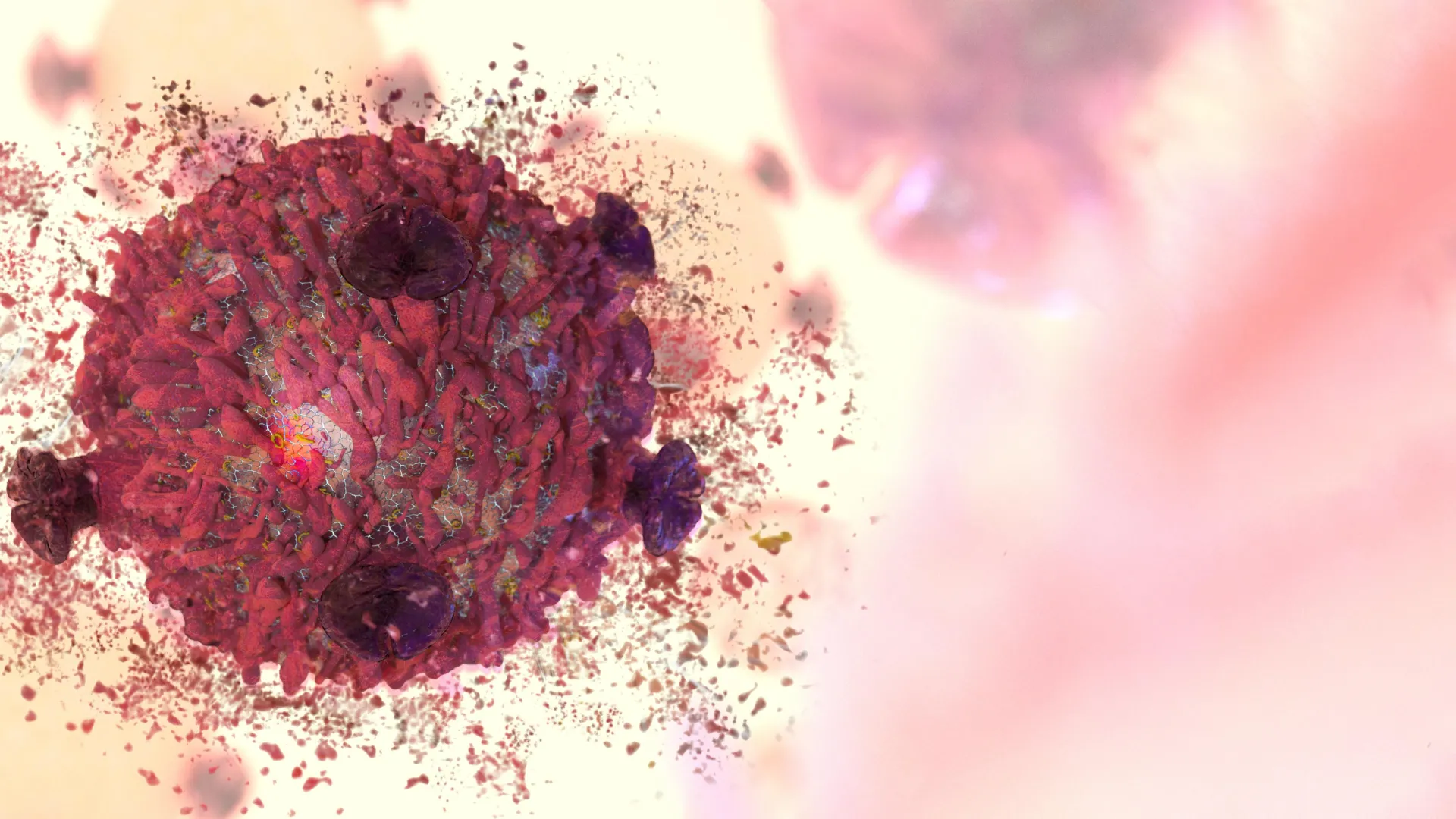
Revolutionary Nanodots Show Promise for Targeted Cancer Cell Destruction: A Deep Dive into RMIT’s Breakthrough
(Last Updated: October 26, 2023)
For decades, the holy grail of cancer treatment has been a therapy that selectively eradicates malignant cells while sparing healthy tissue. Now, researchers at RMIT University in Melbourne, Australia, are reporting a significant step towards that goal with the development of novel nanodots capable of inducing cancer cell death with remarkable selectivity. This groundbreaking research, detailed in recent publications and supported by the ARC Center of Excellence in Optical Microcombs (COMBS), offers a potentially gentler, more affordable, and ultimately more effective approach to battling cancer.
Understanding the Challenge: why Selective Cancer Treatment Matters
Conventional cancer treatments – chemotherapy and radiation – frequently enough operate as “blunt instruments,” damaging both cancerous and healthy cells. This leads to debilitating side effects and limits the dosage that can be administered,hindering treatment efficacy. The need for targeted therapies that exploit the unique vulnerabilities of cancer cells is paramount. This is where the RMIT team’s innovation shines.
Introducing Molybdenum Oxide Nanodots: A New Weapon in the Fight
The core of this breakthrough lies in the creation of incredibly small particles, known as nanodots, composed of molybdenum oxide – a compound derived from the relatively abundant and industrially-utilized metal, molybdenum. What sets thes nanodots apart isn’t just their size (measured in nanometers, a billionth of a meter), but their carefully engineered properties.
Professor Jian Zhen Ou and Dr. Baoyue Zhang, leading the research at RMIT’s School of Engineering, discovered that subtle alterations to the chemical structure of these nanodots trigger the release of reactive oxygen molecules (ROS). ROS are unstable oxygen forms that, at elevated levels, can disrupt vital cellular processes and initiate programmed cell death – a process known as apoptosis.
Why Cancer Cells are Particularly Vulnerable
The brilliance of this approach lies in its exploitation of a essential characteristic of cancer cells: they already exist under higher levels of stress than their healthy counterparts. As Dr.Zhang explains, “Cancer cells already live under higher stress than healthy ones.Our particles push that stress a little further – enough to trigger self-destruction in cancer cells, while healthy cells cope just fine.”
This inherent vulnerability means the nanodots don’t need to be “activated” by external stimuli like light, a requirement for many similar technologies. In laboratory tests,the nanodots demonstrated a striking three-fold increase in the rate of cervical cancer cell death compared to healthy cells over a 24-hour period.This selectivity is a crucial indicator of potential clinical success.
Beyond Cervical Cancer: A Broad Spectrum of Potential
While initial testing focused on cervical cancer cells, the underlying principle – inducing oxidative stress selectively in cancer cells – suggests potential applicability across a wide range of cancer types. The team’s research, a collaborative effort involving scientists from The Florey Institute of Neuroscience and Mental Health, Southeast University, Hong Kong Baptist University, and Xidian University in China, is actively exploring this possibility.
The Science Behind the Selectivity: Fine-tuning Electron Management
The team’s success isn’t accidental. It’s rooted in meticulous control over the nanodots’ composition. By adding minute amounts of hydrogen and ammonium, they precisely tuned the way the particles manage electrons. This adjustment dramatically increased the production of reactive oxygen molecules, effectively amplifying the oxidative stress within cancer cells.
Further demonstrating the nanodots’ potency, experiments showed they could break down a blue dye by 90% in just 20 minutes, even in complete darkness – highlighting their powerful chemical reactivity.
Advantages Over Existing Technologies: Cost, Safety, and Efficacy
The potential benefits of this technology extend beyond its selectivity. Compared to therapies relying on expensive and potentially toxic noble metals like gold or silver, molybdenum oxide is readily available and generally considered safe. This translates to potentially lower manufacturing costs and reduced toxicity concerns, making the treatment more accessible.
What’s Next? Moving Towards Clinical Application
While these initial findings are incredibly promising, the research is still in its early stages.The RMIT team is actively pursuing several key areas of development:
* Targeted Delivery Systems: developing methods to ensure the nanodots activate only within tumor environments,minimizing off-target effects.
* Controlled ROS Release: Precisely controlling the release of reactive oxygen species to further protect healthy tissue.
* Preclinical and Clinical Trials: Seeking partnerships with biotech and pharmaceutical companies to conduct rigorous testing in animal models and, ultimately, human clinical trials.
**Collaboration
Related reading