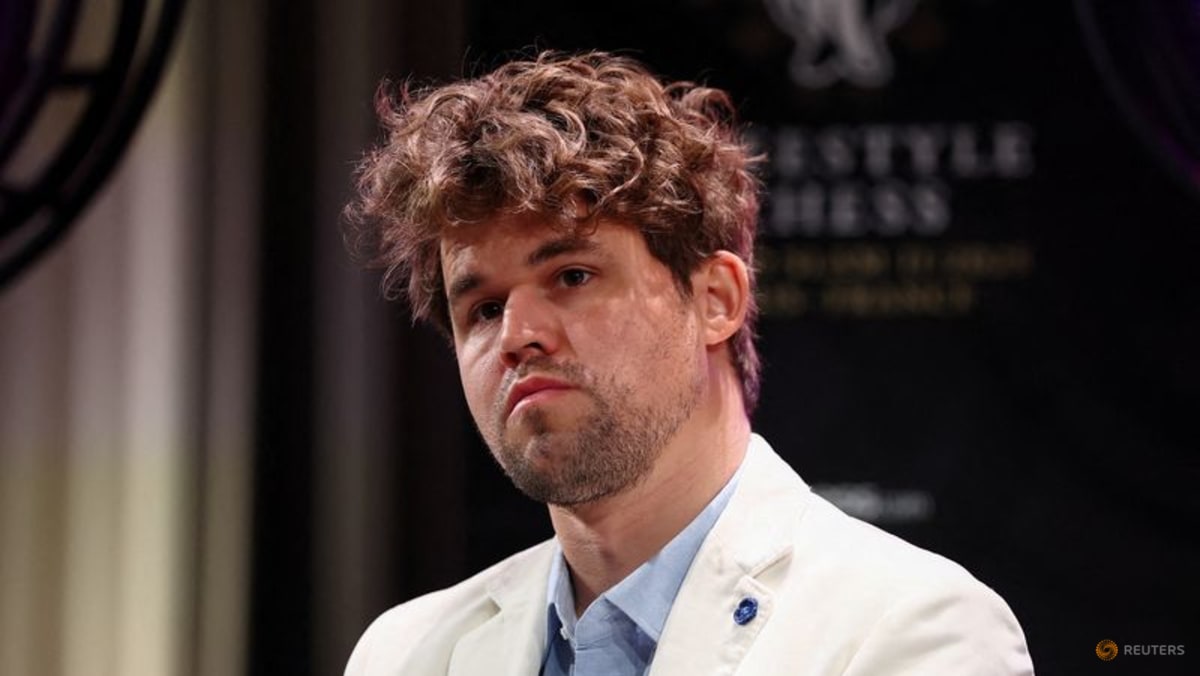
Magnus Carlsen‘s Sixth World Rapid Championship: A Deep Dive into Strategy, Resilience, and the Pursuit of Chess Excellence
Magnus Carlsen, the chess prodigy who dominated the world championship scene for over a decade, has onc again proven his mastery, securing his sixth World Rapid Championship title at the FIDE World Rapid and blitz Chess Championships in Qatar on December 28, 2025. this victory,his 19th world championship underscores not only his exceptional talent but also his remarkable ability to rebound from setbacks – a crucial element in the high-pressure world of competitive chess. This article will delve into the details of Carlsen’s triumph, analyzing the key moments, the psychological aspects of the tournament, and the broader context of his illustrious career. We’ll explore what this win signifies for the future of chess and the enduring legacy of a true champion.
The Tournament Landscape & Carlsen’s Performance
The 2025 FIDE World Rapid and Blitz Championships, held in Doha, Qatar, brought together the world’s elite grandmasters. The rapid format, with games lasting 10-15 minutes per player, demands a unique blend of tactical calculation and strategic intuition. Carlsen navigated this challenging landscape with characteristic precision, accumulating 10.5 points from 13 rounds. His closest competitor, Russia’s Vladislav Artemiev, finished a point behind, highlighting Carlsen’s consistent performance throughout the tournament.
Did You Know? Magnus Carlsen’s peak rating of 2882 (achieved in 2014) remains the highest ever recorded in chess history, a testament to his unparalleled skill.
Though, the path to victory wasn’t without its hurdles.A frustrating second day saw Carlsen draw with Maxime Vachier-Lagrave and, more surprisingly, lose to artemiev. This momentary lapse in form triggered a visible display of frustration, with Carlsen notably pushing away a camera as he left the venue. This incident,while unusual for the typically composed Carlsen,offers a engaging glimpse into the intense pressure faced by top-level athletes.
From Setback to Triumph: The Psychology of Resilience
Pro tip: In chess, as in life, acknowledging and learning from mistakes is paramount. Carlsen’s ability to compartmentalize his losses and refocus on the task at hand is a key component of his success.
Carlsen’s reaction to the losses against Vachier-Lagrave and Artemiev is especially insightful.He openly admitted the games felt “disconnected from reality” and ”wholly embarrassing.” This self-awareness, coupled with his ability to quickly recalibrate, is a hallmark of his mental fortitude. Recent research in sports psychology emphasizes the importance of “cognitive versatility” – the ability to adapt to changing circumstances and overcome adversity. A study published in the Journal of Applied Sport Psychology (November 2025) found that elite athletes consistently demonstrate higher levels of cognitive flexibility than their less prosperous counterparts.Carlsen’s post-tournament comments – “I am just glad that I managed to turn it around” – demonstrate this very quality.
This ability to bounce back is not merely innate talent; it’s a skill honed through years of rigorous training and self-analysis. Grandmasters routinely work with sports psychologists to develop strategies for managing pressure, maintaining focus, and overcoming psychological barriers. The modern chess landscape demands not only exceptional calculation skills but also a robust mental game.
The Meaning of Carlsen’s 19th World Championship
This latest victory adds another important chapter to Carlsen’s already legendary career. His 19th world championship title solidifies his position as one of the most dominant chess players of all time.But beyond the sheer number of titles,this win carries symbolic weight. Having relinquished his classical world championship title in 2023, Carlsen has focused his energies on rapid and blitz formats, demonstrating his versatility and continued passion for the game.
| Championship type | Number of Titles (as of Dec 28, 2025) |
|---|---|
| Classical world Championship | 5 |
| World Rapid Championship | 6 |
| World Blitz Championship | 8 |