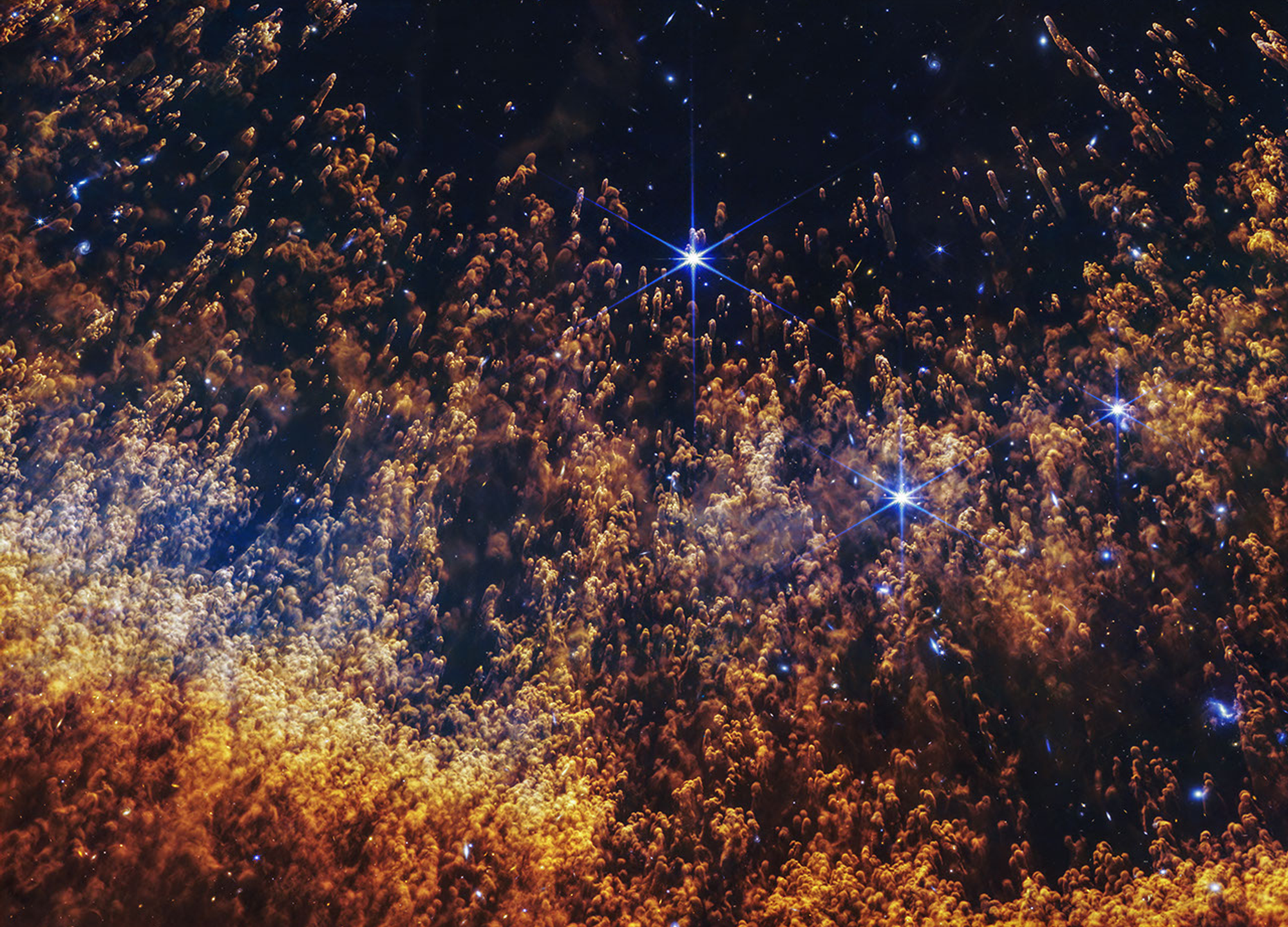
James Webb Telescope Reveals New Details of the Helix Nebula
The Helix Nebula, a visually striking planetary nebula approximately 655 light-years from Earth, has long captivated astronomers and stargazers alike. Often likened to the “Eye of Sauron” due to its distinctive appearance, this nebula is one of the closest and brightest of its kind, making it a frequent subject for astronomical photography.
Planetary nebulae, despite their name, are not related to planets. Thay are formed when stars similar in size to our Sun reach the end of their lives and expel their outer layers into space, creating a glowing shell of gas. This process, though temporary on a cosmic scale, results in a spectacular display of light and color.
For years, the Hubble Space Telescope has provided iconic images of the Helix Nebula. Now, the James Webb Space Telescope (JWST) has turned its advanced capabilities toward this celestial object, revealing unprecedented details. NASA recently released these new images, showcasing vibrant pillars of gas within the nebula’s expanding shell.These observations offer new insights into the nebula’s structure and the processes that shape its ethereal beauty. The JWST data promises to deepen our understanding of stellar evolution and the life cycle of stars like our own.