From Opposition to Agreement: Examining India’s Evolving Stance on the EU Free Trade Agreement
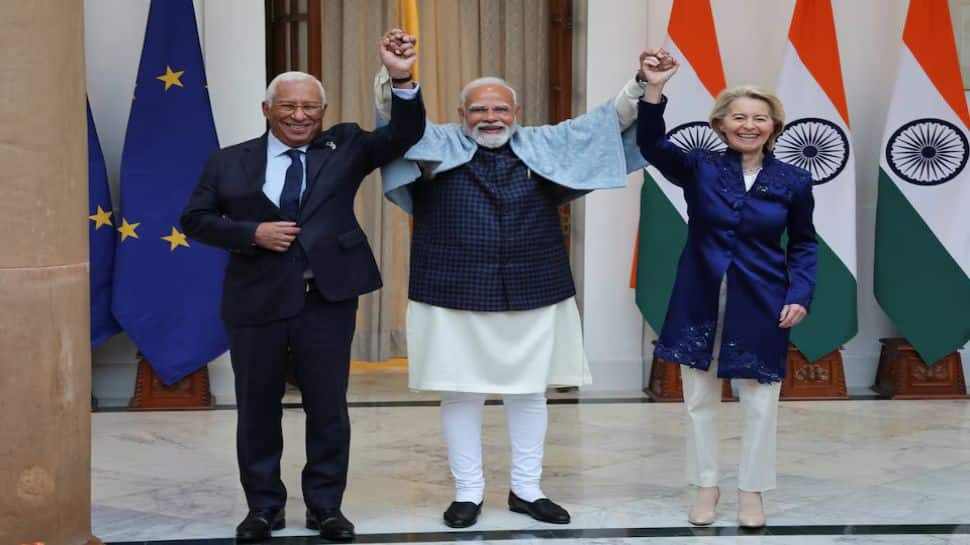
For decades, the possibility of a Free Trade Agreement (FTA) between India and the European Union (EU) has been a subject of intense debate and scrutiny. what began as a point of contention, notably during the United Progressive Alliance (UPA) government, has culminated in a “historic” agreement signed in 2026 by the current National Democratic Alliance (NDA) management. This shift reflects not only changing global dynamics but also a significant evolution in India’s approach to international trade negotiations.
In 2013, Dr. Murli Manohar Joshi, a prominent leader of the Bharatiya Janata Party (BJP), voiced strong opposition to the proposed FTA. His concerns centered on the potential detrimental effects on India’s economic sovereignty, its agricultural sector, small and medium-sized enterprises (SMEs), and the government’s ability to formulate autonomous policy. Dr. Joshi argued that the conditions being considered by the UPA government would “seriously jeopardise the interests of the Indian people wiht no obvious gains in trade or economic expansion.”
A key focus of Dr.Joshi’s critique was the vulnerability of indian farmers and agro-industries. He cautioned that the substantial subsidies provided to European farmers could create an uneven playing field, undermining the competitiveness of Indian agricultural products. He astutely observed that an FTA solely focused on tariff reductions would be insufficient, leaving Indian agriculture exposed to unfair competition.”An FTA which talks only about tariffs, and not about trade-distorting tricks such as subsidies and other incentives is detrimental to our agriculture,” he emphasized.
Beyond agriculture, Dr. Joshi also expressed concerns about the potential impact on India’s domestic industries. He warned that opening government procurement to EU companies could disadvantage SMEs, including those owned by women and marginalized communities, making it difficult for them to compete with larger, more technologically advanced European firms. He illustrated this point by questioning the fairness of small-town Indian vendors competing with established European giants for government contracts.
Furthermore, Dr.Joshi raised issues regarding intellectual property rights and pre-establishment investment rights, fearing they could limit India’s control over foreign investment and perhaps impact access to affordable medicines and other essential goods. he advocated for thorough parliamentary review of any treaty affecting national sovereignty, food security, and the federal structure of India.
however, the landscape has dramatically shifted in the intervening years. the FTA signed in 2026 represents a departure from the concerns raised in 2013. This new agreement incorporates lessons learned from past negotiations, featuring safeguards for India’s policy space, phased implementation schedules, and mechanisms to support domestic industries as they adjust to increased competition.
Unlike the 2013 draft,the current pact addresses a broader range of issues,including tariff reductions,regulatory cooperation,and services trade,while simultaneously providing India with the adaptability to prioritize its domestic needs. Key improvements include expanded sector coverage, phased liberalization, and specific protections for sensitive industries. Indian exporters are poised to benefit from improved market access for textiles, engineering goods, marine products, and leather.
The agreement also establishes a framework for investment, digital services, sustainability, and the harmonization of standards. This reflects India’s growing stature as a major trading partner and its increasing integration into global supply chains. The deal is designed to streamline trade, ensure fair practices, and empower Indian businesses to compete effectively on the international stage.
The context of this agreement is also crucial. Trade between India and the EU has surpassed $130 billion,and India’s enhanced role in international supply chains provides it with greater negotiating leverage. Both sides have successfully navigated complex issues such as automobile tariffs, alcohol trade regulations, and other trade barriers, resulting in an agreement that balances market access with the preservation of India’s regulatory autonomy.
While the FTA still requires ratification from both the EU member states and India, it signifies a marked shift from the risks highlighted by the BJP in 2013. This agreement demonstrates India’s ability to engage in open economic policies while safeguarding its national interests through careful negotiation and gradual reform. It serves as a valuable blueprint for future trade agreements,showcasing a mature approach to economic diplomacy where strategic flexibility and national priorities are paramount.
Keywords:
* Primary Keyword: India EU FTA
* Primary Topic: India-European Union Free Trade Agreement
* secondary Keywords: India EU trade, Free Trade Agreement, Dr.Murli Manohar Joshi, Indian agriculture, EU subsidies, trade policy, economic sovereignty, trade negotiations, India economy, UPA, NDA, trade agreement, international trade, economic diplomacy.