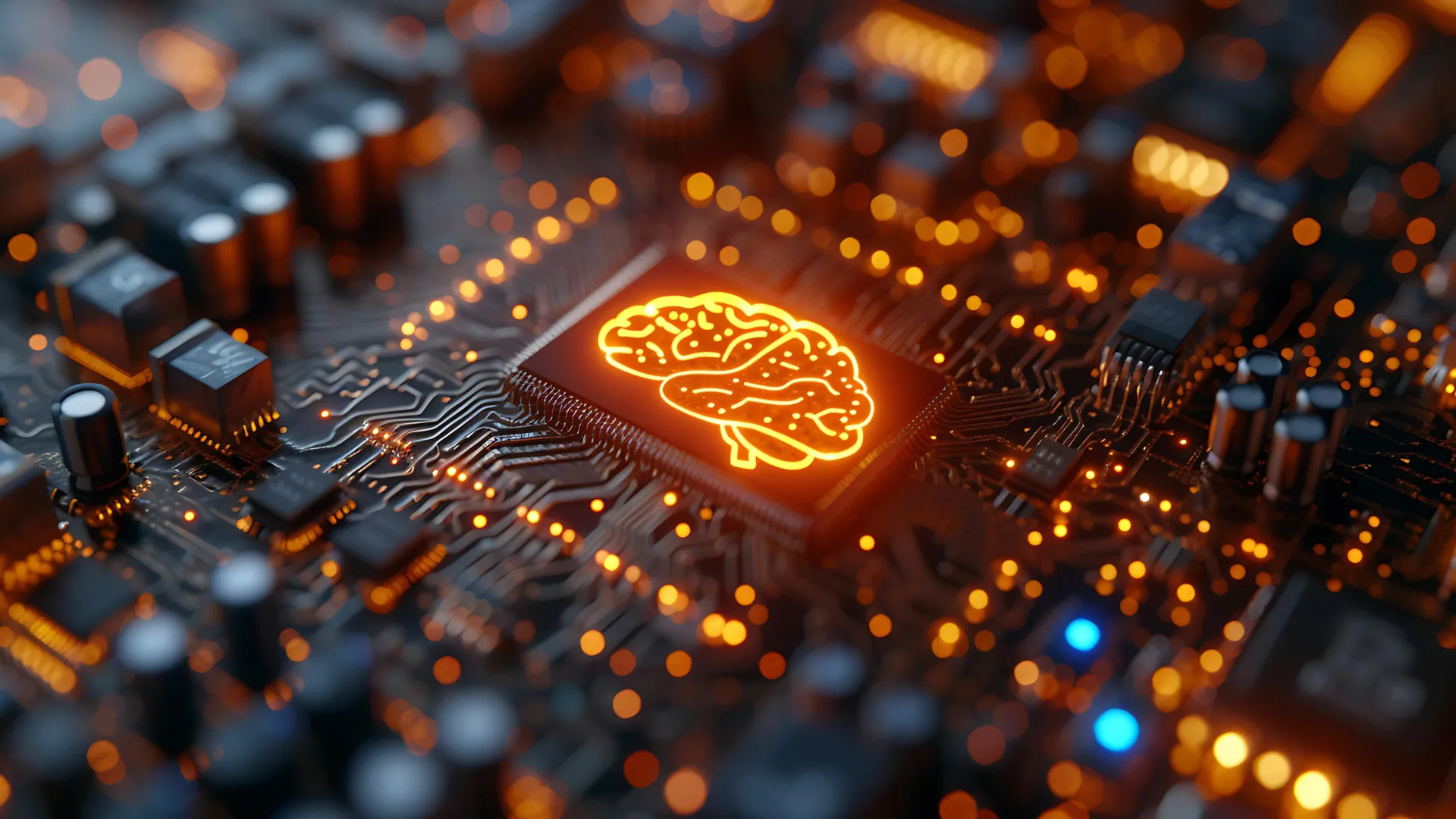
Brain-Inspired Computing: Neuromorphic Systems Tackle Complex Equations
Computers engineered to mimic the human brain are achieving a surprising feat: effectively solving complex mathematical equations that underpin numerous scientific and engineering disciplines. This breakthrough, detailed in a study published in Nature Machine Intelligence, signals a potential shift towards more energy-efficient and powerful computing solutions. Published February 14, 2026, this research marks a notable step towards the creation of neuromorphic supercomputers.
Solving Partial Differential Equations with Novel Hardware
Researchers at Sandia national Laboratories, Brad Theilman and Brad Aimone, developed a new algorithm enabling neuromorphic hardware to solve partial differential equations (PDEs). PDEs are basic to modeling a wide range of real-world phenomena, including fluid dynamics, electromagnetic fields, and structural mechanics. Traditionally, solving these equations demands immense computational resources.
Neuromorphic computers, however, offer a different approach. They process information in a manner similar to the human brain, potentially leading to considerable gains in efficiency.According to Theilman, current intelligent-like computational systems require ”ridiculous” amounts of resources compared to the brain’s efficiency.
From Pattern Recognition to complex Calculations
Historically, neuromorphic systems were primarily utilized for pattern recognition and accelerating artificial neural networks. The ability to handle mathematically rigorous problems like PDEs, traditionally the domain of large-scale supercomputers, was unexpected. However, Aimone and Theilman posit that the human brain is inherently adept at complex calculations, often without conscious awareness. As Aimone illustrates, even seemingly simple motor tasks, such as hitting a baseball, require “exascale-level problems that our brains are capable of doing very cheaply.”
Implications for National Security and Energy Efficiency
The implications of this research extend to national security, specifically for the National Nuclear Security Governance (NNSA). Supercomputers used in the nuclear weapons complex consume substantial electricity simulating nuclear systems and high-stakes scenarios. Neuromorphic computing offers the potential to drastically reduce energy consumption while maintaining or even improving computational performance.
By solving PDEs in a brain-inspired manner, these systems may allow for complex simulations to be performed with significantly less power than conventional supercomputers. Aimone emphasizes this counterintuitive outcome: “You can solve real physics problems with brain-like computation… That’s something you wouldn’t expect as people’s intuition goes the opposite way.”
Unlocking the brain’s Computational Secrets
Beyond advancements in engineering, this research delves into the fundamental question of how the brain performs computations. The algorithm developed by Theilman and Aimone closely mirrors the structure and behavior of cortical networks, suggesting a deep connection between neuroscience and applied mathematics.
The researchers propose that understanding the brain’s computational processes could have profound implications for diagnosing and treating neurological disorders like Alzheimer’s and Parkinson’s disease. Aimone suggests that “Diseases of the brain could be diseases of computation,” highlighting the need for a deeper understanding of the brain’s underlying computational mechanisms.
The Future of Supercomputing
While still an emerging field, neuromorphic computing represents a promising avenue for the next generation of supercomputers. the Sandia team envisions these brain-inspired systems becoming integral to their mission of protecting national security. They hope their findings will spur further collaboration between mathematicians, neuroscientists, and engineers to explore the full potential of this technology.
Theilman notes the ongoing exploration: “If we’ve already shown that we can import this relatively basic but fundamental applied math algorithm into neuromorphic — is there a corresponding neuromorphic formulation for even more advanced applied math techniques?”
The research team remains optimistic, acknowledging they’ve “a foot in the door for understanding the scientific questions, but also we have something that solves a real problem.”