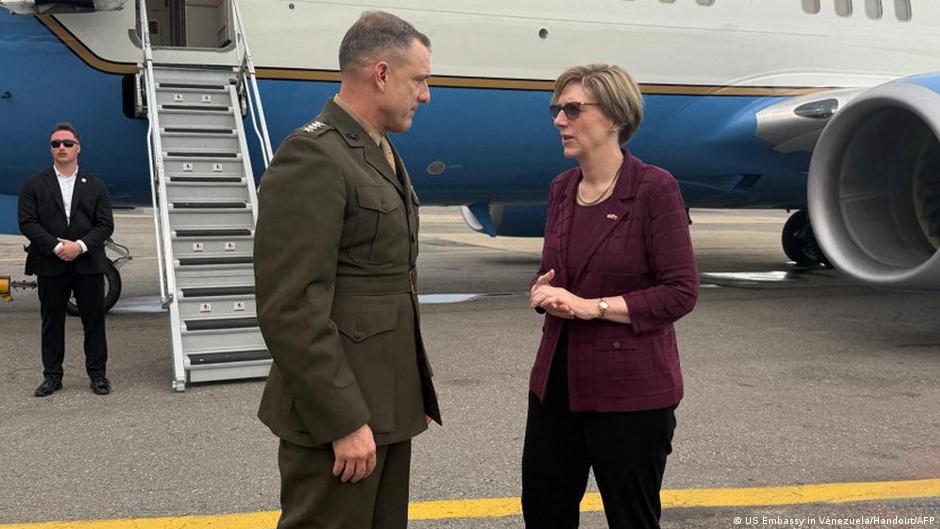
Caracas – A high-level delegation led by U.S. Southern Command (SOUTHCOM) Commander General Francis Donovan recently concluded a visit to Venezuela, signaling a notable shift in engagement between the two nations. The visit, which concluded on Wednesday, February 18, 2026, focused on evaluating security concerns and the implementation of a phased transition plan for Venezuela, initially conceived under the Trump administration. This engagement comes after a period of strained relations and follows the capture of former Venezuelan President Nicolás Maduro by U.S. Authorities last month, a development that has dramatically altered the political landscape in the South American country.
The meetings in Caracas involved key figures within the interim Venezuelan government led by Delcy Rodríguez, including Defense Minister Vladimir Padrino López and Interior Minister Diosdado Cabello. According to statements released by both the U.S. Embassy in Caracas and Venezuelan officials, discussions centered on bolstering cooperation in areas such as combating illicit drug trafficking, countering terrorism, and addressing regional migration challenges. This represents a significant development, given the historically adversarial relationship between Washington and Caracas, particularly during Maduro’s tenure. The visit underscores a potential recalibration of U.S. Policy towards Venezuela, prioritizing stability and security in the wake of recent political upheaval.
U.S. Focus on Transition Plan and Security Cooperation
General Donovan’s visit was specifically aimed at overseeing the application of the “three-phase plan” initially proposed by former President Donald Trump. While the specifics of this plan remain largely undisclosed, U.S. Officials have indicated it involves stabilization, economic recovery, and a transition towards a more democratic and U.S.-aligned Venezuela. According to reports, the plan was initiated following Maduro’s capture and the subsequent establishment of an interim government. The U.S. Embassy in Caracas confirmed that the meetings were productive, focusing on “the issue of security” and the plan’s implementation.
Acting U.S. Chargé d’Affaires in Venezuela, Laura Dogu, stated via social media platform X that the discussions “advanced the objective of a Venezuela aligned with the United States.” Donovan also met with members of the Joint Force service unit responsible for the security of U.S. Diplomatic facilities in Venezuela, as well as interagency partners. This demonstrates a heightened focus on protecting U.S. Interests and personnel within the country during this period of transition. The emphasis on security reflects concerns about potential instability and the demand to safeguard U.S. Assets and citizens.
Energy Cooperation and Diplomatic Re-engagement
The visit by General Donovan followed closely on the heels of a trip to Venezuela by U.S. Energy Secretary Chris Wright. During Wright’s visit, Rodríguez signed a long-term energy agreement with the United States, the details of which have not yet been publicly released. This agreement signals a growing interest in revitalizing Venezuela’s oil industry, which has suffered significant decline in recent years due to mismanagement and U.S. Sanctions. The potential for increased energy cooperation could be a key component of the broader transition plan, offering economic opportunities and fostering closer ties between the two countries.
The Rodríguez government has been actively seeking to restore diplomatic relations with the United States, which were severed in 2019. The recent high-level visits from both Wright and Donovan suggest a willingness on the part of the U.S. To engage with the interim government and explore avenues for cooperation. This shift in policy may be driven by a desire to stabilize the region, secure access to Venezuelan oil reserves, and counter the influence of other external actors in the country. The re-establishment of diplomatic ties would be a crucial step towards normalizing relations and fostering long-term stability.
The Capture of Maduro and the Shift in Power
The current situation in Venezuela is a direct result of the capture of Nicolás Maduro by U.S. Authorities on January 3, 2026. President Trump dismissed concerns raised by Delcy Rodríguez regarding Maduro’s capture, indicating a firm stance on the matter. The circumstances surrounding the capture, reportedly involving a military operation by U.S. Troops in Caracas and surrounding regions, remain sensitive and subject to ongoing scrutiny. Following Maduro’s arrest, Delcy Rodríguez assumed the role of interim president, tasked with overseeing the transition process.
The U.S. Government has framed the capture of Maduro as a necessary step towards restoring democracy and stability in Venezuela. However, the operation has also drawn criticism from some quarters, with concerns raised about the legality and potential consequences of foreign intervention in Venezuelan affairs. The interim government, now led by Rodríguez, faces the daunting task of rebuilding the country’s economy, restoring democratic institutions, and addressing the humanitarian crisis that has plagued Venezuela for years. The success of the transition plan will depend on a number of factors, including the level of cooperation from the U.S., the support of the Venezuelan people, and the ability to overcome the deep-seated political and economic challenges facing the nation.
The agreement reached between the U.S. And Venezuela to collaborate on combating drug trafficking, terrorism, and migration reflects a shared interest in addressing regional security threats. Venezuela’s strategic location makes it a key transit point for illicit drugs and a source of regional instability. Increased cooperation in these areas could support to stem the flow of drugs to the United States, disrupt terrorist networks, and manage the influx of migrants from neighboring countries. This collaboration also highlights the potential for Venezuela to play a constructive role in regional security efforts.
Looking Ahead: Challenges and Opportunities
The coming months will be critical as the U.S. And Venezuela work to implement the three-phase transition plan. The first phase, focused on stabilization and security, will require a concerted effort to address the immediate challenges facing the country, including restoring law and order, providing humanitarian assistance, and rebuilding critical infrastructure. The second phase, aimed at economic recovery, will necessitate significant investment and structural reforms to revitalize Venezuela’s oil industry and diversify the economy. The final phase, focused on a democratic transition, will require establishing free and fair elections, strengthening democratic institutions, and ensuring respect for human rights.
While the recent engagement between the U.S. And Venezuela represents a positive step, significant challenges remain. The political situation in Venezuela remains fragile, and there is a risk of renewed instability. The economic situation is dire, and the country faces a long and difficult road to recovery. The success of the transition plan will depend on the willingness of all stakeholders to compromise and work together towards a common goal. The international community will also have a role to play in supporting Venezuela’s transition to democracy and providing humanitarian assistance to its people.
The U.S. Southern Command’s commitment to the region, as stated in its recent social media posts, underscores the importance of a collaborative approach to security and prosperity in the Western Hemisphere. The ongoing dialogue between U.S. Officials and the interim Venezuelan government suggests a willingness to forge a new path forward, one based on mutual respect and shared interests. However, the path ahead will undoubtedly be fraught with challenges, and the success of this endeavor will require sustained commitment and careful diplomacy.
The next key development to watch will be the release of further details regarding the energy agreement signed between the U.S. And Venezuela. The specifics of this agreement will provide valuable insights into the scope of U.S. Investment in Venezuela’s oil industry and the potential for economic cooperation. Readers can stay informed about these developments by following official statements from the U.S. Embassy in Caracas and the Venezuelan government. We encourage you to share your thoughts and perspectives on this evolving situation in the comments below.
- Trump, Netanyahu, and the Saudi Nuclear Deal: A Relationship Under Strain
- Europe’s “Sixth Generation” Wildfires: Record Seasons and Economic Crisis
- Trump Unveils $22.5 Billion Plan to Overhaul Dulles Airport Facilities (time.news)
- Controversy at Bundaran HI: Alphard Incident and Security Guard Drama (newsdirectory3.com)