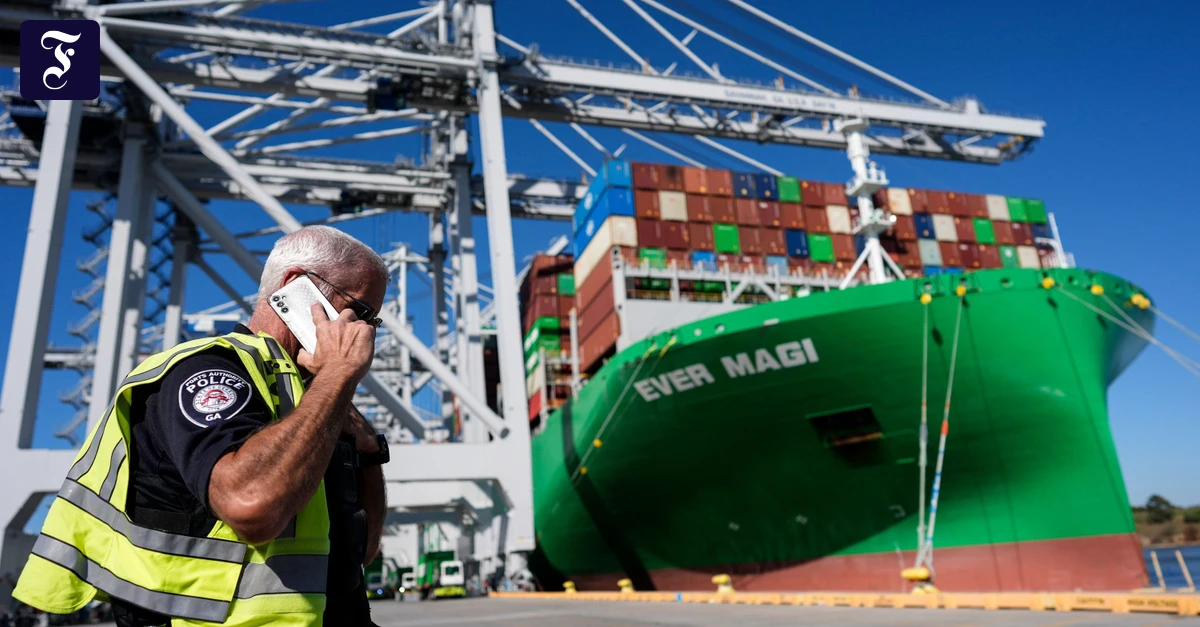
Savannah, Georgia – Despite predictions of soaring consumer prices, the anticipated surge in inflation following the implementation of former President Donald Trump’s tariffs has largely failed to materialize. New studies indicate that the costs associated with these tariffs have been almost entirely absorbed by American businesses and consumers, yet the inflation rate in the United States remains surprisingly low, mirroring levels not seen since 2021. This unexpected outcome has prompted the White House to claim that President Trump “defeated” President Biden’s inflation crisis through his “America First” agenda, a statement that economists are scrutinizing.
The resilience of the U.S. Economy in the face of these trade barriers presents a complex economic puzzle. While conventional economic theory suggests tariffs should increase prices for consumers, the reality has been far more nuanced. The question now is whether this trend will continue, and what factors are contributing to this divergence from expected outcomes. The situation has sparked debate among economists, with some suggesting that global economic conditions and supply chain adjustments have played a mitigating role, while others point to the ability of businesses to absorb costs through efficiency gains or reduced profit margins.
The initial imposition of tariffs in April 2025 raised concerns across the business landscape. John David Rainey, Chief Financial Officer of Walmart, described the speed and magnitude of the price increases as “unprecedented in history.” Consumer fears were reflected in University of Michigan surveys, where respondents predicted a 6.6% rise in prices over the following year. Similarly, businesses surveyed by the Federal Reserve Bank of Philadelphia anticipated a 4.7% increase. However, these predictions have not come to fruition.
The Cost of Tariffs: Who Really Pays?
A recent report by the nonpartisan Tax Foundation revealed the financial impact of Trump’s tariffs. The analysis found that these tariffs amounted to a tax increase of approximately $1,000 per U.S. Household in 2025, and are projected to cost each household another $1,300 in 2026. This represents the largest tax increase since 1993, yet the overall inflation rate has remained subdued.
The key to understanding this discrepancy lies in how the costs of the tariffs are distributed. According to studies, American consumers and businesses are bearing the brunt of these costs, rather than the countries targeted by the tariffs. This means that while the tariffs may be intended to protect domestic industries, they are effectively acting as a tax on American economic activity. The Frankfurter Allgemeine Zeitung reports that the costs are being absorbed, preventing the anticipated inflationary spike.
The fact that inflation has remained low despite the tariffs is a significant development. In December 2025, the annual inflation rate lingered at 2.7%, fluctuating between 2% and 3% throughout the year. This contrasts sharply with the earlier predictions of a substantial increase. Bill Adams, Chief Economist at Comerica Bank, described this as a “fine news story,” noting that the economic impact of the tariffs has been smaller than initially feared. The White House has seized on this outcome, attributing it to President Trump’s policies.
Global Economic Factors and Supply Chain Adjustments
While the tariffs are undoubtedly a factor, it’s crucial to consider the broader global economic context. The post-pandemic recovery has been uneven, with various geopolitical factors influencing supply chains, and demand. These disruptions have created both inflationary and deflationary pressures, making it difficult to isolate the specific impact of the tariffs.
businesses have demonstrated a degree of resilience in adapting to the new trade landscape. Some companies have absorbed the tariff costs by streamlining operations, improving efficiency, or accepting lower profit margins. Others have sought alternative suppliers or renegotiated contracts to mitigate the impact. These adjustments have helped to cushion the blow to consumers, preventing the widespread price increases that were initially anticipated.
The Long-Term Implications
The question remains whether this trend will persist. While the current situation suggests that the tariffs have not triggered a significant inflationary surge, the long-term implications are still uncertain. The continued imposition of tariffs could eventually lead to higher prices, particularly if businesses are unable to continue absorbing the costs. The tariffs could distort trade patterns, leading to inefficiencies and reduced economic growth.
The impact of the tariffs as well varies across different sectors of the economy. Industries that rely heavily on imported goods are particularly vulnerable to the increased costs. Conversely, domestic industries that compete with imported goods may benefit from the tariffs, although this benefit could be offset by higher input costs. The overall effect on the U.S. Economy is complex and depends on a variety of factors.
The Role of Consumer Behavior
Consumer behavior also plays a role in determining the impact of the tariffs. If consumers are willing to accept higher prices, businesses are more likely to pass on the tariff costs. However, if consumers are price-sensitive, businesses may be forced to absorb the costs themselves. The elasticity of demand for different goods and services will therefore influence the extent to which the tariffs translate into higher prices.
The current situation highlights the limitations of traditional economic models in predicting the impact of trade policies. The interaction between tariffs, global economic conditions, supply chain adjustments, and consumer behavior is complex and difficult to model accurately. This underscores the importance of ongoing monitoring and analysis to understand the evolving economic landscape.
Looking Ahead
As of February 2026, the U.S. Economy continues to navigate the complexities of the tariff landscape. The Biden administration has not yet signaled any major changes to the existing tariff policies, and the future trajectory of these policies remains uncertain. The next key economic data release, scheduled for March 15th, will provide further insights into the inflationary pressures facing the U.S. Economy. Economists will be closely watching this data to assess whether the current trend of low inflation is sustainable.
The ongoing debate over the impact of Trump’s tariffs underscores the importance of evidence-based policymaking. While the initial predictions of a significant inflationary surge have not materialized, the long-term consequences of these trade barriers remain to be seen. A thorough understanding of the economic forces at play is essential for formulating effective policies that promote sustainable economic growth and benefit American consumers and businesses.
Key Takeaways:
- Despite initial fears, Trump’s tariffs have not caused a significant increase in inflation.
- American consumers and businesses are largely bearing the cost of the tariffs.
- Global economic factors and supply chain adjustments have mitigated the inflationary impact.
- The long-term consequences of the tariffs remain uncertain.
What are your thoughts on the impact of these tariffs? Share your insights and perspectives in the comments below. Don’t forget to share this article with your network to spark further discussion.
Worth a look
- BYD Malaysia Launches 2026 Sealion 7 With New Dynamic Variant From RM163,800
- The Staggering Cost of Red Tape: How Excessive Regulation is Crippling the Economy
- Alex Jones Calls for Immediate Trump Impeachment (archyde.com)
- Trump Unveils $22.5 Billion Plan to Overhaul Dulles Airport Facilities (time.news)