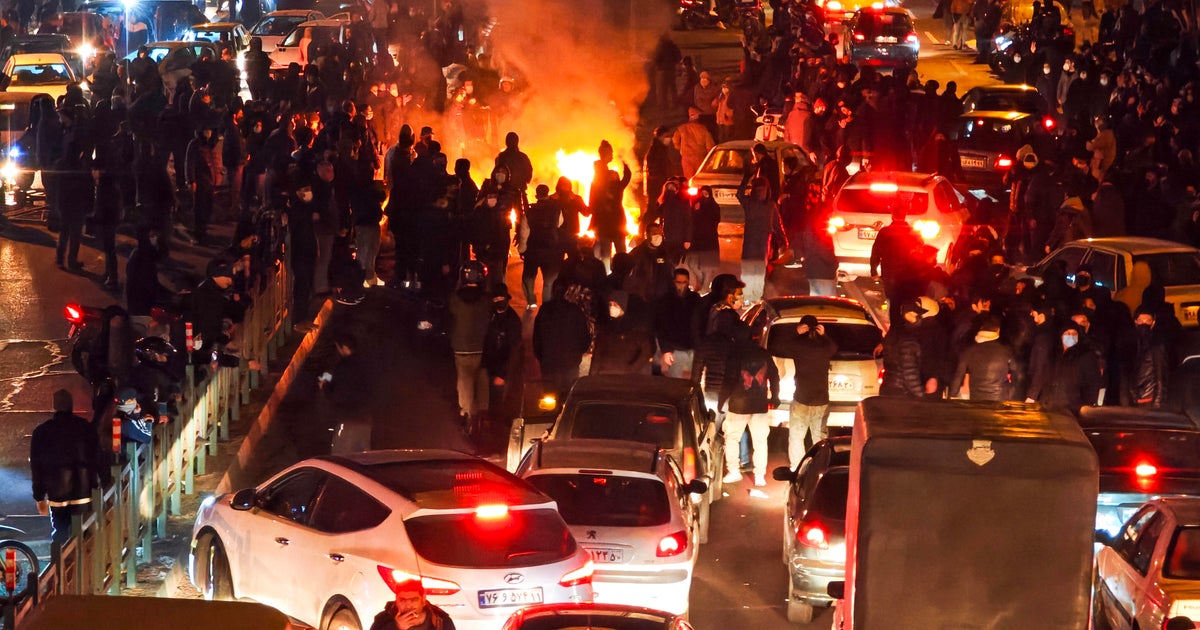
Washington D.C. – Former President Donald Trump made a startling claim Friday, alleging that 32,000 people were killed during the recent protests in Iran. This figure, significantly higher than previously reported estimates, was revealed during a press conference addressing the Supreme Court’s decision to strike down his sweeping tariffs. The announcement comes amidst heightened tensions between the United States and Iran and as U.S. Military forces continue to build up in the region.
The Supreme Court’s 6-3 ruling against Trump’s tariffs, enacted under the International Emergency Economic Powers Act (IEEPA), represents a major setback for the former president’s economic policies. Chief Justice John Roberts, writing for the majority, asserted that Trump’s invocation of a national emergency to justify the tariffs was a substantial overreach of congressional authority. The court found that the power to impose tariffs during peacetime rests solely with Congress, a principle the framers explicitly intended to uphold. This decision, as reported by the Associated Press, has significant implications for the global economy and the balance of power between the executive and legislative branches.
However, the focus of the press conference quickly shifted to the situation in Iran. Trump, without providing specific sources for the death toll, stated that the Iranian government brutally suppressed the protests. He characterized the Iranian people as distinct from their leaders, expressing sympathy for those who took to the streets to demonstrate. This statement echoes previous expressions of support for the Iranian people during the unrest, which began in January and were met with a forceful crackdown by Iranian security forces. The protests, sparked by economic grievances and political discontent, were among the largest seen in Iran since the 1979 revolution.
The Crackdown and Conflicting Reports on Casualties
The Iranian protests, initially focused on economic hardship, quickly evolved into broader calls for political change and an end to the country’s theocratic rule. The demonstrations spread across numerous cities, posing a significant challenge to the authority of the Islamic Republic. In response, the Iranian government implemented a severe crackdown, deploying security forces, restricting internet access, and arresting thousands of protesters. The internet blackout, implemented to stifle the flow of information, made it exceedingly difficult to independently verify reports of casualties and arrests.
Although Trump cited a figure of 32,000 deaths, this number sharply contrasts with previously reported estimates. Earlier reports from CBS News, citing two sources including one inside Iran, indicated that at least 12,000 people may have been killed, with some estimates reaching as high as 20,000. These figures were based on information gathered despite the ongoing internet restrictions and the challenges of accessing reliable data. The U.S.-based Human Rights Activists News Agency (HRANA) reported over 50,000 arrests related to the protests, highlighting the scale of the government’s response.
The discrepancy in reported death tolls underscores the difficulty of obtaining accurate information from Iran, particularly during periods of political unrest and government censorship. The lack of independent verification and the deliberate suppression of information by the Iranian authorities contribute to the uncertainty surrounding the true extent of the casualties. The events of January 8 and 9 are widely believed to have been the bloodiest days of the protests, but concrete details remain scarce.
Trump’s Threat of Military Action and Nuclear Concerns
Beyond the issue of casualties, Trump revealed that he had warned the Iranian government against conducting public executions, threatening military retaliation if such actions were carried out. He claimed that he told Iranian officials that any execution, even of a single person, would trigger an immediate U.S. Response. According to Trump, this warning successfully deterred the Iranian government from proceeding with the planned executions of 837 individuals. While this claim has not been independently verified, it reflects the escalating tensions between the two countries.
The threat of military action comes as the United States continues to pressure Iran over its nuclear program. Trump reiterated his demand for Iran to negotiate a “fair deal” regarding its nuclear activities, suggesting that military force remains an option if diplomatic efforts fail. U.S. Military forces have been increasing their presence in the region, with reports indicating a buildup of warships and aircraft, as reported by CBS News. This military posture is intended to signal U.S. Resolve and deter Iran from pursuing nuclear weapons.
The situation is further complicated by concerns over Iran’s ballistic missile program and its support for proxy groups in the Middle East. The United States has long accused Iran of destabilizing the region through its support for militant organizations and its pursuit of advanced weapons technology. These concerns, coupled with the ongoing dispute over the nuclear program, have fueled tensions and raised the risk of a potential conflict.
The Supreme Court Ruling and its Implications
The Supreme Court’s decision to invalidate Trump’s tariffs is a significant victory for Congress and a reaffirmation of its constitutional authority over trade policy. The ruling underscores the principle that the power to impose tariffs rests with the legislative branch, not the executive branch, except in cases explicitly authorized by Congress. This decision is likely to have a lasting impact on the relationship between the two branches of government and on the future of U.S. Trade policy.
The case centered on Trump’s use of IEEPA to impose tariffs on imported goods, arguing that a national emergency justified the action. However, the court rejected this argument, finding that the president had exceeded his authority and that the tariffs were not authorized by law. The ruling effectively limits the president’s ability to unilaterally impose tariffs based on claims of national emergency.
The decision also has broader implications for the “major questions doctrine,” which holds that Congress must speak clearly when authorizing an agency to exercise broad regulatory authority. The court’s application of this doctrine in the tariffs case suggests that it will be more closely scrutinizing executive actions that have significant economic or political consequences.
As the situation in Iran remains volatile and the implications of the Supreme Court’s ruling unfold, the international community will be closely watching developments. The potential for escalation remains high, and the need for diplomatic solutions is more urgent than ever. The coming days and weeks will be critical in determining the future of U.S.-Iran relations and the stability of the Middle East.
The White House has not yet released a detailed response to the Supreme Court ruling beyond the remarks made by the former president during the press conference. Further statements and policy adjustments are expected in the coming days. The State Department has also yet to comment on the specific allegations regarding the number of deaths in Iran.
Key Takeaways:
- Former President Trump alleged 32,000 deaths during Iranian protests, a figure higher than previous estimates.
- The Supreme Court struck down Trump’s tariffs, reaffirming Congress’s authority over trade policy.
- Tensions between the U.S. And Iran remain high, with the potential for military action.
- Accurate information regarding the situation in Iran is difficult to obtain due to government censorship and internet restrictions.
The situation in Iran continues to evolve, and further updates will be provided as they turn into available. We encourage readers to share their thoughts and perspectives in the comments section below.
- 한국 축구의 철학은 무엇입니까? 월드컵 우승 스페인이 던진 질문 – 주간조선
- Wildfires in France and Spain force more than 250,000 to flee as crews continue to battle untamed blazes
- Trump Insults Journalists During White House Correspondents’ Association Dinner (news-usa.today)
- Iran Claims Destruction of US Military Bases and Amazon Data Center in Middle East (archyde.com)