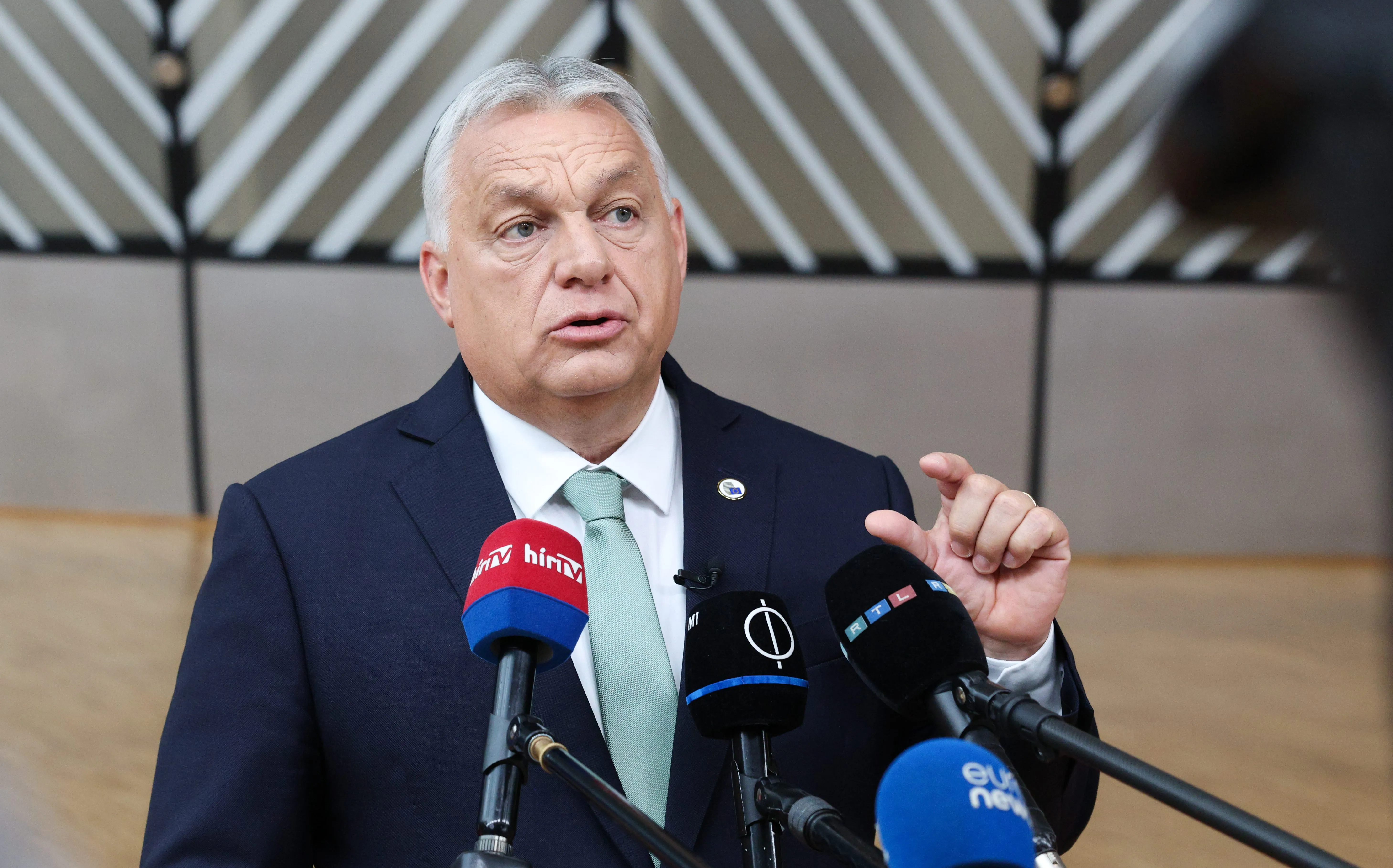
The fragile unity of the European Union has been starkly exposed as Hungary blocked a proposed €90 billion aid package for Ukraine, a move that extends beyond a simple financial dispute and reveals deeper fissures within the bloc. The veto, announced in Brussels this week, is predicated on the restoration of Russian oil transit through the Druzhba pipeline, a condition Budapest argues is essential for its energy security and upholds prior agreements. This action, though, underscores a growing divergence in European strategy as the war in Ukraine enters its fourth year, raising questions about the long-term commitment to supporting Kyiv and the continent’s reliance on Russian energy sources.
The proposed aid package was intended as a crucial lifeline for Ukraine, designed to stabilize its finances through 2027 and demonstrate unwavering Western support. However, the EU’s requirement for unanimous agreement among its 27 member states has proven to be a significant vulnerability, allowing a single nation to disrupt a carefully constructed plan. Hungary’s decision highlights the challenges of maintaining a cohesive front when national interests and energy dependencies clash with broader geopolitical objectives. The timing of the veto, just days before the fourth anniversary of Russia’s full-scale invasion on February 24th, adds a layer of symbolic weight to the situation, casting a shadow over efforts to project a united front against Russian aggression.
This isn’t an isolated incident. Analysts have previously warned that Western aid strategies, while intended to bolster Ukraine, may inadvertently prolong the conflict by creating dependencies and hindering diplomatic solutions. The current standoff over oil transit underscores the inextricable link between war financing and energy security in Central Europe, despite repeated assertions from Western leaders about reducing reliance on Russian energy. Hungary and Slovakia, in particular, remain heavily dependent on crude oil transported through Ukraine via the Druzhba pipeline, a vulnerability that has been exploited by the current crisis. When damage to the pipeline disrupted flows in January, Budapest responded by tapping into its strategic reserves, while simultaneously accusing Kyiv of using the disruption for political leverage, a claim echoed by Slovakian leadership.
Hungary’s Energy Security Concerns Drive the Veto
Hungarian Foreign Minister Péter Szijjártó has been vocal in defending his country’s position, stating that Hungary will not support the €90 billion loan unless oil transit through the Druzhba pipeline is resumed. According to Reuters, Szijjártó argued that blocking oil transit violates the EU-Ukraine Association Agreement and breaches commitments made to the European Union. Kyiv, however, maintains that the disruption was a direct result of damage to infrastructure caused by Russian attacks and rejects accusations of political manipulation. This dispute highlights the complex interplay of energy routes, geopolitical tensions, and national interests within Europe, complicating the EU’s efforts to present a unified response to the conflict in Ukraine.
The situation is further complicated by the fact that the loan’s approval is linked to broader financial arrangements, including potential support from the International Monetary Fund (IMF). A delay in the EU loan could jeopardize the IMF program, which is also contingent on Kyiv receiving the promised financial assistance. The Financial Times reported that the blockage comes at a particularly sensitive time, just before the anniversary of the invasion, underscoring the erosion of symbolic unity within the EU. Hungary has already begun to explore alternative oil supply routes and has released 250,000 tons of crude oil from its strategic reserves to mitigate the impact of the disruption, as reported by Reuters.
A Deeper Rift Within the EU
The Hungarian veto isn’t solely about energy security; it also reflects a broader political context. Hungary is gearing up for local elections in April, and Prime Minister Viktor Orbán’s Fidesz party is currently trailing in the polls to the Tisza Party led by Péter Magyar. Orbán has increasingly adopted anti-Ukraine rhetoric in the lead-up to the elections, blaming Kyiv for halting oil flows through the Druzhba pipeline. This stance aligns with a growing skepticism towards Brussels’ war posture within a regional bloc that is wary of the economic consequences of prolonged conflict. Slovakia, under Prime Minister Robert Fico, has also expressed concerns about the disruption of oil supplies and threatened retaliatory measures against Ukraine if the pipeline isn’t reopened.
The situation highlights a fundamental vulnerability within the EU: a reliance on unanimity for critical decisions. While this system is designed to ensure that all member states have a voice, it also allows a single nation to hold the entire bloc hostage to its own national interests. This is not the first time Hungary has challenged EU policy, and its actions raise questions about the long-term viability of a decision-making process that is so easily disrupted. The New York Times reported on February 20, 2026, that Hungary’s objection represents an “unexpected hurdle” to the EU’s efforts to provide financial assistance to Ukraine.
Implications for Ukraine and the EU
For Ukraine, the delay in receiving the €90 billion loan has significant financial implications. Kyiv is facing a growing fiscal strain as public spending increases and reconstruction efforts require substantial funding. Without the promised EU assistance, Ukraine’s economic stability is at risk, potentially hindering its ability to sustain its defense against Russia. The Guardian noted on February 21, 2026, that the loan was intended to provide a financial lifeline to Ukraine, stabilizing its budget through 2027.
For the EU, the episode exposes a deeper vulnerability: a strategy built on unanimity is inherently fragile. The bloc’s ability to project a united front is undermined when member states prioritize national interests over collective security. This situation underscores the necessitate for a reevaluation of the EU’s decision-making processes, potentially exploring alternative mechanisms that would reduce the risk of individual nations blocking critical policies. The incident also serves as a reminder that energy security remains a central concern for many European nations, and that reducing dependence on Russian energy is crucial for strengthening the bloc’s strategic autonomy.
The dispute over the Druzhba pipeline is a symptom of a larger problem: the complex and often conflicting interests within the EU. While the bloc has largely presented a united front in its support for Ukraine, the Hungarian veto demonstrates that cracks are beginning to appear in the facade of solidarity. The episode serves as a cautionary tale, highlighting the challenges of maintaining cohesion in a diverse and often divided union.
As the fourth anniversary of Russia’s full-scale invasion of Ukraine approaches, the EU faces a critical juncture. The Hungarian veto has thrown the future of the €90 billion aid package into doubt, raising questions about the bloc’s long-term commitment to supporting Kyiv. The coming weeks will be crucial in determining whether a compromise can be reached or whether the EU will be forced to confront a deeper crisis of unity. The next key development will be further negotiations between EU member states, scheduled to take place in Brussels next week, to attempt to resolve the impasse. Readers can stay updated on the situation through official EU press releases and reports from the European Council.
Key Takeaways:
- Hungary has blocked a €90 billion EU loan to Ukraine, demanding the resumption of Russian oil transit through the Druzhba pipeline.
- The veto highlights a growing divergence within the EU regarding energy security and support for Ukraine.
- The situation underscores the vulnerability of a decision-making process reliant on unanimous agreement.
- The delay in aid could have significant financial implications for Ukraine, potentially hindering its economic stability.
- The incident raises questions about the long-term viability of EU unity and the need for a reevaluation of its decision-making processes.