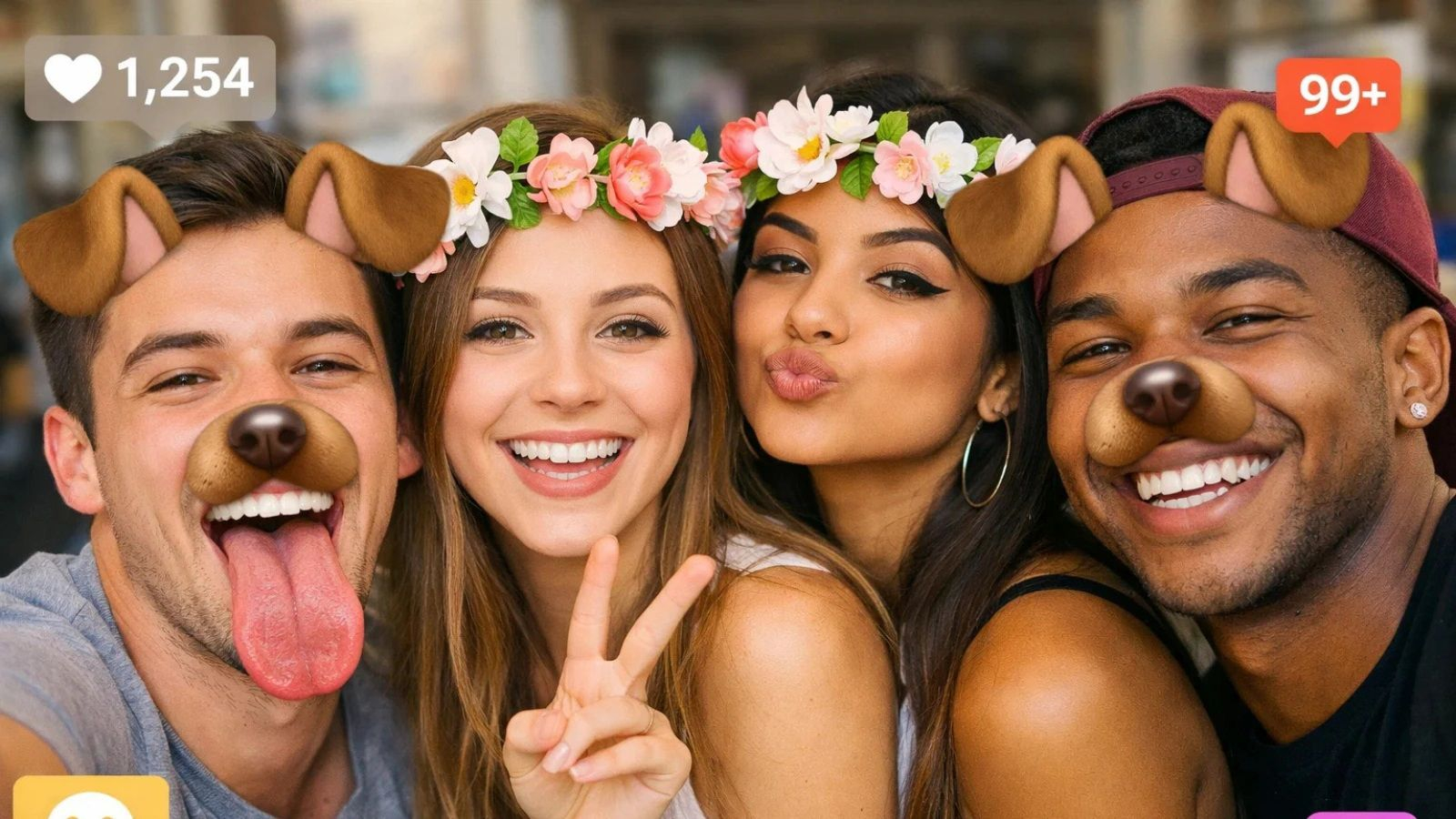
A wave of nostalgia for 2016 is sweeping across social media, particularly among Gen Z. From TikTok trends to Instagram aesthetics, the mid-2010s are experiencing a resurgence, fueled by a desire for a perceived simpler time. This isn’t merely a fashion revival; it’s a collective yearning for a sense of lightness and ease that feels increasingly distant in today’s complex world. The hashtag “2026 is the new 2016” began circulating on TikTok in late December 2025, prompting users to share throwback photos, videos, and memories from that era. This trend, often referred to as “Nostalgia 2016,” taps into a specific cultural moment and reflects a broader generational sentiment.
The aesthetic of this nostalgia is distinct: grainy photos, orange-tinted filters, screenshots of old chats, and fashion reminiscent of early 2016 – skinny jeans, Vans, bomber jackets, and chokers. Content creators are sharing videos set to popular songs from that period, including tracks by Desiigner, Rae Sremmurd, DRAM, Lil Yachty, Major Lazer, DJ Snake, Zara Larsson, and The Weeknd. But beneath the surface of this aesthetic lies a deeper emotional resonance. The appeal of 2016 isn’t simply about the style; it’s about a feeling – a sense of optimism and possibility before the anxieties of the present day took hold. This phenomenon highlights how powerfully music and visual culture can evoke specific periods and emotions, and how social media platforms facilitate the collective experience of nostalgia.
The year 2016 is increasingly remembered as a turning point, a period “before everything” – before the COVID-19 pandemic, before the rapid advancement and widespread adoption of generative artificial intelligence, and before social media became, for many, a full-time job. For those who were teenagers or in their early twenties in 2016 – now largely part of Gen Z – it represents a time of transition, a moment when the future felt open-ended and less burdened by uncertainty. This generation is now navigating the challenges of entering the workforce, facing economic instability, and grappling with global crises, making the perceived simplicity of 2016 particularly appealing. The rise of “Nostalgia 2016” is, in part, a response to these contemporary pressures.
The Evolution of Social Platforms and the Rise of “Imperfect” Aesthetics
The appeal of 2016 is also tied to the evolution of social media platforms themselves. In 2016, Instagram hadn’t yet been fully transformed by Reels and aggressive monetization strategies, and TikTok hadn’t yet achieved its current global dominance. The influencer culture was less structured, and content often felt more spontaneous and less curated for engagement. As reported by How-To Geek, Spotify began rolling out integrations with TikTok and Instagram in November 2024, allowing users to easily share music and podcasts across platforms, further connecting these digital spaces. This integration has likely contributed to the resurgence of older songs and trends as users rediscover and share music from the past.
“Nostalgia 2016” functions as an implicit critique of the present digital landscape. In an ecosystem governed by sophisticated algorithms and a constant demand for visibility, the “imperfect” aesthetics of ten years ago – overexposed photos, low-resolution images, and raw memes – have develop into synonymous with authenticity. These visual elements represent a rejection of the polished, hyper-curated content that dominates many social media feeds today. This desire for authenticity is a common theme in contemporary culture, as users increasingly seek genuine connection and self-expression online.
Nostalgia as a Collective Emotional Construct
Nostalgia is never a neutral phenomenon. It selectively highlights positive memories, often downplaying or omitting the political and social tensions of the time. It’s a constructed emotional experience that responds to a present perceived as accelerated and uncertain. From a cultural perspective, the cyclical nature of fashion and collective memory makes this trend predictable; the 1990s experienced a revival in the 2010s, and the Y2K aesthetic dominated the early 2020s. The ten-to-fifteen-year timeframe is often sufficient to transform a recent period into an object of desire. However, “Nostalgia 2016” is unique in that it’s the first major wave of nostalgia to develop in a fully digital world, where memories are readily archived, indexed, and remixable.
Unlike previous nostalgic trends that required digging through old photo albums or searching for CDs, revisiting 2016 simply involves scrolling through a social media feed. This ease of access amplifies the emotional impact of the trend, allowing users to instantly reconnect with past experiences and share them with others. Reducing this phenomenon to a mere trend, however, would be a disservice to its underlying significance. “Nostalgia 2016” taps into a generational need for stability and reassurance. In an era of constant transformation – technological, climatic, and geopolitical – looking back at a recent past becomes a form of emotional self-preservation.
Why 2016? The Search for a Simpler Time
While 2016 wasn’t necessarily “simpler” in reality, it symbolically represents a moment when the future felt less threatening and more linear. The anxieties surrounding climate change, political polarization, and the rapid development of artificial intelligence hadn’t yet reached their current levels. As long as uncertainty continues to dominate the present, that past is likely to remain a shared digital refuge. The year 2016 has become a symbol, and the core of the trend isn’t a desire to return to the past, but rather a longing to recapture a feeling of lightness and optimism.
The integration of Spotify with TikTok and Instagram, as highlighted in a Spotify newsroom announcement from November 7, 2024, further facilitates this nostalgic experience. Users can easily share songs from 2016 playlists, triggering memories and encouraging others to join the trend. This seamless sharing capability underscores the role of music in evoking nostalgia and connecting people through shared experiences. Instagram also introduced a feature in October 2024 allowing users to save songs directly to their Spotify playlists, as reported by Music Business Worldwide, making it even easier to rediscover and curate music from the past.
It’s likely that in ten years, someone will be creating nostalgic videos about 2026, complete with vintage filters, “old” music, and melancholic captions. This is as nostalgia doesn’t truly speak about the past; it speaks about how we feel in the present. The enduring power of nostalgia lies in its ability to provide comfort, connection, and a sense of continuity in a rapidly changing world.
Key Takeaways:
- “Nostalgia 2016” is a social media trend driven by Gen Z’s longing for a perceived simpler time.
- The aesthetic of the trend includes grainy photos, orange filters, and music from the mid-2010s.
- The rise of this nostalgia is linked to the evolution of social media platforms and a desire for authenticity.
- The trend reflects a broader generational need for stability and reassurance in an era of uncertainty.
- The seamless integration of music streaming services like Spotify with platforms like TikTok and Instagram amplifies the nostalgic experience.
As the trend continues to evolve, it will be interesting to observe how it shapes our understanding of the past and influences our perceptions of the present. The ongoing integration of social media and music streaming services will undoubtedly play a key role in shaping future waves of nostalgia. Maintain an eye on TikTok and Instagram for further developments and share your own memories of 2016 in the comments below.
Worth a look