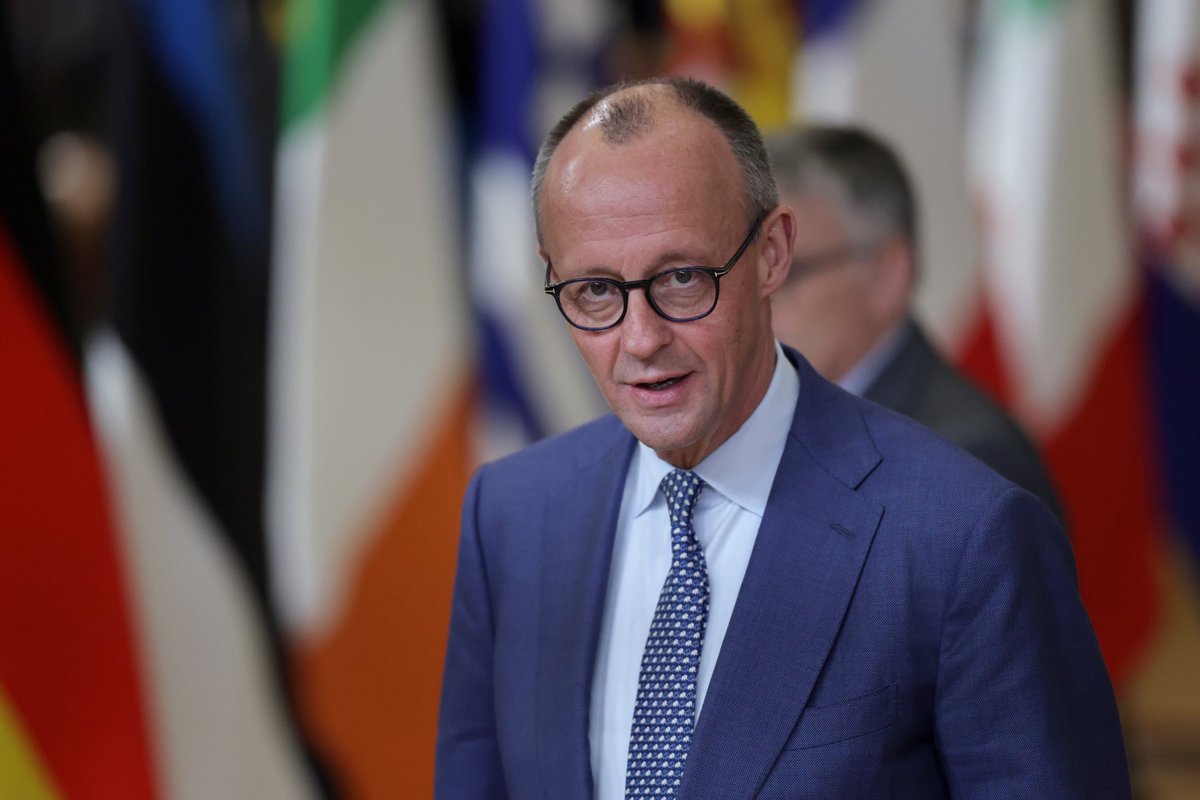
Berlin – Friedrich Merz, leader of the Christian Democratic Union (CDU), has reaffirmed his position as the frontrunner to potentially succeed Olaf Scholz as Germany’s next Chancellor, securing a resounding endorsement from party members at a recent CDU convention. The gathering, held as Germany prepares for a series of crucial state elections in March and September, underscored the CDU’s determination to regain its footing after a period of political turbulence. The outcome signals a potential shift in the German political landscape, with implications for both domestic policy and Germany’s role on the international stage.
Merz, addressing CDU delegates, emphasized his commitment to leading Germany forward and tackling long-standing challenges. He pledged to prioritize addressing issues that have been “paralyzing” the country, outlining a “Plan for Germany” aimed at revitalizing the nation’s economy and addressing concerns over migration. The CDU currently holds approximately 30% support among voters, placing it in a leading position ahead of the upcoming elections, though facing a rising challenge from the far-right Alternative for Germany (AfD) party. This support was evident in the enthusiastic reception Merz received, with delegates offering a standing ovation lasting over ten minutes.
Navigating a Fractured Political Landscape
The CDU’s convention took place against a backdrop of increasing political polarization in Germany. The AfD has been gaining traction in several eastern German states, even surpassing the CDU in recent polls in some regions. This rise has prompted concerns about the potential for far-right influence in German politics. Merz directly addressed this challenge, stating the CDU must “prevent the return of right-wing radicalism to the state chancellories of Germany.” He stressed the importance of focusing on policies that appeal to the political center, rejecting any collaboration with the AfD. “We will not allow these people from the so-called ‘Alternative for Germany’ to destroy our country,” Merz declared.
The CDU’s stance against cooperating with the AfD has been tested recently, drawing criticism from opponents who accuse Merz of breaking with tradition. A proposal put forward by the CDU in the Bundestag, Germany’s lower house of parliament, recently passed with the support of the AfD, sparking protests across the country. Demonstrations in Berlin drew up to 250,000 participants, according to organizers, highlighting the deep divisions within German society. Delfi reported that the controversial plan focused on restricting illegal migration.
Seeking Unity and Coalition Building
Despite the internal and external challenges, Merz called for greater unity within the CDU and a more constructive relationship with its coalition partners, particularly the Social Democratic Party (SPD), currently led by Chancellor Scholz. He criticized the existing dynamic, where proposals from one coalition partner are often “ritually rejected” by the other, and advocated for a more collaborative approach. Merz emphasized the require to set ambitious goals and inspire citizens to achieve their full potential. He also acknowledged the importance of maintaining strong transatlantic ties, a key element of German foreign policy.
The presence of former Chancellor Angela Merkel at the CDU convention was a significant moment, marking her first appearance at a party gathering since leaving office. Merkel, who served as Chancellor for 16 years, received a warm welcome from delegates, and Merz publicly praised her legacy, recognizing her role in fostering unity within the CDU. While their relationship was often described as tense – Merkel challenged Merz for the party leadership in 2002 – Merz acknowledged her enduring contribution to the party’s success. He described Merkel as embodying the spirit of unity that defined the CDU for many years.
International Reactions and Implications
The outcome of the CDU convention has been met with interest and, in some quarters, relief, internationally. In Lithuania, for example, officials expressed optimism that a Merz-led government would ensure continuity in Germany’s security policies. According to LRT, Lithuanian politicians believe a coalition between the CDU and the SPD would likely maintain support for Ukraine and strengthen security cooperation in the Baltic region. Giedrimas Jeglinskas, Chairman of the National Security and Defence Committee in Lithuania, noted the CDU and SPD share a similar stance on the presence of a German brigade in Lithuania and their commitment to transatlantic relations.
The potential for a CDU-SPD coalition is also seen as positive for continued support for Ukraine. Both parties have historically been strong proponents of providing aid to Ukraine, and officials in Lithuania expressed hope that this support would continue even as the United States engages in what they describe as “ambiguous” peace negotiations. The stability of German support is considered crucial, particularly given the ongoing conflict and the evolving geopolitical landscape.
Merz’s Path to the Chancellorship
Friedrich Merz’s journey to potentially becoming Chancellor has been marked by both success and setbacks. He previously served as the CDU’s parliamentary group leader in the early 2000s, but lost the party leadership contest to Angela Merkel in 2002. He later returned to the political forefront, becoming the CDU leader in 2022. His current position as the party’s frontrunner reflects a shift within the CDU towards a more conservative approach. He was officially elected as the recent German Federal Chancellor on February 20, 2026, receiving 325 votes in favor, 289 against, with 1 abstention and 3 invalid votes. Respublika.lt reported on his election.
Looking ahead, the upcoming state elections in March and September will be critical tests for the CDU. Success in these elections will strengthen Merz’s position and increase the likelihood of forming a governing coalition after the next federal election. The CDU faces a challenging political environment, with the AfD gaining ground and the SPD struggling to maintain its popularity. However, Merz’s ability to unite the party and articulate a clear vision for Germany’s future will be crucial in determining the outcome of these elections and his ultimate prospects of becoming Chancellor.
Key Takeaways
- Friedrich Merz has solidified his position as the leading candidate to become Germany’s next Chancellor.
- The CDU is focused on regaining political ground and addressing challenges posed by the rising AfD.
- International partners, such as Lithuania, view a potential CDU-SPD coalition favorably, particularly regarding security and support for Ukraine.
- Merz’s leadership emphasizes unity, a return to centrist policies, and a commitment to transatlantic relations.
The coming months will be pivotal for German politics. As the country prepares for key elections and navigates a complex geopolitical landscape, the CDU’s performance and Merz’s leadership will be closely watched both domestically and internationally. Further updates on the state elections and potential coalition negotiations will be reported as they become available.
What are your thoughts on the future of German politics? Share your comments below and join the conversation.
Keep reading