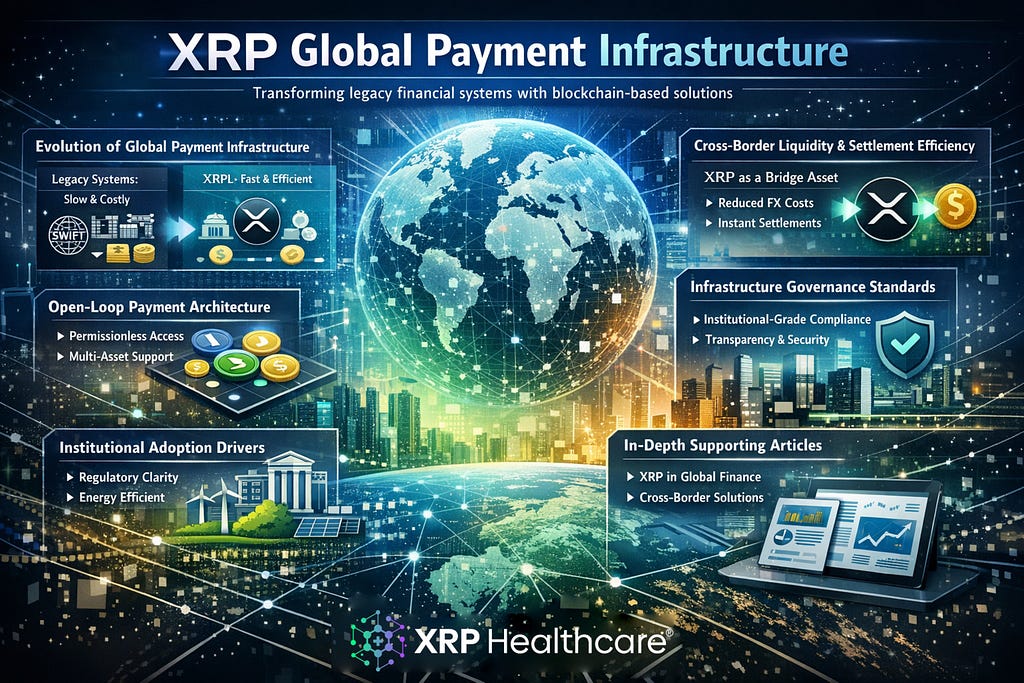
The world of global finance is undergoing a quiet revolution, driven by the need for faster, cheaper, and more transparent cross-border payments. For decades, international transactions have relied on infrastructure built for a different era – a system plagued by delays, high fees, and a lack of real-time visibility. Now, blockchain technology, and specifically the XRP Ledger (XRPL), is emerging as a potential solution, offering a glimpse into a future where value can move across borders with unprecedented speed and efficiency. This isn’t simply about streamlining existing processes; it’s about building a new financial infrastructure designed for the demands of a globalized, digital economy.
The inefficiencies of traditional cross-border payments are well-documented. Correspondent banking networks, while ubiquitous, are inherently slow and costly. Banks must pre-fund accounts in multiple jurisdictions to facilitate foreign exchange settlement, locking up significant capital and introducing multiple layers of fees. These delays can have a particularly detrimental impact on businesses operating in emerging markets, hindering working capital cycles and limiting growth potential. The XRP Ledger aims to address these challenges by providing a decentralized, low-cost, and near-instant settlement layer, potentially unlocking significant economic opportunities worldwide. According to a 2023 report by Juniper Research, the cost of cross-border payments is projected to reach $2.1 trillion by 2028, highlighting the urgent need for more efficient solutions. Juniper Research
Founded in 2012 by Jed McCaleb, Arthur Britto, and David Schwartz, the XRP Ledger was conceived as a more efficient alternative to traditional payment systems. Wikipedia Unlike many other blockchain platforms that rely on energy-intensive “proof-of-work” mining, the XRPL utilizes a unique consensus mechanism that doesn’t require mining, making it significantly more environmentally friendly and scalable. This consensus mechanism allows transactions to finalize within seconds, with transaction fees typically costing fractions of a penny. The XRPL’s core functionality extends beyond simple payments, supporting tokens representing various assets, including currencies, frequent flyer miles, and even mobile minutes. XRPL.org
How the XRP Ledger Works: A Decentralized Approach to Global Payments
At the heart of the XRPL’s efficiency lies its decentralized nature. Instead of relying on a central authority, the network is maintained by a distributed network of validators who independently verify transactions. This decentralized validation process, combined with the unique consensus protocol, ensures the integrity and security of the ledger. The XRPL achieves “deterministic finality,” meaning that once a transaction is confirmed, It’s irreversible. This contrasts with some other blockchain networks where transactions can be subject to potential reversals. The network’s high throughput capacity – capable of processing thousands of transactions per second – further contributes to its speed and scalability. XRPL.org
A key component of the XRPL ecosystem is XRP, the native cryptocurrency. While not essential for all transactions on the ledger, XRP serves as a “bridge currency” facilitating faster and cheaper cross-currency conversions. Traditionally, converting between two less common currencies often requires multiple intermediary steps, incurring significant fees and delays. XRP can act as an intermediary, allowing for near-instantaneous conversions without the need for pre-funded liquidity in correspondent accounts. This liquidity sourcing on demand is a fundamental advantage of the XRPL architecture. The XRP Ledger similarly supports decentralized exchange functionality, allowing users to directly trade different currencies without relying on centralized exchanges.
Open Financial Infrastructure vs. Traditional Banking Systems
The XRPL represents a shift from closed, centralized banking systems to open, decentralized financial infrastructure. Traditional banking operates within closed loops, limiting access and innovation. The XRPL, in contrast, allows institutions, fintech companies, and developers to build on top of a shared settlement layer, fostering greater interoperability and competition. This open infrastructure reduces reliance on intermediaries, potentially lowering costs and increasing efficiency. The ability to develop new cross-border corridors, particularly in emerging markets with fragmented banking infrastructure, is a significant benefit. This flexibility and scalability are crucial for supporting the growing demands of global commerce.
The concept of “open finance” is gaining traction globally, with regulators increasingly exploring ways to promote innovation while maintaining financial stability. The European Union’s Open Banking Directive, for example, aims to give consumers greater control over their financial data and promote competition among financial service providers. European Commission The XRPL aligns with this trend by providing a platform for building innovative financial applications and services.
The Potential Impact on Emerging Markets
Emerging markets often face significant challenges in accessing efficient and affordable cross-border payment solutions. Fragmented banking systems, high foreign exchange spreads, and slow clearing processes can hinder economic growth and limit financial inclusion. Blockchain-based payment infrastructure, like the XRPL, has the potential to address these challenges by reducing friction and lowering costs. Faster settlement times can improve cash flow management for businesses, reduce FX exposure, and increase capital velocity. In high-growth regions, these improvements can have a significant impact on economic participation and development.
For example, remittances – money sent home by migrant workers – are a crucial source of income for many developing countries. Traditional remittance services often charge high fees, reducing the amount of money that actually reaches recipients. The XRPL offers a potential solution by providing a low-cost and efficient alternative for sending and receiving remittances. The World Bank estimates that global remittance flows totaled $864 billion in 2023, highlighting the significant economic impact of these payments. World Bank
Governance and Future Developments
The governance of the XRP Ledger is evolving. While Ripple Labs initially played a significant role in the development and promotion of the XRPL, the network is now increasingly community-driven. Validators, who are responsible for verifying transactions and maintaining the integrity of the ledger, are independent entities. The XRPL Foundation, a non-profit organization, is dedicated to fostering the growth and development of the XRPL ecosystem. XRPL Foundation
Recent legal developments have also shaped the landscape surrounding XRP. In July 2023, a U.S. District Court ruled that XRP itself is not a security, although the sale of XRP could still be considered a security offering under certain circumstances. Wikipedia This ruling provided greater clarity for the XRP ecosystem and potentially paved the way for wider institutional adoption. The ongoing evolution of regulatory frameworks surrounding digital assets will undoubtedly play a crucial role in the future of the XRPL and other blockchain-based payment solutions.
Key Takeaways
- The XRP Ledger offers a potential solution to the inefficiencies of traditional cross-border payments through its decentralized, low-cost, and near-instant settlement capabilities.
- Its unique consensus mechanism and XRP bridge currency contribute to faster and cheaper transactions, particularly in cross-currency conversions.
- The XRPL’s open infrastructure fosters innovation and reduces reliance on centralized intermediaries, benefiting both businesses and consumers.
- Emerging markets stand to gain significantly from the increased efficiency and affordability of blockchain-based payment solutions.
- Ongoing legal and regulatory developments will shape the future of the XRPL and the broader digital asset landscape.
Looking ahead, the continued development and adoption of the XRP Ledger will depend on several factors, including regulatory clarity, technological advancements, and the willingness of financial institutions to embrace this new infrastructure. The next key milestone will be observing the impact of the July 2023 court ruling on institutional investment and adoption of XRP. Stay tuned to World Today Journal for further updates on this evolving story. We encourage you to share your thoughts and experiences with blockchain-based payment solutions in the comments below.