The Mounting Costs of Conflict: Four Years of War Deepen Economic Strain in Ukraine and Russia
Four years after Russia launched its full-scale invasion of Ukraine, the economic repercussions are reverberating far beyond the battlefield. While the human cost remains immeasurable, the financial burden of the conflict is staggering, with reconstruction costs for Ukraine now estimated at nearly $588 billion over the next decade. This figure, revealed in a joint report released February 23 by the World Bank Group, the European Commission, the United Nations, and the Ukrainian government, represents almost three times Ukraine’s projected nominal GDP for 2025. But the economic fallout isn’t confined to Ukraine; Russia’s economy is also feeling the strain of international sanctions and the demands of a protracted war, impacting the daily lives of citizens in both nations.
The escalating costs reflect nearly four years of sustained destruction, beginning in February 2022. Beyond the immediate humanitarian crisis, the war has severely disrupted economic activity, damaged critical infrastructure, and created long-term challenges for both countries. The impact extends to global markets, particularly in food and energy, highlighting the interconnectedness of the modern world. As the conflict continues, understanding the economic consequences for both Ukraine and Russia is crucial for assessing the long-term implications for regional and global stability.
Ukraine’s Reconstruction: A Herculean Task
The $588 billion price tag for Ukraine’s recovery and reconstruction is a sobering assessment of the devastation wrought by the war. Direct damage across the country has already exceeded $195 billion, a significant increase from earlier estimates. Homes, transport systems, and energy infrastructure have borne the brunt of the attacks, impacting millions of Ukrainians. Approximately 14 percent of all housing has been damaged or destroyed, leaving over three million households displaced or in need of repair. The World Bank estimates that the largest reconstruction needs are concentrated in the transport, energy, and housing sectors, requiring tens of billions of dollars in investment each.
The Ukrainian energy sector has been particularly vulnerable, with attacks intensifying over the past year. Damage to power generation facilities, transmission lines, and heating systems has increased significantly, raising concerns about electricity and heating supplies, especially as winter approaches. Transport networks, including railways and ports, have also suffered major destruction, further complicating economic recovery efforts. Restoring these vital systems is paramount to rebuilding Ukraine’s economy and ensuring the well-being of its citizens.
Economic Hardship in Russia: The Impact of Sanctions
While Ukraine faces the immediate challenge of rebuilding, Russia’s economy is grappling with the consequences of international sanctions imposed by the European Union and the United States. Whereas Russia’s economy grew by less than 1% last year, and is projected to grow by another 1% in 2026, the sanctions are demonstrably impacting various sectors. The full extent of the economic damage is difficult to assess, as Russia’s financial reporting practices are often opaque.
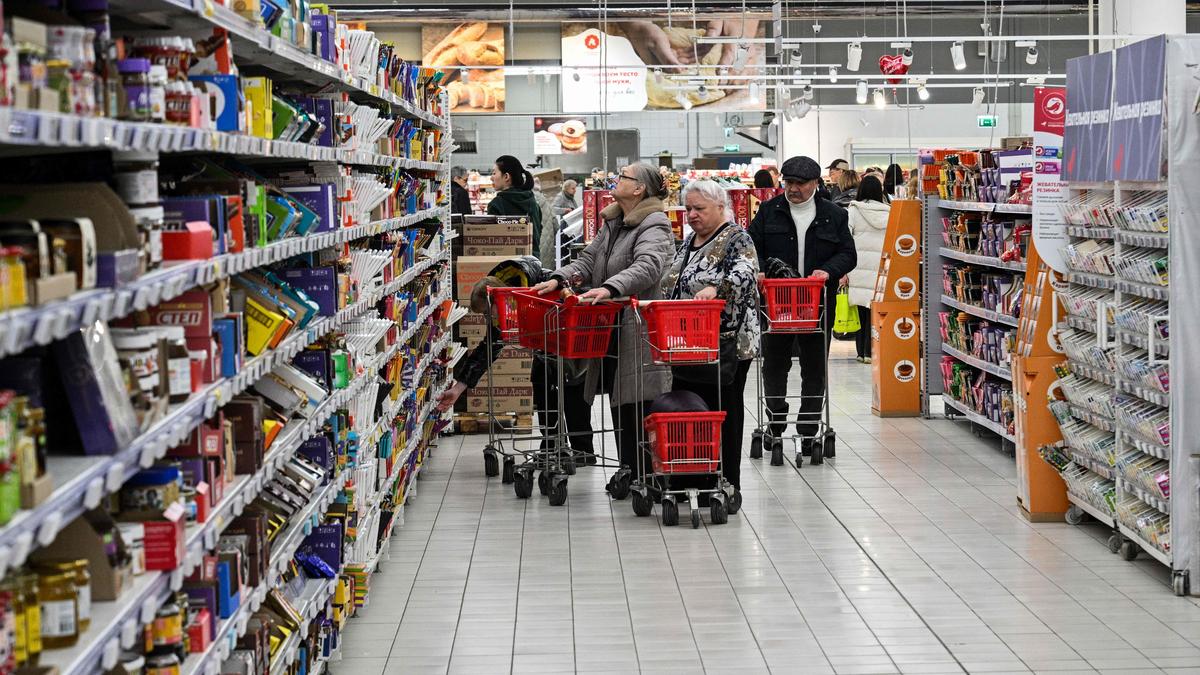
Consumer price inflation in Russia surged to 14% in 2022, moderating to 5% in 2023, but subsequently increasing to 9% in the last year, according to data presented in reports from Reuters. This inflationary pressure is eroding the purchasing power of Russian citizens, particularly for essential goods. The cost of basic food products has risen substantially, with a kilogram of bread increasing by 13% this month compared to the previous year and by over 50% compared to five years ago, as reported by the Food and Agriculture Organization’s Food Price Index.
The price of rice has also seen a significant increase, rising by 40% this month compared to 2022. These rising food prices disproportionately affect low-income households, exacerbating economic inequality within Russia. While the Russian government has implemented measures to mitigate the impact of sanctions, the long-term economic consequences remain uncertain.
Shifting Priorities: Defence Spending and Social Programs
In both Ukraine and Russia, the war has led to a significant reallocation of government resources towards defence spending, often at the expense of social programs. In Ukraine, defence spending consistently accounted for more than half of the country’s total expenditure since 2022. Expenditure on education, healthcare, and social protection has been drastically reduced, declining by more than half compared to 2021 levels. This shift in priorities poses a long-term threat to Ukraine’s human capital development and social welfare system.
Russia has also significantly increased its defence spending, accounting for almost 30% of the total expenditure. While social spending has not decreased as drastically as in Ukraine, a research paper published by the Stockholm International Peace Research Institute (SIPRI) notes that Russia’s military spending is sometimes categorized under other budget headings, such as social support, making it difficult to accurately assess the true extent of the reallocation. This lack of transparency raises concerns about the long-term sustainability of Russia’s social programs.
The Human Cost: A Devastating Toll
Beyond the economic consequences, the war has exacted a devastating human toll. The Centre for Strategic and International Studies estimates that 1.2 million people have been killed, wounded, or are missing in Russia between February 2022 and December 2025. The corresponding figure for Ukraine is estimated to be between 500,000 and 600,000. These numbers represent a profound loss of life and a lasting trauma for both nations. Millions more have been displaced from their homes, creating a humanitarian crisis that requires sustained international support.
The long-term psychological and social consequences of the war will be felt for generations to come. Addressing the needs of those affected by the conflict, including providing mental health support and facilitating reconciliation, will be a critical challenge in the years ahead. The scale of the human suffering underscores the urgent need for a peaceful resolution to the conflict.
Looking Ahead: Continued Uncertainty
The economic outlook for both Ukraine and Russia remains highly uncertain. The duration and intensity of the conflict will be key determinants of the long-term economic consequences. Ukraine’s ability to attract international investment and implement effective reconstruction policies will be crucial for its recovery. Russia’s ability to adapt to sanctions and diversify its economy will be essential for mitigating the impact of the war. The World Bank and other international organizations will continue to monitor the situation and provide assistance to both countries.
The next major assessment of Ukraine’s reconstruction needs is expected from the World Bank in late 2026, providing an updated estimate of the financial requirements and outlining progress made in the recovery process. Continued international cooperation and a commitment to long-term support will be essential for helping Ukraine rebuild and restore its economy.
What are your thoughts on the long-term economic impact of the Russia-Ukraine war? Share your perspectives in the comments below, and please share this article with your network to raise awareness about this critical issue.
Related reading