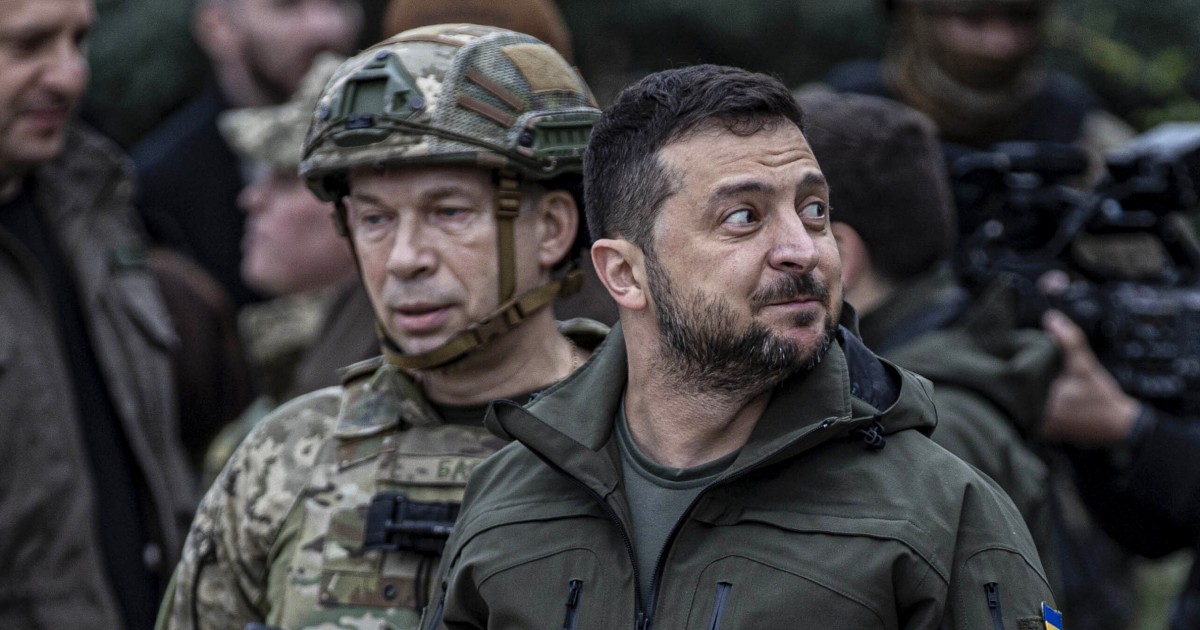
Ukrainian President Volodymyr Zelenskyy has officially replaced his commander-in-chief, Colonel-General Oleksandr Syrskyi, following a period of intense public pressure and significant internal friction regarding the nation’s military strategy. The leadership transition, confirmed by the Presidential Office, marks a critical shift in the management of Ukraine’s defense operations as the country continues to navigate the complexities of its ongoing conflict with Russia.
The decision to remove Syrskyi comes after months of mounting public dissatisfaction and visible street protests in Kyiv and other major cities, where citizens demanded accountability for the military’s current trajectory. While the presidential administration has characterized the move as a necessary step for “strategic renewal,” the development highlights the widening gap between the military command and the civilian population, who have grown increasingly vocal about the exhaustion of troops and the lack of clear, actionable goals on the front lines.
Strategic Realignment Amid Public Pressure
The dismissal of Oleksandr Syrskyi follows a period of intense scrutiny over his command style and the perceived lack of progress in recent counter-offensive efforts. According to reports from the Kyiv Post, public frustration reached a boiling point as families of mobilized soldiers expressed concerns over the absence of rotation schedules and the high intensity of combat roles. The government’s move to reshuffle the leadership reflects an attempt to address these grievances and restore morale within the ranks and among the broader public.
Zelenskyy’s office issued a formal statement on the change, emphasizing that the military must adapt to the “new realities” of the battlefield. This transition is not merely a change in personnel; it signifies a potential shift in how Ukraine approaches its defensive posture. Military analysts suggest that the incoming leadership will face the immediate challenge of reconciling the need for sustainable troop levels with the persistent demand for territorial defense, a balance that has proven difficult to achieve under the current mobilization laws, as detailed in the Verkhovna Rada’s legislative updates.
The Impact of Military Leadership Changes
The removal of a top commander in the midst of a high-stakes conflict carries significant political and operational weight. Syrskyi, who had been in the role since February 2024, faced criticism from both soldiers and civil society groups regarding the efficiency of command structures. The Reuters news agency reported that the decision was finalized following a series of closed-door meetings between the president and his security council, where the consensus focused on the need for a more dynamic approach to logistics and tactical coordination.
For the average Ukrainian, the change represents a hope for a more transparent military administration. However, experts warn that leadership changes alone cannot solve the structural issues inherent in a protracted war of attrition. The focus now turns to the successor, who must immediately address the logistical bottlenecks that have hindered the delivery of aid and the management of reserves. Transparency regarding the military’s needs remains a key demand from the public, as tracked by monitors at the Ukrinform news service.
What Happens Next on the Front Lines
The immediate aftermath of this leadership change will be measured by the stability of the front lines and the speed at which the new commander can integrate into the existing chain of command. The Presidential Office has indicated that further briefings will be provided to the public and international partners regarding the updated military doctrine. These updates are expected to be communicated through official channels to maintain alignment with international military aid providers.
While the government shifts its focus to internal reorganization, the broader geopolitical context remains unchanged. The challenge remains to maintain international support while managing domestic expectations. The next major checkpoint for the administration will be the upcoming parliamentary review of the current mobilization framework, which is scheduled for the next legislative session. Observers are encouraged to follow official government announcements and provide feedback through established civic platforms as the administration works to stabilize its military leadership.
We invite our readers to share their perspectives on these developments in the comments section below. As this story continues to unfold, our editorial team will provide ongoing coverage of the implications for Ukraine’s national security and regional stability.
Related reading