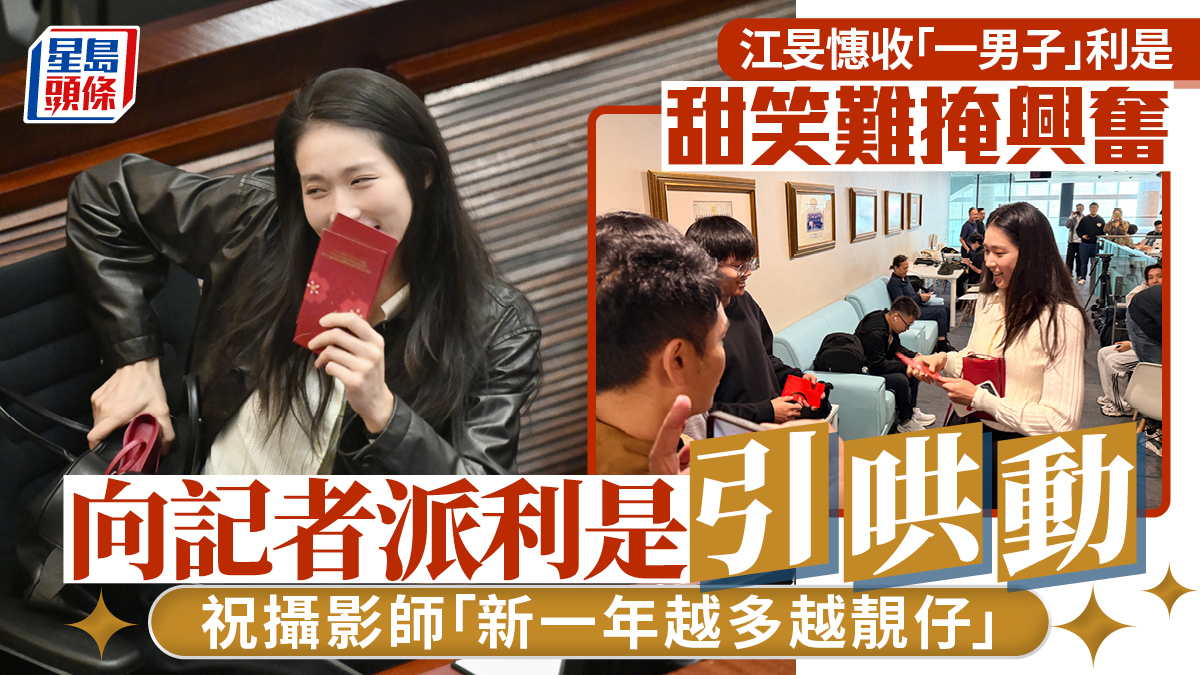
Hong Kong lawmaker Junie Ho received a red envelope, or *lai see*, from a fellow legislator during Lunar New Year celebrations, prompting a cheerful reaction. Ho then proactively distributed red envelopes to reporters, requiring three trips to ensure everyone received one, according to reports from multiple Hong Kong news outlets.
The incident occurred on February 25, 2026, the tenth day of the Lunar New Year, a traditional time for exchanging greetings and red envelopes containing money. The Legislative Council building was filled with well wishes as legislators celebrated, with Ho, representing the tourism sector, appearing particularly delighted by the gesture from her colleague, Wu Kin-ho, of the accountancy functional constituency. Sing Tao Daily reported that Ho smiled broadly upon receiving the red envelope from Wu.
Initial Distribution and Subsequent Trips
Following the exchange with Wu Kin-ho, Ho took the initiative to distribute red envelopes to the assembled journalists. However, she initially underestimated the number of reporters present. After distributing approximately ten red envelopes, she announced her require to return to her office to gather more, stating, “Sorry, I need to head back and prepare some more.” Star Headline detailed the three trips Ho made to ensure all reporters received a red envelope.
She promptly returned to the Legislative Council chamber to prepare additional red envelopes, only to find that she still hadn’t brought enough. This necessitated a second trip back to her office. On her third attempt, Ho successfully distributed red envelopes to all the reporters present, ensuring “everyone had a share.” The process drew attention and amusement from those present, with Ho too extending Lunar New Year greetings to the photographers, wishing them “more and more handsome looks in the new year,” which elicited laughter.
Context of the Red Envelope Tradition
The exchange of red envelopes, known as *hongbao* in Mandarin and *lai see* in Cantonese, is a deeply ingrained tradition during Lunar New Year in Hong Kong and other parts of Asia. Red envelopes typically contain money and are given to children, unmarried adults, and employees as a symbol of good luck, and prosperity. The act of giving and receiving red envelopes is believed to ward off evil spirits and bring blessings for the year ahead. The amount of money enclosed is often an even number, as odd numbers are associated with funerals. A discussion on Lihkg, a Hong Kong online forum, highlighted the event and the tradition surrounding it.
Legislative Council Meeting and Budget Announcement
The red envelope exchange took place before a meeting of the Legislative Council Finance Committee, where Financial Secretary Chan Mo-po presented the new budget proposal. Legislators exchanged greetings before the meeting commenced, contributing to the festive atmosphere. Ho, being one of the few unmarried legislators in the council, received the red envelope from Wu Kin-ho, her seatmate, in a gesture of goodwill and celebration.
The Financial Secretary’s presentation of the budget is a significant event in Hong Kong’s political calendar, outlining the government’s financial plans for the coming year. The budget typically includes measures related to taxation, social welfare, and infrastructure development. The Finance Committee plays a crucial role in scrutinizing the budget proposal and approving its implementation.
Ho’s Proactive Engagement with the Press
Ho’s decision to proactively distribute red envelopes to reporters demonstrates a gesture of goodwill and a desire to foster positive relationships with the media. This action, even as seemingly small, can contribute to a more collaborative environment between legislators and the press, facilitating the dissemination of information and promoting transparency. Her repeated trips to replenish her supply of red envelopes underscored her commitment to ensuring that all members of the press were included in the Lunar New Year celebrations.
The incident also highlights the cultural significance of the Lunar New Year in Hong Kong and the importance of traditions like the exchange of red envelopes. These traditions serve as a reminder of the values of community, generosity, and good fortune, fostering a sense of unity and optimism during the festive season.
The event occurred amidst ongoing political discussions in Hong Kong, including debates over electoral reform and the balance of power between the executive and legislative branches. The Legislative Council has been at the center of these debates, with legislators representing a diverse range of political views. Ho’s gesture, while not directly related to these political issues, provided a moment of levity and goodwill within the often-contentious political landscape.
The Hong Kong Legislative Council is composed of elected representatives from various functional constituencies and geographical districts. The council plays a vital role in enacting laws, scrutinizing government policies, and representing the interests of the Hong Kong people. The composition of the council has evolved over time, with changes to the electoral system and the representation of different sectors of society.
As of February 26, 2026, no further details have emerged regarding the specific amount of money contained within the red envelopes exchanged. The focus remains on the gesture itself and the positive atmosphere it created during the Lunar New Year celebrations. The Finance Committee is expected to continue its deliberations on the budget proposal in the coming weeks, with further updates to be provided as they become available.
The next scheduled meeting of the Legislative Council Finance Committee is slated for March 5, 2026, where further discussion on the proposed budget is expected. Readers can find more information about the budget proposal and the work of the Legislative Council on the official Hong Kong government website: https://www.gov.hk/en/. We encourage readers to share their thoughts on this story and the Lunar New Year traditions in the comments below.
Keep reading