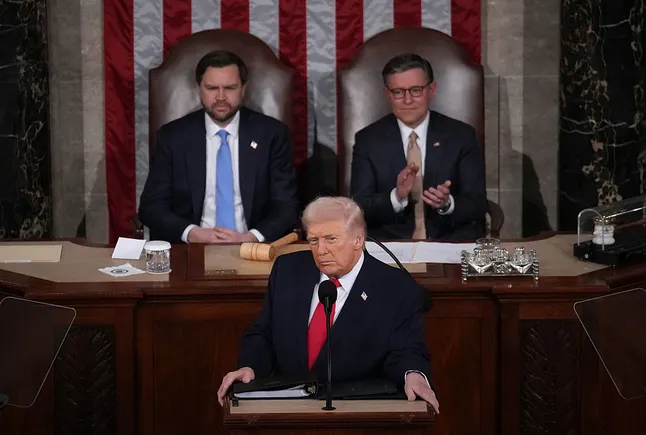
Berlin – President Donald Trump’s recent State of the Union address largely focused on economic gains and national security, dedicating a relatively brief segment – approximately five minutes – to healthcare. While touting an “America First” approach to lowering costs, the speech offered few concrete novel policies, instead revisiting familiar criticisms of the Affordable Care Act (ACA) and promoting previously announced initiatives like the “Most Favored Nation” (MFN) drug pricing model and the direct-to-consumer platform, TrumpRx. This limited focus on healthcare comes as the Republican party plans to heavily emphasize the issue in the upcoming midterm elections, aiming to convince voters that the administration’s policies are easing the financial burden of medical expenses.
The address, the longest State of the Union in recorded history at nearly two hours, was delivered against a backdrop of declining presidential approval ratings. Polling data indicates a need for the administration to regain public trust, and healthcare consistently ranks as a top concern for American families. According to recent data from the Kaiser Family Foundation (KFF), healthcare costs remain the primary economic worry for many Americans, with independent voters particularly inclined to trust Democrats on the issue. KFF polling from last month underscored this anxiety.
Revisiting Familiar Healthcare Critiques
President Trump reiterated his long-standing criticism of the Affordable Care Act, labeling it a “rip-off” that benefits insurance companies at the expense of consumers. This rhetoric is consistent with his previous attacks on the ACA, which have intensified following the expiration of enhanced subsidies that helped lower premiums for many Americans. The expiration of these subsidies led to increased costs for some ACA enrollees, fueling the administration’s narrative of the law’s failures.
In January, the administration unveiled the “Great Healthcare Plan,” a proposal that aims to redirect government subsidies currently flowing to insurance companies in the ACA marketplaces directly to individuals. The plan, details of which remain somewhat vague, proposes to allow individuals to apply these funds to purchase their own healthcare coverage. However, experts have expressed skepticism about its potential to address affordability concerns, particularly for those with lower incomes. Concerns center around whether the proposed subsidies would be sufficient to offset the cost of insurance for those who previously benefited from the ACA’s cost-sharing reductions and premium tax credits.
The “Most Favored Nation” Model and TrumpRx: Limited Impact?
The President highlighted the “Most Favored Nation” (MFN) drug pricing model as a significant achievement, claiming it has led to Americans paying the “lowest prices in the world” for certain medications. The MFN model ties the prices of some drugs in the United States to the lowest prices paid in other developed countries. However, the impact of this policy has been limited. Currently, the MFN model applies primarily to drugs purchased by Medicare and Medicaid, and to those purchased with cash by consumers. Health Affairs provides a detailed explanation of the MFN rule and its implementation.
reports indicate that some pharmaceutical companies have responded to the MFN rule by raising prices on other drugs, potentially offsetting any savings for consumers. NPR reported that several companies increased prices on hundreds of brand-name drugs this year, despite the administration’s claims of significant price reductions.
Trump also touted TrumpRx, his direct-to-consumer drug sales platform, as a means of securing lower prices for Americans. While the platform aims to offer discounted medications, analysis suggests that it doesn’t consistently provide the lowest available prices. The New York Times reported that consumers may often locate cheaper prices through their insurance plans or by opting for generic alternatives.
Omissions and Ongoing Concerns
Notably absent from the President’s address were discussions on several critical healthcare issues. These included the administration’s stance on vaccine access, which has faced criticism from public health experts, and concerns regarding cuts to health research funding. The speech also did not address reported downsizing within the Department of Health and Human Services (HHS). Reports of workforce reductions at HHS have raised concerns about the agency’s capacity to effectively address public health challenges.
the President did not mention the significant cuts to Medicaid included in the GOP’s “Big Beautiful Bill” passed last summer. These cuts, which are projected to reduce federal funding for Medicaid, could have a substantial impact on access to care for millions of low-income Americans.
The Future of Healthcare Policy
The limited focus on healthcare in the State of the Union address, coupled with the administration’s ongoing efforts to dismantle aspects of the ACA, signals a continued emphasis on market-based solutions and individual responsibility in healthcare. However, the complexities of the healthcare system and the persistent challenges of affordability and access suggest that significant policy changes will be required to address the needs of all Americans. The upcoming midterm elections will likely serve as a crucial test of public opinion on these issues.
The debate surrounding healthcare affordability is particularly salient given the current economic climate. Rising inflation and stagnant wages are exacerbating the financial strain on families, making healthcare costs even more burdensome. The ongoing discussion about the role of government in healthcare, and the balance between individual choice and collective responsibility, will continue to shape the political landscape in the years to come.
Looking ahead, the Centers for Medicare & Medicaid Services (CMS) is expected to release updated enrollment figures for the ACA marketplaces in the coming weeks. These figures will provide further insight into the impact of the administration’s policies on access to affordable health insurance. Congress is expected to continue debating potential legislative solutions to address healthcare costs and improve the quality of care. The next key date to watch is March 15th, when CMS is scheduled to release its annual report on healthcare spending. The CMS website provides access to this and other key healthcare data.
The healthcare landscape remains dynamic and complex. Continued monitoring of policy developments, market trends, and public opinion will be essential to understanding the future of healthcare in the United States. What are your thoughts on the President’s healthcare priorities? Share your comments below.
Related reading
- How Our Understanding of COVID-19 Has Evolved Since the Pandemic
- Ex-INAME Officials Investigated for Pharmaceutical Control Irregularities
- California Billionaire Tax Proposal: Debate Over $100B Healthcare Fund (archynewsy.com)
- Trump’s Former Lawyer Clears Key Hurdle for Attorney General Role (world-today-news.com)