Preventive Vaccines Offer New Hope for Individuals with Hereditary Cancer Syndromes
Berlin – For individuals carrying genetic predispositions to cancer, the specter of the disease often looms large, demanding vigilant screening and, in some cases, prophylactic surgeries. But a growing area of research – preventive vaccines targeting cancers linked to inherited genetic mutations – is offering a new layer of defense, moving beyond detection towards genuine prevention. Although still largely in the clinical trial phase, these vaccines represent a paradigm shift in how we approach cancer risk management, particularly for those with hereditary cancer syndromes like Lynch syndrome and familial breast cancer. The promise isn’t to eliminate risk entirely, but to significantly reduce the likelihood of cancer development and improve outcomes when it does occur.
Hereditary cancer syndromes account for approximately 5-10% of all cancers, arising from inherited mutations in genes that control cell growth and DNA repair. These mutations don’t guarantee cancer, but they dramatically increase susceptibility. Individuals with these syndromes often face a lifetime of heightened surveillance, including frequent endoscopies, mammograms, and MRIs. Preventive vaccines, however, offer the potential to harness the body’s own immune system to recognize and destroy precancerous cells before they can develop into full-blown tumors. This approach is particularly exciting as it addresses the root cause of the increased risk – the genetic vulnerability – rather than simply monitoring for its consequences.
The development of these vaccines builds upon decades of research into cancer immunology and the identification of tumor-associated antigens – specific proteins or molecules found on the surface of cancer cells. These antigens can be recognized by the immune system as foreign, triggering an immune response. The challenge lies in designing vaccines that effectively train the immune system to target these antigens specifically, without causing harmful autoimmune reactions. Recent advances in mRNA vaccine technology, similar to that used in some COVID-19 vaccines, have accelerated progress in this field, allowing for the rapid development and testing of personalized cancer vaccines.
Understanding the Landscape of Hereditary Cancer Syndromes and Vaccine Targets
Several hereditary cancer syndromes are currently the focus of vaccine development efforts. Lynch syndrome, as well known as hereditary non-polyposis colorectal cancer (HNPCC), is caused by mutations in mismatch repair genes (MLH1, MSH2, MSH6, PMS2). These genes are crucial for correcting errors that occur during DNA replication. When they are defective, errors accumulate, increasing the risk of colorectal, endometrial, ovarian, and other cancers. Vaccines targeting proteins produced by these mutated genes are showing promise in early trials. According to the National Cancer Institute, Lynch syndrome affects an estimated 1 in 300 to 1 in 400 people.
BRCA1 and BRCA2 mutations are the most well-known genetic factors associated with increased risk of breast and ovarian cancer. While prophylactic mastectomy and oophorectomy are options for high-risk individuals, they arrive with significant physical and emotional costs. Vaccines targeting proteins expressed by BRCA1/2-mutated cells are under investigation, aiming to provide a less invasive preventive strategy. The American Cancer Society estimates that about 1 in 400 women carry a BRCA1 or BRCA2 mutation.
Other syndromes, such as Li-Fraumeni syndrome (caused by TP53 mutations) and Peutz-Jeghers syndrome (caused by STK11 mutations), are also being explored as potential targets for preventive vaccination. Each syndrome presents unique challenges and opportunities, requiring tailored vaccine strategies based on the specific genetic defect and the types of cancers it predisposes to.
How Do These Vaccines Function? The Science Behind the Prevention
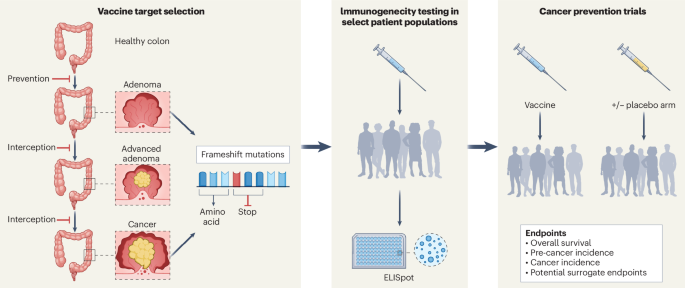
The vaccines currently in development generally fall into a few key categories. Peptide vaccines utilize short fragments of tumor-associated antigens to stimulate an immune response. These peptides are often combined with adjuvants – substances that enhance the immune system’s reaction. mRNA vaccines, like those used against COVID-19, deliver genetic instructions to cells, prompting them to produce the tumor-associated antigen. This triggers the immune system to recognize and attack cells displaying that antigen. Viral vector vaccines use a harmless virus to deliver the genetic material encoding the antigen into cells.
A crucial aspect of these vaccines is their ability to induce a robust and long-lasting T-cell response. T cells are a type of immune cell that can directly kill cancer cells. The goal is to train these T cells to specifically recognize and eliminate cells expressing the tumor-associated antigen, preventing them from developing into cancerous tumors. Researchers are also exploring strategies to combine these vaccines with other immunotherapies, such as checkpoint inhibitors, to further enhance the immune response.
Current Clinical Trials and Emerging Data
Several clinical trials are currently underway evaluating the safety and efficacy of preventive cancer vaccines. One notable trial, led by researchers at Memorial Sloan Kettering Cancer Center, is investigating an mRNA vaccine targeting mismatch repair deficient cancers in individuals with Lynch syndrome. Preliminary data presented at the American Society of Clinical Oncology (ASCO) annual meeting in 2023 showed promising immune responses in vaccinated participants. While long-term follow-up is needed to determine the vaccine’s impact on cancer incidence, the initial results are encouraging.
Another trial is evaluating a personalized mRNA vaccine for individuals with BRCA1/2 mutations. This vaccine is designed based on the specific mutations present in each individual’s tumor, maximizing the potential for a targeted immune response. Early-stage trials are also exploring vaccines for other hereditary cancer syndromes, including those associated with TP53 and PTEN mutations. The pace of development is accelerating, driven by advances in vaccine technology and a growing understanding of cancer immunology.
Challenges and Future Directions
Despite the promising progress, several challenges remain. One key hurdle is identifying the most effective tumor-associated antigens to target. Cancer cells are adept at evading the immune system, and they can downregulate or modify antigens to avoid detection. Another challenge is ensuring that the vaccine elicits a strong and durable immune response in all individuals, as immune responses can vary depending on genetic factors and overall health. Cost and accessibility are also important considerations, as these vaccines are likely to be expensive and may not be readily available to all who could benefit.
Looking ahead, researchers are exploring several strategies to overcome these challenges. These include developing vaccines that target multiple antigens simultaneously, combining vaccines with other immunotherapies, and using artificial intelligence to identify novel tumor-associated antigens. Personalized vaccine approaches, tailored to the specific genetic mutations and immune profile of each individual, are also gaining traction. The ultimate goal is to develop a portfolio of preventive cancer vaccines that can significantly reduce the burden of hereditary cancer syndromes and improve the lives of millions of people at risk.
Key Takeaways
- Preventive cancer vaccines are a promising new approach for individuals with hereditary cancer syndromes.
- These vaccines aim to harness the body’s immune system to recognize and destroy precancerous cells.
- mRNA vaccine technology is accelerating the development of personalized cancer vaccines.
- Clinical trials are underway evaluating the safety and efficacy of these vaccines for Lynch syndrome, BRCA1/2-related cancers, and other syndromes.
- Challenges remain, including identifying effective antigens and ensuring a robust immune response, but ongoing research is addressing these hurdles.
The field of preventive cancer vaccination is rapidly evolving, offering a beacon of hope for those living with the anxiety of inherited cancer risk. Continued research and clinical trials are crucial to realizing the full potential of this innovative approach. Further updates on clinical trial results and regulatory approvals are expected in the coming years. For individuals concerned about their family history of cancer, consulting with a genetic counselor and discussing potential screening and prevention options with a healthcare provider is highly recommended.
Related reading