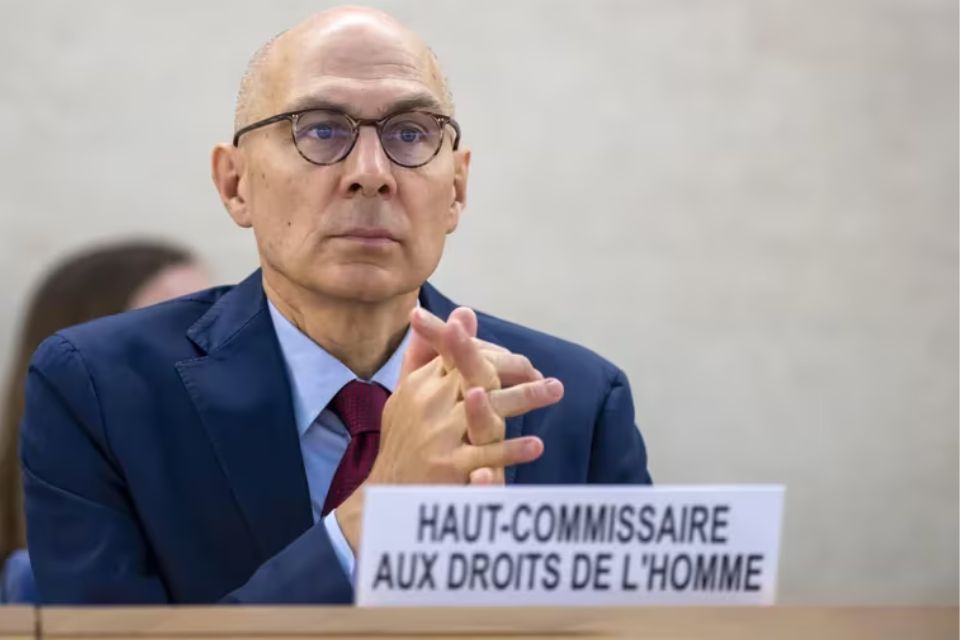
London, United Kingdom – The United Nations High Commissioner for Human Rights, Volker Türk, has renewed calls for the immediate release of all political prisoners in Venezuela, while also urging a review of the country’s state of emergency. The appeal comes amid concerns over increasing arbitrary detentions, enforced disappearances, and reports of torture under the government of President Nicolás Maduro. The situation remains deeply concerning as families continue to wait outside detention centers hoping for the release of loved ones, even after recent amnesties.
Türk voiced his concerns during the 61st session of the Human Rights Council, noting the recent release of some individuals detained arbitrarily but stressing the urgent need for the liberation of those still held. This call for action underscores the ongoing human rights crisis in Venezuela, a situation that has drawn international scrutiny for years. The High Commissioner’s statement highlights the importance of respecting civic space and upholding fundamental human rights within the country.
Amnesty Law and Remaining Concerns
On February 19th, Venezuela’s National Assembly, controlled by the ruling party, approved an Amnesty Law intended to cover cases dating back to 1999, when Hugo Chávez rose to power. However, the law’s application is limited, specifically focusing on 13 “events” occurring over 13 distinct years. This selective approach excludes a significant period and, critically, excludes cases related to military operations, raising questions about its true scope and impact. As reported by the Associated Press, this has fueled criticism that the amnesty is politically motivated and does not address the full extent of the human rights concerns.
Despite the recent release of 217 individuals in the past week, independent organizations estimate that over 500 political prisoners remain incarcerated in Venezuela. According to a statement from High Commissioner Türk in December 2025, Venezuelan society urgently needs justice and accountability for human rights violations. This leaves families in a state of prolonged uncertainty and anguish, anxiously awaiting further releases.
The Persona Non Grata Declaration
The Maduro government’s response to international scrutiny has been increasingly assertive. In a significant diplomatic move, Venezuela’s ruling party-controlled National Assembly declared Volker Türk *persona non grata* in July 2025. Reuters reported that the decision stemmed from criticism of Türk’s alleged failure to protect the rights of Venezuelan migrants deported by the Trump administration to a prison in El Salvador. National Assembly President Jorge Rodríguez accused Türk of “turning a blind eye to atrocious crimes” and failing to advocate for the human rights of Venezuelans abroad.
While the *persona non grata* designation carries symbolic weight, its immediate practical effect is limited. However, it reflects a broader pattern of antagonism towards the UN human rights agency and its monitoring efforts. This action underscores the Maduro government’s resistance to external oversight and its sensitivity to criticism regarding its human rights record.
Concerns Over Deportations and Due Process
A key point of contention highlighted by High Commissioner Türk involves the treatment of Venezuelan migrants deported from the United States to El Salvador. He recently urged the U.S. To halt deportations of Venezuelans who may face risks of arbitrary arrest upon their return to Venezuela, raising concerns about the lack of due process in mass deportations. The situation in El Salvador, where 252 Venezuelans are currently held in a maximum-security prison, has further amplified these concerns.
The AP reported that Türk’s concerns center on the potential for these deported individuals to face persecution or other human rights violations in Venezuela. The lack of adequate legal safeguards during the deportation process and the conditions of detention in El Salvador have also drawn criticism from human rights organizations. This situation highlights the complex interplay between migration policies, human rights, and international obligations.
The State of Emergency and Civic Space
Beyond the issue of political prisoners and deportations, High Commissioner Türk has also called for a review of the state of emergency currently in effect in Venezuela. He argues that the state of emergency should be reassessed to ensure it respects civic space and fundamental human rights. Türk emphasized the importance of allowing civil society organizations and victims’ groups to participate meaningfully in public affairs, a crucial element for fostering a more inclusive and accountable governance system.
Restrictions on freedom of expression, assembly, and association have been widely documented in Venezuela, particularly during the state of emergency. These restrictions hinder the ability of civil society to operate effectively and advocate for human rights, creating an environment of fear and self-censorship. A review of the state of emergency is seen as a critical step towards restoring democratic norms and protecting fundamental freedoms.
International Response and Future Outlook
The international community continues to monitor the human rights situation in Venezuela closely. The United Nations, along with various human rights organizations, has consistently called for accountability for human rights violations and urged the government to engage in constructive dialogue with civil society and international observers. The European Union and the United States have also imposed sanctions on Venezuelan officials implicated in human rights abuses.
However, the Maduro government has largely resisted international pressure, maintaining its stance that it is defending its sovereignty and combating foreign interference. The ongoing political and economic crisis in Venezuela has exacerbated the human rights situation, creating a complex and challenging environment for addressing these concerns. The recent amnesty law, while a step in the right direction, falls short of addressing the full scope of the problem.
The situation remains fluid, and the future outlook for human rights in Venezuela is uncertain. Continued international pressure, coupled with a genuine commitment from the government to uphold human rights standards, will be essential for achieving lasting improvements. The release of all remaining political prisoners and a comprehensive review of the state of emergency are critical steps towards restoring the rule of law and ensuring the protection of fundamental freedoms.
The next key development to watch will be the response of the Venezuelan government to High Commissioner Türk’s latest appeal and the implementation of the Amnesty Law. Further updates from the UN Human Rights Office and independent monitoring organizations will provide crucial insights into the evolving situation on the ground.
Do you have thoughts on the human rights situation in Venezuela? Share your comments below and share this article with your network.