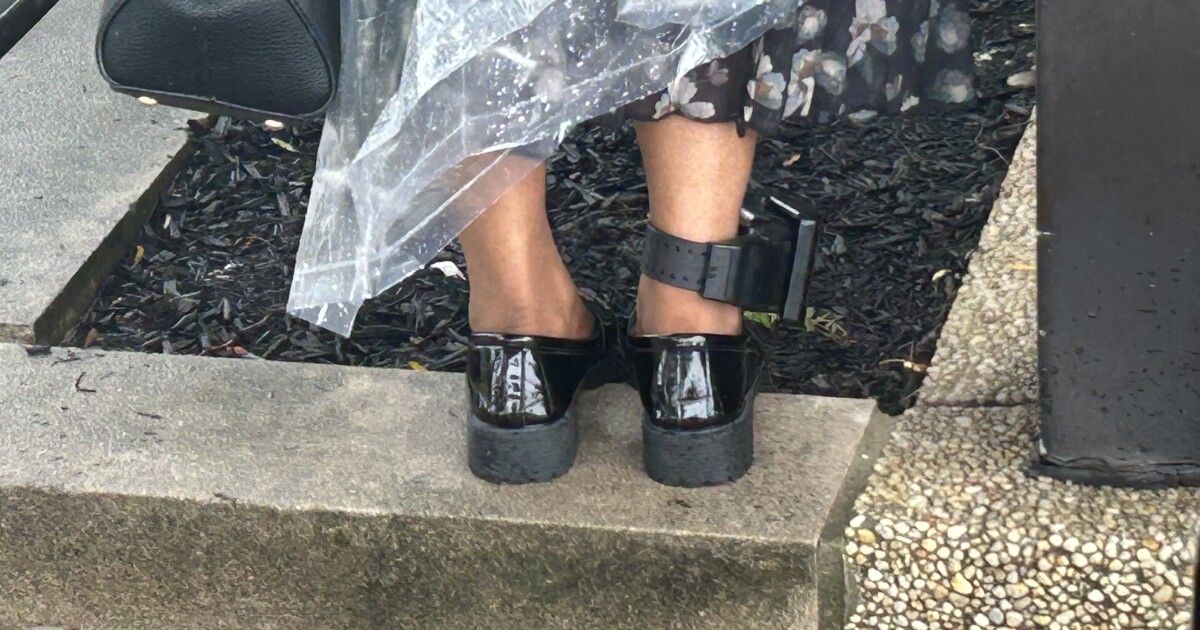
The Department of Homeland Security has begun summoning Haitian immigrants in Ohio to report for check-ins, where federal officers are outfitting individuals with ankle monitors. This enforcement effort follows a Supreme Court ruling that allowed the Trump administration to end Temporary Protected Status (TPS) for Haiti on July 27, 2026.
The summons arrives via letters from U.S. Immigration and Customs Enforcement (ICE) agents, directing recipients to report to a facility in Blue Ash, Ohio. According to the Springfield Haitian Support Center, thousands of these letters have been mailed to individuals who previously held TPS status.
ICE Check-ins and the Use of Ankle Monitors
Immigrants arriving for these appointments are being interviewed and then fitted with electronic tracking devices. Viles Dorsainvil, executive director of the Springfield Haitian Support Center, has driven more than a dozen former TPS holders to the Blue Ash office since July 27, each armed with all of their immigration papers. He noted that upon arrival, (ICE) interviewed them and eventually they put an ankle monitor on them.
“There is one mother who went to that appointment. When she came back home, she did not even want her kids to notice that she has that ankle monitor,” Dorsainvil said. “I am grieving with this family for that because it’s really humiliating. They’re not criminals. They put ankle monitors on criminals. This is very humiliating to see happen to my people.”
Viles Dorsainvil, executive director of the Springfield Haitian Support Center
Beyond the monitoring devices, individuals are receiving court dates scheduled 30 days from their check-in meeting. The process is rigid; if a recipient cannot make the appointment, they must write a reason on the form, scan it, and email it back within 24 hours, according to the Springfield Haitian Support Center.
Legal Consequences of Non-Compliance
The stakes for ignoring these summons are immediate. Inna Simakovsky, an immigration attorney, stated that individuals who refuse to wear the ankle monitor or fail to appear for their appointment can be arrested and deported.
The Department of Homeland Security defends these measures as part of standard operations. A DHS spokesperson stated that the agency conducts law enforcement activities across the country every day and does not discuss ongoing or future operations. On its website, ICE explains that its Alternatives to Detention programs exist to ensure compliance with release conditions and provide important case management services for non-detained aliens.
The Expiration of Temporary Protected Status
The current surge in enforcement is tied directly to the expiration of TPS for Haiti on July 27, 2026. The U.S. Supreme Court ruled that DHS possessed the authority to terminate these humanitarian protections.
“For too long, TPS has been allowed to function as a de facto amnesty program despite Congress never intending it to be permanent,” a DHS spokesperson said in a statement. “What we would say now is it’s closing time which means you don’t have to go home, but you can’t stay here.”
DHS Spokesperson
The loss of status has left many in the Haitian community in Springfield facing profound uncertainty. Dorsainvil expressed this distress, stating, I know I have faith in the Lord, but I don't know what the Lord is about to do. If only he can reveal something to me,
and adding, I am grieving for my country. I am grieving for my people here. It's tough, really tough.
Summary of Enforcement Timeline
- July 27, 2026: Temporary Protected Status for Haiti expires following a Supreme Court ruling.
- Late July / Early August 2026: DHS mails thousands of summons letters to Haitians in Springfield to report to Blue Ash, Ohio.
- August 3, 2026: Reports emerge of Haitian immigrants, including one who has lived in the United States for five years, being outfitted with ankle monitors during these check-ins.
While the administration views the move as a correction of a program that exceeded its intended temporary nature, the community describes the use of tracking devices on non-criminals as a humiliating experience. The immediate future for those summoned involves a 30-day window before their scheduled court appearances.
Related reading