
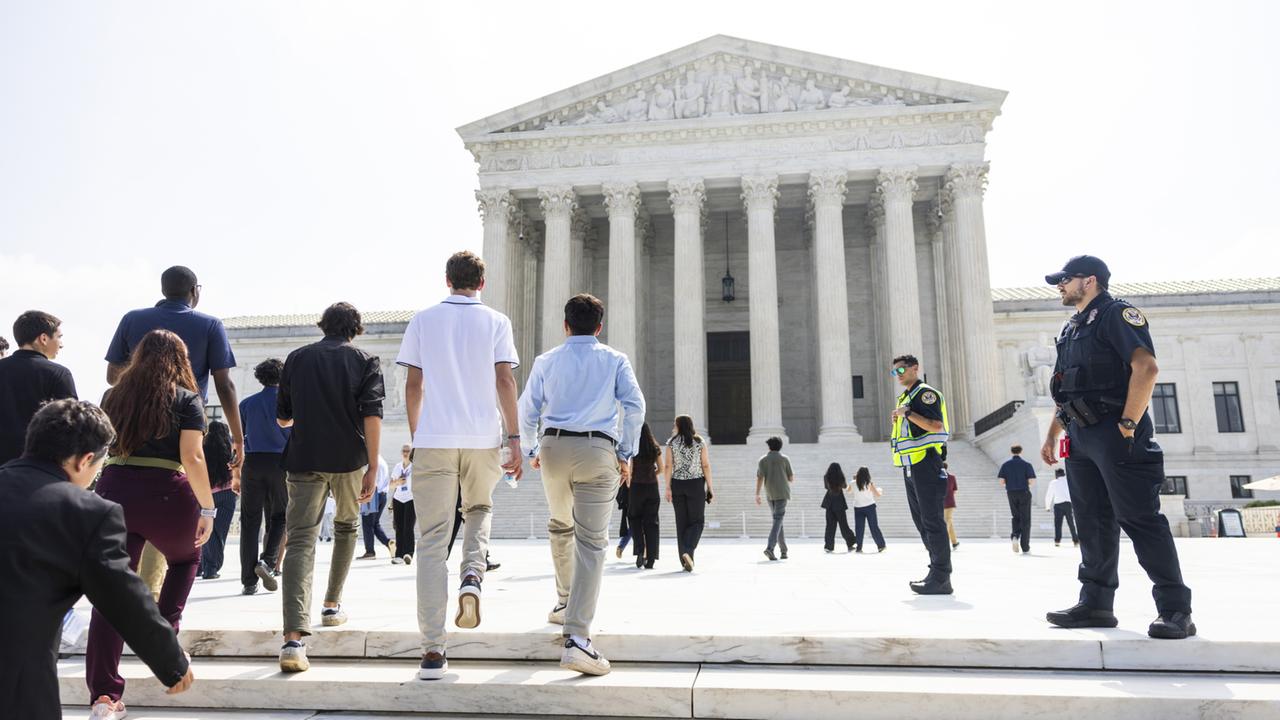
The U.S. Supreme Court has upheld the principle of birthright citizenship, maintaining that individuals born on U.S. soil are automatically granted citizenship regardless of their parents’ legal status. This ruling effectively blocks efforts by former President Donald Trump to end the practice via executive order, affirming the legal interpretation of the 14th Amendment to the U.S. Constitution.
The decision settles a long-standing legal debate over whether the presidency possesses the authority to unilaterally redefine citizenship. Under the 14th Amendment, “All persons born or naturalized in the United States, and subject to the jurisdiction thereof, are citizens of the United States.”
Legal challenges to birthright citizenship often center on the phrase “subject to the jurisdiction thereof,” with opponents arguing that children of undocumented immigrants are not truly subject to U.S. jurisdiction. However, the Court’s adherence to precedent confirms that birth on U.S. territory is the primary determinant for citizenship eligibility.
How the Supreme Court ruled on birthright citizenship
The Court’s decision rests on the principle of jus soli, or “right of the soil.” According to legal analysts and court records, the judiciary has consistently interpreted the 14th Amendment as a broad guarantee that prevents the government from denying citizenship to those born within the country’s borders.

Former President Donald Trump previously suggested that an executive order could terminate birthright citizenship for children of undocumented parents. The Court’s stance clarifies that such a fundamental right cannot be altered by the executive branch alone, as it is enshrined in the Constitution. Changing this status would likely require a constitutional amendment, which requires a two-thirds vote in both the House and Senate and ratification by three-fourths of the states.
This ruling prevents the implementation of policies that would have created a class of stateless or non-citizen residents born within the United States, a scenario that legal scholars argue would violate both domestic law and international human rights standards.
Why this ruling blocks the Trump administration’s plans
During his presidency and subsequent campaigns, Donald Trump argued that birthright citizenship acted as a “magnet” for illegal immigration. He claimed that individuals travel to the U.S. specifically to give birth so their children can obtain citizenship. By attempting to end this practice, the Trump administration sought to reduce the incentive for undocumented migration.

The Supreme Court’s refusal to overturn the existing interpretation of the 14th Amendment means that any attempt to restrict citizenship via executive action remains legally untenable. The ruling reinforces the separation of powers, stating that the President cannot override constitutional mandates through administrative decrees.
The decision also protects the status of millions of “anchor” children and families who have relied on the certainty of birthright citizenship for decades. According to data from the U.S. Census Bureau, the demographic makeup of the U.S. has been significantly shaped by this legal standard since the amendment’s ratification in 1868.
What happens to the legal status of children born in the U.S.?
Children born in the United States to non-citizen parents continue to be U.S. citizens from birth. This status provides them with full legal protections, the right to a U.S. passport, and the ability to work and vote upon reaching adulthood.
The ruling ensures that the legal process for obtaining citizenship for these individuals remains unchanged. They do not need to apply for naturalization; their citizenship is automatic and inherent. This distinguishes the U.S. from many other developed nations, such as those in the European Union, which largely follow jus sanguinis (right of blood), where citizenship is passed through parents regardless of birthplace.
For families currently navigating the immigration system, this ruling removes the immediate threat of a policy shift that would have left children in a legal limbo. It maintains the status quo of the American legal system regarding nationality and identity.
Comparing U.S. birthright citizenship to global standards
The United States is one of a minority of countries that grant unconditional birthright citizenship. This policy creates a sharp contrast with the legal frameworks found in most other sovereign states.

| Feature | United States (Jus Soli) | Most EU Nations (Jus Sanguinis) |
|---|---|---|
| Primary Requirement | Physical birth on territory | Parental citizenship |
| Automaticity | Immediate upon birth | Based on lineage/bloodline |
| Executive Control | Limited by 14th Amendment | Higher legislative flexibility |
While Canada and Mexico also practice forms of birthright citizenship, the U.S. system is particularly rigid due to its constitutional basis. In contrast, many European countries require at least one parent to be a citizen or a legal resident for the child to acquire nationality, preventing the “birth tourism” that U.S. critics often cite.
What is the next legal step for citizenship challenges?
While the Supreme Court has blocked executive attempts to end birthright citizenship, the issue may reappear through legislative efforts. Some members of Congress have proposed bills that would redefine the meaning of “jurisdiction” within the 14th Amendment to exclude children of undocumented immigrants.
However, any such law would likely face immediate challenges in the lower courts and eventually return to the Supreme Court. Given the current ruling, a legislative change would need to be exceptionally precise or be accompanied by a formal constitutional amendment to survive judicial review.
The next confirmed checkpoint for this issue will be the monitoring of any new legislative filings in the 118th or 119th Congress that specifically target the 14th Amendment’s citizenship clause. No further hearings on this specific executive challenge are currently scheduled by the Supreme Court.
We invite readers to share their perspectives on this ruling in the comments below and share this report with others interested in global legal developments.