
New York state officials have launched a major legal assault against the prediction market Kalshi, seeking at least $36 billion in financial penalties and restitution. New York Attorney General Letitia James and Governor Kathy Hochul announced the lawsuit, accusing the platform of running an illegal gambling operation without state authorization.
New York Sues Kalshi for $36 Billion Over Alleged Illegal Gambling
The complaint asks the state Supreme Court to permanently ban Kalshi from operating within New York until it obtains the required licenses from the state Gaming Commission. Alongside a permanent injunction, the state is seeking restitution for consumers who placed bets on the platform, forfeiture of company profits, a penalty of three times the amount of revenue generated in the state, and a $100,000 fine for each instance of offering or attempting to offer unlicensed sports wagering.
State officials argue that Kalshi exposes residents to significant financial and personal risks. According to the lawsuit, the platform allows individuals younger than New York’s legal gambling age of 21 to use its services. New York’s gambling laws protect children from underage betting and help combat gambling addiction,
James said in a statement. No matter what they call themselves, prediction markets like Kalshi are gambling platforms, plain and simple.
Federal Preemption and Court Battles
The high-stakes litigation sits at the center of a growing nationwide conflict between state authorities and federal regulators regarding who holds jurisdiction over prediction markets. Platforms like Kalshi and Polymarket allow users to trade contracts on the outcomes of sports, elections, and other events. While prediction market operators argue they function similarly to stock markets where consumers trade against one another rather than against a traditional sportsbook, state regulators maintain they are sportsbooks in disguise.
The U.S. Commodity Futures Trading Commission rejects New York’s enforcement efforts, with Chairman Michael Selig asserting the federal agency’s exclusive jurisdiction over commodity derivatives markets.
Federal courts across the country have delivered mixed rulings on whether federal law preempts state gaming statutes. In April, the U.S. Court of Appeals for the 3rd Circuit ruled that New Jersey cannot regulate sports bets on prediction markets, and a federal court in Minnesota similarly issued an injunction preventing that state from enforcing a ban. However, Kalshi has faced setbacks elsewhere, including a 6th Circuit ruling refusing to grant an injunction against Ohio gambling laws and an adverse ruling in New York.
Recent Legal Losses for Kalshi in Manhattan Federal Court
U.S. District Judge Analisa Torres in Manhattan denied Kalshi’s bid for a preliminary injunction that sought to block New York from enforcing its gambling laws against the platform’s sports-event contracts. Torres found that the federal Commodity Exchange Act did not supersede New York’s gambling laws as applied to Kalshi’s contracts, writing that Congress did not exhibit a clear and manifest purpose to preempt state gambling regulation in this area.
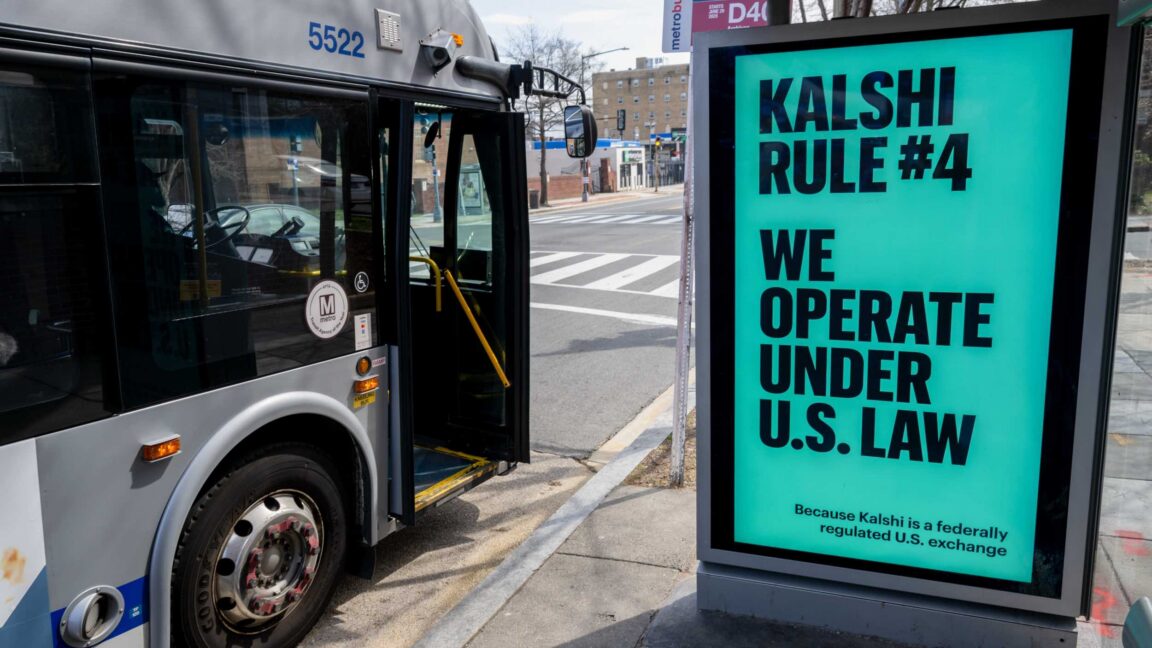
Torres concluded that New York’s interests in preventing gambling addiction, preserving sports integrity, and avoiding a proliferation of unregulated contracts heavily outweighed Kalshi’s interests. Kalshi appealed Torres’s decision to the federal appeals court in Manhattan.
Welcoming the district court’s decision, Hochul and James emphasized in a joint statement that New York’s gambling laws are designed to protect consumers. We will continue to hold all gambling platforms accountable to the law — and that includes prediction markets,
they stated.
Explosive Growth and Industry Stakes
The legal clashes follow an explosion in popularity for prediction markets, particularly following the 2024 U.S. presidential election. According to the Pew Research Center, combined monthly global trading volume on Kalshi and Polymarket surged from less than $5 billion in September 2025 to about $24 billion by April 2026.

Representatives for Kalshi have dismissed New York’s enforcement actions as political theater, noting that the company is a federally licensed exchange and warning that shutting down access would drive New Yorkers offshore. Nevertheless, the state argues that prediction market evasions of state and tribal law have siphoned more than $1.2 billion in gaming tax revenue from community initiatives nationwide. Supreme Court.
Keep reading