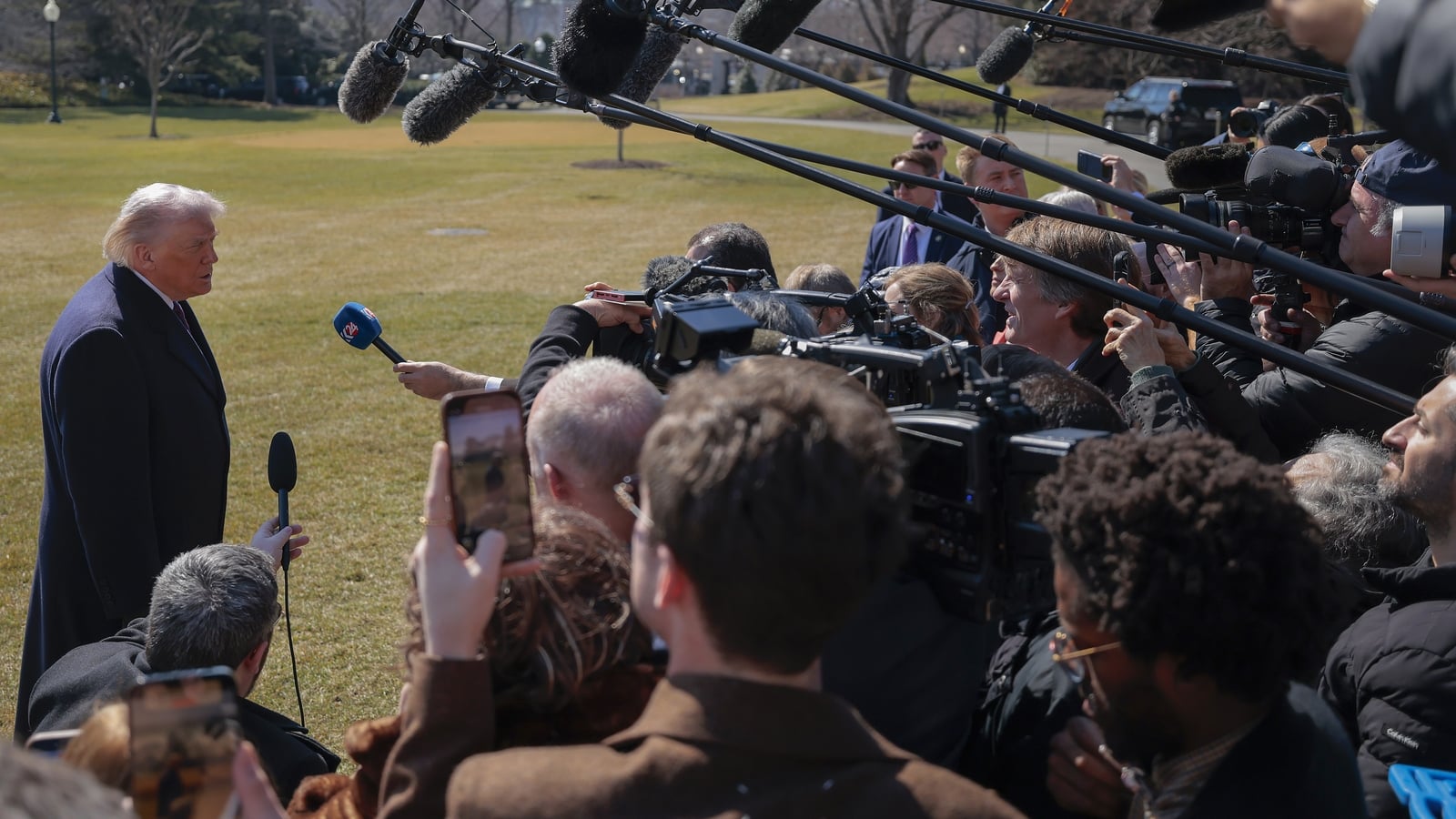
Washington D.C. – In a surprising development, former U.S. President Donald Trump has raised the possibility of a “friendly takeover” of Cuba, sparking debate and raising questions about the future of U.S.-Cuba relations. The remarks, made Friday, February 27, 2026, came as the Trump administration continues to exert pressure on Havana amid ongoing economic challenges and political tensions. This potential shift in policy, coupled with recent events in Venezuela, signals a potentially dramatic re-evaluation of U.S. Strategy in the region.
Speaking to reporters before departing on a trip to Texas, Trump stated that Cuba is facing severe hardship, lacking essential resources like money, oil, and food. He suggested that the Cuban government is now seeking assistance from the United States, opening a window for potential intervention. “They have no money, they have no anything right now, but they’re talking with us, and maybe we’ll have a friendly takeover of Cuba,” Trump said, adding that Secretary of State Marco Rubio is engaged in “very high level” discussions with Cuban officials. The concept of a “friendly takeover” remains undefined, leaving analysts and observers to speculate on its potential implications.
The Context: Economic Pressure and Regional Instability
The Trump administration’s comments come against a backdrop of escalating economic pressure on Cuba. For weeks, the U.S. Has sought to leverage Cuba’s fuel crisis, a direct consequence of the recent political upheaval in Venezuela. Last month, U.S. Forces captured Venezuelan President Nicolás Maduro, a key ally of Cuba, effectively cutting off a vital oil supply line to the island nation. Reuters reported that this action was intended to force political changes within Cuba, but has instead exacerbated the existing economic difficulties.
The situation was further complicated by a recent incident involving a Florida-registered speedboat that entered Cuban waters and opened fire on a Cuban patrol, resulting in the deaths of four individuals and injuries to six others. Rubio denied any U.S. Government involvement in the incident, but it nonetheless heightened tensions between the two countries. The U.S. Has largely blocked oil shipments to Cuba, intensifying the pressure on the Communist government. This series of events has created a volatile environment, prompting speculation about potential U.S. Intervention.
Rubio’s Role and Reported Talks
Secretary of State Marco Rubio is playing a central role in the unfolding situation. Trump specifically highlighted Rubio’s involvement, stating he is handling the matter at a “very high level.” Reports indicate that Rubio has been engaged in discreet talks with Raúl Guillermo Rodríguez Castro, the grandson of former Cuban President Raúl Castro. The Associated Press noted these discussions reportedly took place on the sidelines of the regional Caribbean Community conference in St. Kitts and Nevis. While the Cuban government has not confirmed these high-level talks, it has too not denied the reports.
Rubio, a vocal critic of the Cuban government, has long advocated for a change in the island nation’s political system. He has described the current situation as unsustainable and has called for “dramatic” changes. His Cuban-American heritage and strong stance against the Cuban regime position him as a key figure in shaping U.S. Policy towards Cuba. The Miami Herald and Axios have both reported on Rubio’s engagement with Rodríguez Castro, suggesting a willingness on both sides to explore potential avenues for dialogue, despite the publicly strained relationship.
What Does a “Friendly Takeover” Mean?
The term “friendly takeover,” as used by Trump, remains ambiguous. Experts suggest it could range from a negotiated political transition to a more direct form of U.S. Influence over Cuban affairs. Some analysts speculate it could involve a U.S.-backed interim government, while others believe it could entail a more gradual process of political and economic reform guided by the United States. However, without further clarification from the administration, the precise meaning of the term remains unclear.
The historical context of U.S.-Cuba relations is crucial to understanding the potential implications of Trump’s remarks. The U.S. Has a long history of intervention in Cuban affairs, including the failed Bay of Pigs invasion in 1961 and decades of economic embargoes. Any attempt at a “takeover,” even a “friendly” one, would likely be met with resistance from within Cuba and could further destabilize the region. The large Cuban exile community in Miami, many of whom have long sought the overthrow of the Cuban government, may view a U.S. Intervention favorably, as Trump suggested, but international reaction could be sharply divided.
International Reaction and Potential Consequences
The international community is closely watching the developments surrounding Cuba. The possibility of U.S. Intervention raises concerns about potential violations of Cuban sovereignty and the broader implications for regional stability. Several countries have expressed reservations about the Trump administration’s approach, warning against any actions that could escalate tensions or undermine the principles of international law. USA Today reports that the situation is being monitored by several Latin American nations, who fear a repeat of past U.S. Interventions in the region.
a U.S. Takeover of Cuba could have significant economic consequences. Cuba’s economic woes are already contributing to regional instability, and a sudden change in government could exacerbate these problems. The disruption of trade and investment could also have a negative impact on other countries in the region. The long-term effects of a U.S. Intervention remain uncertain, but the potential for unintended consequences is significant.
Key Takeaways
- Trump’s Remarks: Former President Trump has suggested the possibility of a “friendly takeover” of Cuba, citing the country’s economic struggles.
- Rubio’s Involvement: Secretary of State Marco Rubio is reportedly engaged in high-level talks with representatives of the Cuban government.
- Economic Pressure: The U.S. Has been increasing economic pressure on Cuba, particularly through restrictions on oil shipments following the capture of Venezuelan President Maduro.
- Ambiguity Remains: The precise meaning of a “friendly takeover” remains unclear, prompting speculation about potential U.S. Intervention.
The situation remains fluid, and the future of U.S.-Cuba relations is uncertain. The Trump administration’s approach is likely to be met with both support and opposition, both domestically and internationally. The coming weeks and months will be critical in determining whether the U.S. Will pursue a more assertive policy towards Cuba and what form that policy might take. The next key development to watch for is any official statement from the State Department clarifying the administration’s intentions and outlining a potential path forward.
As of February 27, 2026, the State Department has not issued any further statements regarding the possibility of a “friendly takeover” of Cuba. However, officials have indicated that Secretary Rubio will continue to engage in discussions with Cuban representatives. Readers are encouraged to follow World Today Journal for ongoing coverage of this developing story and to share their thoughts in the comments section below.
Related reading