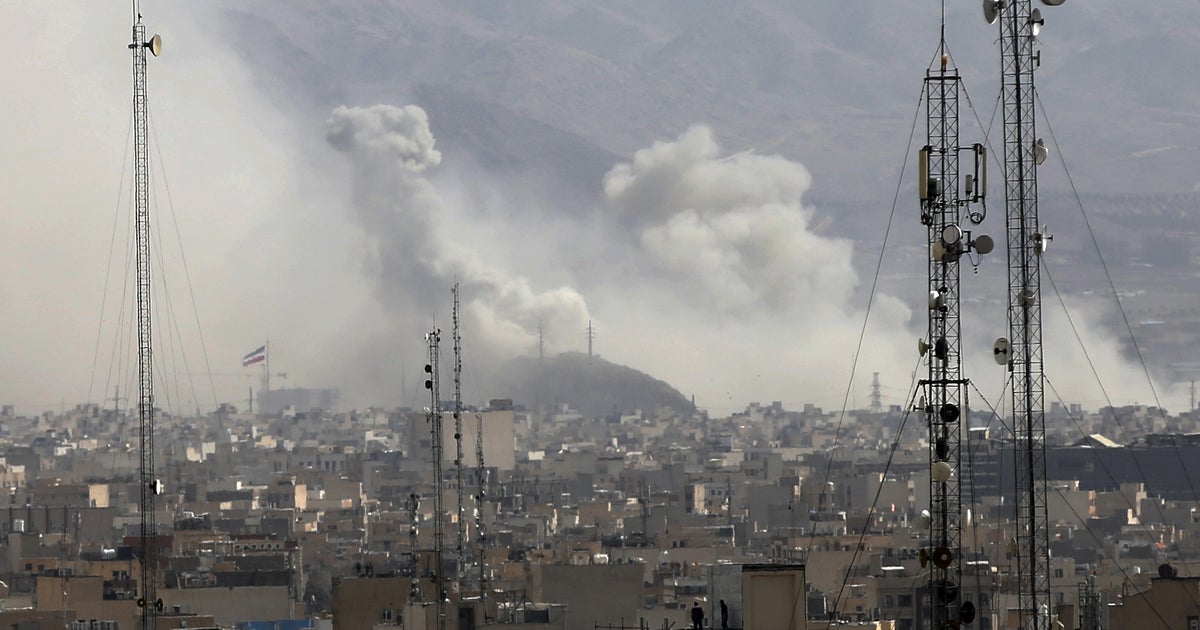
Tehran, Iran – The United States and Israel have launched a coordinated military attack on Iran, escalating tensions in the Middle East and prompting a strong response from Iranian officials. U.S. President Donald Trump confirmed the “major combat operations” in a public statement Saturday, calling on Iranian government forces to lay down their arms. The strikes, which targeted locations across Iran including the capital Tehran, come after weeks of heightened rhetoric and failed negotiations surrounding Iran’s nuclear program and ballistic missile development.
The attacks mark a significant escalation in the long-running conflict between Iran and Israel, which has largely played out through proxy groups and covert operations. Although details remain fluid, initial reports indicate strikes targeted infrastructure related to both Iran’s nuclear capabilities and its ballistic missile program. The timing of the offensive, according to sources, was driven by intelligence suggesting an acceleration of Iran’s ballistic missile advancements. This latest action follows the Twelve-Day War between Iran and Israel in June 2025, and builds upon the broader Middle Eastern crisis that began in 2023.
Details of the Joint U.S.-Israel Offensive
Explosions were reported in multiple Iranian cities shortly after 09:30 Tehran time (06:00 GMT), including Tehran, Isfahan, Qom, Karaj, and Kermanshah. Verified videos circulating online demonstrate plumes of smoke rising over Tehran, with one video reportedly taken within a kilometer of Leadership House, the office of Iran’s Supreme Leader, Ayatollah Ali Khamenei. The extent of casualties and damage remains unclear at this time, and Iranian airspace has been closed as a result of the attacks. Trump described the operation as “massive and ongoing,” signaling a potentially protracted military engagement.
While the specific targets remain largely undisclosed, an Israeli military official indicated that the initial strikes focused on both practical objectives – creating operational freedom – and targeting “essential personnel.” The official declined to provide further details on who may have been targeted. The objective of the offensive, according to the same source, is to significantly reduce the capabilities of the Iranian regime. The U.S. Involvement, confirmed by President Trump, suggests a broader strategic aim beyond simply disrupting Iran’s immediate capabilities.
International Atomic Energy Agency Assessment
The attacks raise concerns about the status of Iran’s nuclear program. Rafael Grossi, Director General of the International Atomic Energy Agency (IAEA), stated in an interview with French network TF1 ten days prior, on February 18, 2026, that most of Iran’s enriched uranium remained intact following U.S. Strikes on nuclear facilities in June 2025. CBS News reported on this assessment, noting that Grossi found no indication Iran was actively developing a nuclear weapon.
“No,” Grossi told TF1 when asked about evidence of Iran pursuing a weapon, adding, “On the contrary, I see, today, a willingness on both sides to reach an agreement.” He further emphasized that while some material may be less accessible, “most of the material that Iran had accumulated up until June of last year… is still there, in large quantities.” Grossi highlighted the urgency of reaching an agreement to prevent further military action in the region. He was directly involved in recent indirect talks between U.S. And Iranian delegations in Geneva, Switzerland, last week, seeking a diplomatic resolution.
Regional Reactions and Defensive Measures
The attacks have prompted a range of reactions from regional actors. According to the Wikipedia entry on the Iran–Israel war, several countries played a defensive role during the Twelve-Day War in June 2025, including Iraq, Jordan, Saudi Arabia, and Qatar. France also reportedly provided support. The extent of their involvement in the current conflict remains unclear, but the potential for wider regional escalation is significant. The Houthis, a Yemeni rebel group aligned with Iran, have also been identified as a belligerent in previous conflicts, and their potential response is being closely monitored.
The U.S. And Israel have reportedly been coordinating closely on this operation, with Israel taking a leading role in the initial strikes. The involvement of the United States signals a firm commitment to containing Iran’s regional influence and preventing the development of nuclear weapons. However, the potential for miscalculation and unintended consequences remains a major concern. The situation is further complicated by the ongoing proxy conflict between Iran and Israel, which has seen clashes in Lebanon, Syria, and Yemen.
Casualty Reports and Damage Assessment
As of Saturday, February 28, 2026, confirmed casualty figures remain limited and are subject to conflicting reports. According to the Wikipedia entry on the Iran–Israel war, Israel reported 32 civilian and one off-duty soldier killed, along with 3,238 wounded during the June 2025 conflict. Iran, however, reported significantly higher numbers, claiming 1,060 killed and 5,800 wounded. Independent verification of these figures is challenging. Human Rights Activists in Iran (HRANA) reported 1,190 killed (436 civilians, 435 military personnel, and 319 unidentified) and 4,475 injured.
The extent of damage to Iranian infrastructure is also still being assessed. Initial reports suggest strikes targeted military facilities, nuclear sites, and ballistic missile infrastructure. The Iranian government has yet to release a comprehensive assessment of the damage, but state media reports indicate significant disruptions to communications and transportation networks.
What Happens Next?
The immediate future remains highly uncertain. President Trump’s call for Iranian forces to lay down their arms suggests a desire for a swift resolution, but it is unlikely that the Iranian government will comply. Iran has a history of resisting external pressure and is likely to retaliate against the U.S. And Israel. The potential for further escalation is high, and the risk of a wider regional conflict cannot be ruled out.
The international community is urging restraint and calling for a diplomatic solution. The United Nations Security Council is expected to convene an emergency session to discuss the situation. However, the prospects for a peaceful resolution appear dim, given the deep-seated mistrust and animosity between Iran and its adversaries. The coming days and weeks will be critical in determining whether this latest escalation can be contained or whether it will spiral into a full-scale war.
The next key development to watch for is the Iranian government’s official response to the attacks, expected within the next 24-48 hours. Further updates will be provided as they become available.
Here’s a developing story. Check back for updates.
What are your thoughts on the escalating tensions in the Middle East? Share your comments below and share this article with your network.
Keep reading