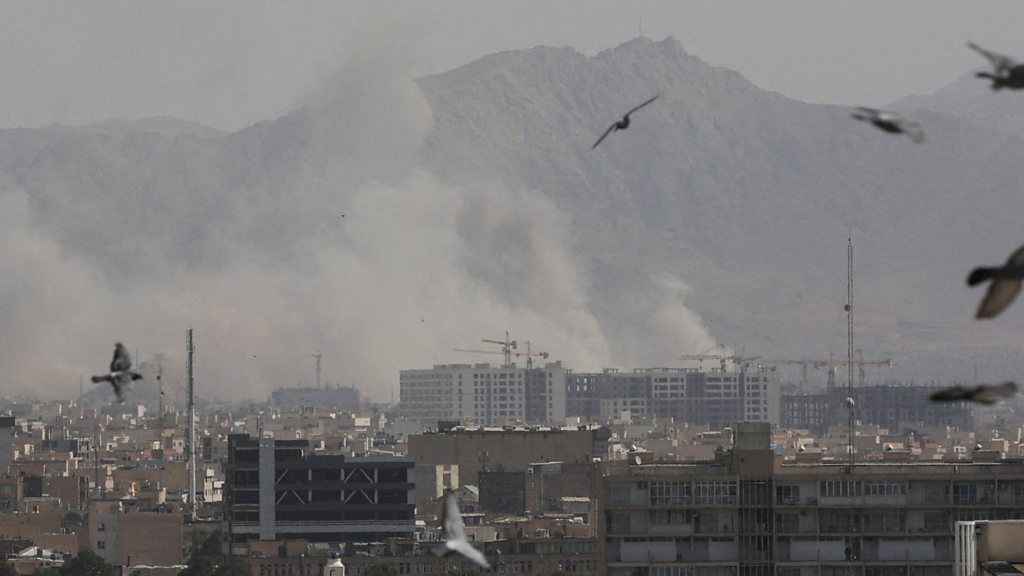
London, United Kingdom – February 28, 2026 – A significant escalation of tensions in the Middle East unfolded today as the United States and Israel launched joint military attacks against targets within Iran. The strikes, confirmed by U.S. President Donald Trump, represent a major shift in the long-standing geopolitical dynamics of the region and have prompted immediate retaliatory threats from Tehran. This development comes amidst heightened concerns over Iran’s nuclear program and its regional influence, and raises fears of a wider conflict.
President Trump, addressing the nation on Saturday, stated that the “major combat operation” was initiated to “eliminate imminent threats from the Iranian regime.” He further asserted that the U.S. Military’s objective is to “defend the American people,” and vowed to dismantle Iran’s missile capabilities and naval forces. The President’s statements, as reported by Al Jazeera, included pledges to “annihilate” Iran’s navy and ensure that regional “terrorist” proxies are no longer able to destabilize the region. He also reiterated a firm stance against Iran acquiring a nuclear weapon, stating, “They will never have a nuclear weapon.”
Targets and Initial Responses
Initial reports indicate that the attacks targeted several key locations within Iran, including the office of the Supreme Leader and the presidential office in Tehran, alongside various military sites across the country. While specific details regarding the extent of the damage remain limited, Iranian state television reported that the country is preparing a “crushing” retaliation, promising a “strong response” to the attacks. According to Al Jazeera, Iran intends to “take revenge” on Israel.
In response to the U.S.-Israeli strikes, Iran reportedly launched counter-strikes targeting U.S. Military installations across the region. Damage has been reported in Qatar, the United Arab Emirates, and Kuwait, though the precise nature and severity of this damage are still being assessed. The escalating exchange of attacks underscores the volatile situation and the potential for further escalation.
Trump Calls for Regime Change in Iran
Adding another layer of complexity to the unfolding crisis, President Trump directly appealed to the Iranian public, urging them to “seize control” of their government. This call, reported by the Washington Post, echoes similar rhetoric used by the Trump administration in the past, and suggests a potential U.S. Strategy of supporting internal dissent within Iran. The implications of such a strategy are far-reaching and could further destabilize the region.
International Reactions and Concerns
The joint attacks have drawn swift reactions from the international community. While some nations have expressed understanding for the security concerns cited by the U.S. And Israel, many have voiced deep concern over the potential for a wider conflict. The United Nations has called for restraint from all parties involved, urging de-escalation and a return to diplomatic solutions. The European Union has also issued a statement expressing its concern and calling for dialogue.
The situation is particularly sensitive given the ongoing conflicts and instability in the broader Middle East. The potential for the conflict to spill over into neighboring countries, such as Syria, Lebanon, and Iraq, is a major concern for regional and international actors. The involvement of various non-state actors, including Hezbollah and other Iran-backed militias, further complicates the situation.
Background: Iran’s Nuclear Program and Regional Influence
The recent attacks are rooted in a long history of tensions between the U.S., Israel, and Iran. A central point of contention has been Iran’s nuclear program, which Western powers suspect is aimed at developing nuclear weapons, despite Iran’s repeated denials. The 2015 Joint Comprehensive Plan of Action (JCPOA), also known as the Iran nuclear deal, aimed to curb Iran’s nuclear ambitions in exchange for sanctions relief. However, the U.S. Unilaterally withdrew from the JCPOA in 2018 under the Trump administration, reimposing sanctions on Iran.
Since the U.S. Withdrawal, Iran has gradually rolled back its commitments under the JCPOA, increasing its uranium enrichment activities. This has raised concerns that Iran is moving closer to developing a nuclear weapon, prompting increased pressure from the U.S. And Israel. Iran’s support for proxy groups in the region, including Hezbollah in Lebanon, Hamas in Gaza, and Houthi rebels in Yemen, has been a source of concern for regional powers and the U.S.
The Role of Israel
Israel has consistently viewed Iran’s nuclear program as an existential threat and has repeatedly warned that it would take action to prevent Iran from acquiring a nuclear weapon. Israel is widely believed to have conducted covert operations against Iran’s nuclear facilities in the past. The current joint operation with the U.S. Represents a more overt and direct military intervention.
Potential Scenarios and Future Outlook
The immediate future remains highly uncertain. Several potential scenarios could unfold in the coming days and weeks. These include:
- Escalation to a full-scale war: If Iran retaliates with significant attacks against U.S. Or Israeli targets, it could trigger a wider conflict involving multiple regional actors.
- Limited exchange of strikes: The conflict could remain contained to a series of limited strikes and counter-strikes, with both sides seeking to avoid a full-scale war.
- Diplomatic efforts to de-escalate: International mediation efforts could succeed in bringing the parties back to the negotiating table and de-escalating the crisis.
The outcome will likely depend on a number of factors, including the extent of Iran’s retaliation, the response of the U.S. And Israel, and the role played by international actors. The situation is further complicated by the upcoming U.S. Presidential election and the potential for domestic political considerations to influence decision-making.
The attacks also raise questions about the future of the Iran nuclear deal. While the Biden administration has expressed a willingness to rejoin the JCPOA, the current escalation could make it more demanding to revive the agreement. The long-term implications of the attacks for regional stability and the global non-proliferation regime remain to be seen.
Key Takeaways
- The U.S. And Israel have launched joint military attacks against targets in Iran, marking a significant escalation of tensions.
- President Trump has called for regime change in Iran and vowed to eliminate threats from the Iranian regime.
- Iran has promised a “crushing” retaliation and has reportedly launched counter-strikes against U.S. Military targets.
- The international community has expressed concern over the potential for a wider conflict.
- The attacks are rooted in a long history of tensions over Iran’s nuclear program and regional influence.
The situation remains fluid and is developing rapidly. World Today Journal will continue to provide updates as they grow available. The next key development to watch for will be the extent and nature of Iran’s response to the attacks, and any potential diplomatic initiatives aimed at de-escalating the crisis. We encourage readers to share their thoughts and perspectives in the comments section below.