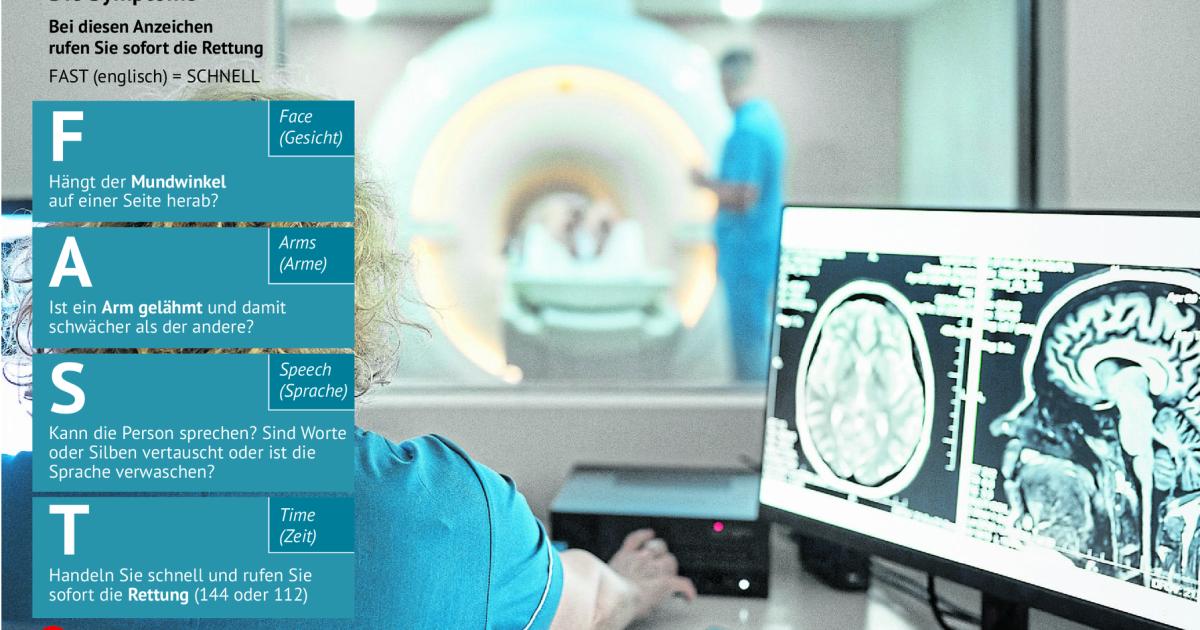
The swift diagnosis and treatment of stroke, a leading cause of long-term disability, is undergoing a revolution thanks to advances in artificial intelligence (AI). At the LKH-Univ.-Klinikum Graz in Austria, clinicians are leveraging AI-powered tools to more accurately assess the extent of brain damage and determine the best course of action for patients experiencing acute ischemic stroke – a condition where a blocked artery deprives the brain of vital blood flow. This technology promises to significantly improve outcomes for stroke patients, particularly those presenting with “wake-up strokes” where the exact time of symptom onset is unknown.
Stroke is a time-sensitive medical emergency. Rapid intervention is crucial to minimize brain damage and maximize the potential for recovery. The standard treatment for acute ischemic stroke involves either intravenous thrombolysis (administering a clot-busting drug) or, for larger blockages, mechanical thrombectomy – physically removing the clot using a specialized catheter. However, determining which patients will benefit most from these interventions and within what timeframe, can be challenging. The decision-making process is complex, relying on imaging scans, clinical assessments, and a careful weighing of risks and benefits. According to the American Stroke Association, stroke affects nearly 800,000 people in the United States each year.
AI-Powered Analysis for Faster, More Accurate Assessments
The core of this innovation lies in the ability of AI algorithms to rapidly analyze medical imaging data – specifically, CT and MRI scans – to quantify the amount of salvageable brain tissue. Traditionally, neurologists visually assess these scans to estimate the “penumbra,” the area of brain tissue at risk of dying but potentially recoverable with timely intervention. This process is subjective and time-consuming. AI offers a more objective and efficient approach.
As Christian Enzinger, Head of the University Clinic for Neurology at the Medical University of Graz, explained, a significant challenge arises with “wake-up stroke” patients – individuals who experience stroke symptoms upon waking and for whom the precise time of symptom onset is unclear. “But we can’t say with such patients, is the stroke happening at 6 a.m. Or 10 p.m.?” he stated during a press conference in Vienna, as reported by Kurier. This uncertainty complicates the decision of whether to proceed with thrombectomy, as the effectiveness of the procedure diminishes with time. The AI tool analyzes all data from the CT and MRI scans of the affected brain area and, within a minute, estimates how much of the potentially salvageable tissue remains.
This rapid assessment is a game-changer. The AI-generated data can be transmitted to mobile devices, allowing neurologists at both regional hospitals and the central university clinic to simultaneously evaluate the patient’s condition. This collaborative approach ensures that patients receive expert opinions quickly, regardless of their location. The LKH-Univ.-Klinikum Graz is at the forefront of implementing this technology, demonstrating a commitment to providing cutting-edge stroke care.
How the Technology Works: A Closer Look
The AI algorithms used in stroke assessment are typically based on machine learning, a subset of artificial intelligence that allows computers to learn from data without explicit programming. These algorithms are trained on vast datasets of CT and MRI scans from stroke patients, along with corresponding clinical outcomes. Through this training process, the AI learns to identify patterns and correlations between imaging features and the likelihood of successful treatment.
Specifically, the AI analyzes various parameters within the scans, including the size and location of the blockage, the extent of the penumbra, and the presence of collateral blood flow (alternative pathways that can supply blood to the affected area). By integrating these factors, the AI provides a comprehensive assessment of the patient’s eligibility for thrombectomy and the potential benefits of the procedure. The technology doesn’t replace the expertise of the neurologist; rather, it augments their decision-making process by providing objective, data-driven insights.
The Role of the LKH-Univ.-Klinikum Graz
The LKH-Univ.-Klinikum Graz, a leading hospital in Austria, is actively integrating AI into its stroke care pathway. The hospital serves as a major referral center for stroke patients in the Graz region, providing comprehensive diagnostic and therapeutic services. As outlined on their website, the hospital encompasses all medical disciplines and offers a full range of care, from basic services to highly specialized treatments. The implementation of AI-powered stroke assessment aligns with the hospital’s commitment to innovation and patient-centered care.
The hospital’s neurology department, led by Christian Enzinger, is actively involved in research and development related to AI in stroke care. This includes collaborating with technology companies and academic institutions to refine the AI algorithms and evaluate their clinical impact. The LKH-Univ.-Klinikum Graz is also focused on training its medical staff in the use of these new technologies, ensuring that they are equipped to deliver the highest quality of care.
Beyond Diagnosis: The Future of AI in Stroke Care
The application of AI in stroke care extends beyond diagnosis and treatment selection. Researchers are exploring the use of AI for predicting stroke risk, identifying patients who would benefit from preventative measures, and personalizing rehabilitation programs. AI-powered monitoring systems could also be used to detect early signs of stroke and alert patients and healthcare providers, potentially leading to even faster intervention.
AI is being used to improve the efficiency of stroke care pathways, streamlining workflows and reducing delays in treatment. This includes automating tasks such as image analysis and report generation, freeing up clinicians to focus on direct patient care. The integration of AI into stroke care is not simply about adopting new technology; it’s about transforming the entire system to deliver more effective, efficient, and equitable care.
The use of AI in stroke treatment is still evolving, but the initial results are promising. The LKH-Univ.-Klinikum Graz’s pioneering work demonstrates the potential of this technology to improve outcomes for stroke patients and reduce the burden of this devastating disease. As AI algorithms become more sophisticated and data sets grow, we can expect to see even more innovative applications of AI in stroke care in the years to come.
The next step in the implementation of this technology will be further validation through large-scale clinical trials to definitively demonstrate its impact on patient outcomes. Researchers will also focus on addressing potential challenges, such as ensuring data privacy and security, and mitigating biases in AI algorithms. Continued investment in research and development will be crucial to unlocking the full potential of AI in stroke care.
What are your thoughts on the role of AI in healthcare? Share your comments below, and please share this article with your network.
Worth a look