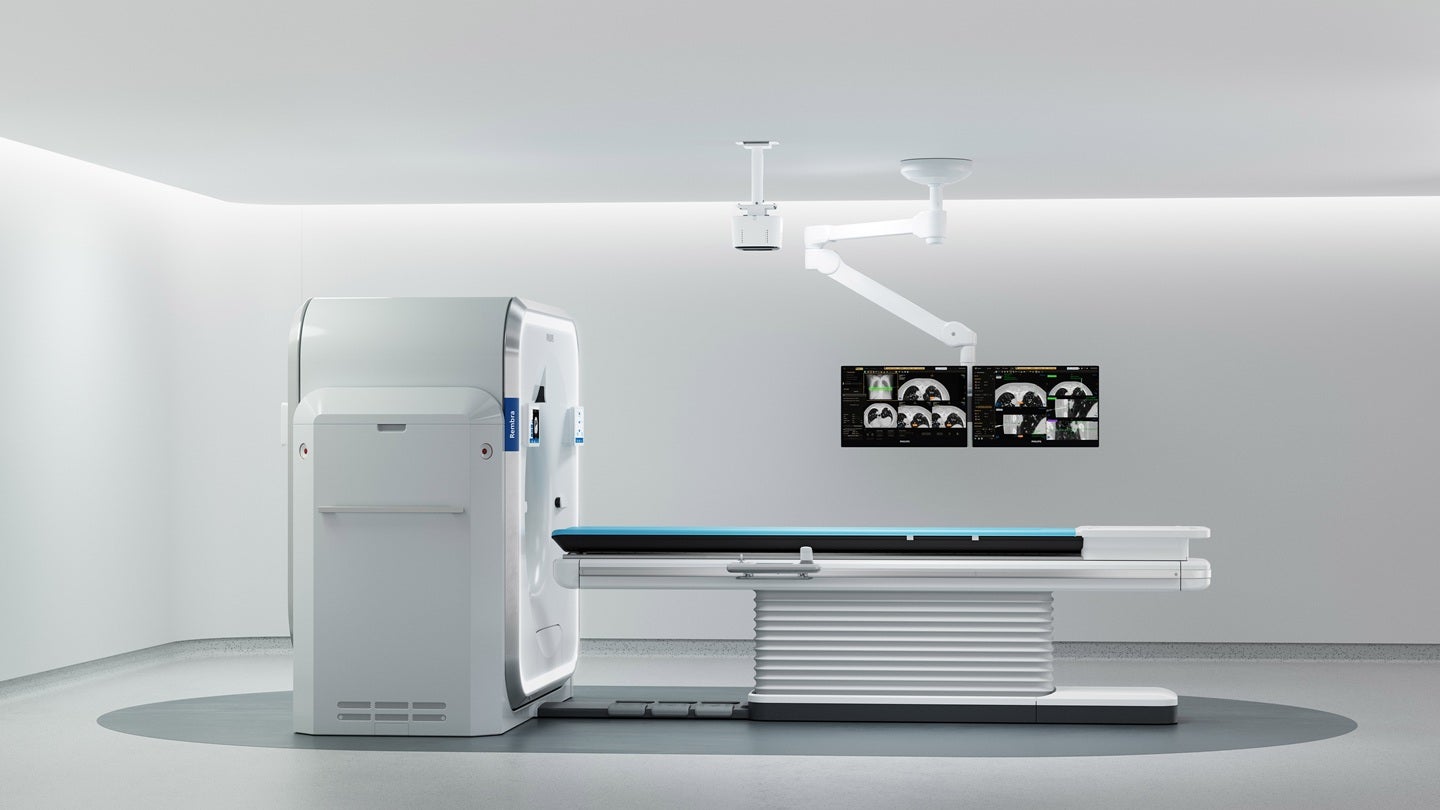
The demands on modern healthcare systems are relentless. Rising patient volumes, increasingly complex medical cases, and persistent staffing shortages are pushing imaging departments to their limits. Today, Royal Philips addressed these challenges with the unveiling of Rembra, a next-generation computed tomography (CT) system designed for acute and high-demand imaging environments. The launch, announced at the European Congress of Radiology (ECR) 2026 in Vienna, signals a significant step forward in diagnostic imaging technology, promising faster scans, improved patient access, and enhanced diagnostic confidence.
Rembra isn’t simply an incremental upgrade. it’s a fundamentally redesigned system, according to Philips. The company recognized the need for a solution built from the ground up to address the realities faced by clinicians daily. “Rembra is built for the realities that clinicians face every day,” stated Dan Xu, Business Leader for Computed Tomography at Philips, in a press statement. “By combining our most advanced detector technology with AI-powered workflows and industry-leading speed, Rembra represents a significant step forward for high-acuity imaging, delivering speed, access and diagnostic confidence when it matters most.”
Addressing the Critical Need for Speed and Throughput
One of the most pressing concerns in emergency and trauma care is the speed at which accurate diagnoses can be made. Rembra directly tackles this issue with its exceptional scanning and reconstruction speeds. The system boasts the capability to reconstruct up to 106 images per second, a figure that dramatically reduces the time between scan acquisition and image availability. This rapid turnaround is crucial in time-sensitive situations like stroke or major trauma, where every second counts. Rembra is designed to handle a high patient throughput, capable of processing up to 270 exams per day, potentially alleviating bottlenecks in busy imaging departments.
Enhanced Patient Comfort and Accessibility
Beyond speed, Philips prioritized patient comfort and accessibility in the design of Rembra. The system features an 85 cm bore – the largest in its class – which accommodates a wider range of patient sizes and body types. This larger bore is particularly beneficial for bariatric patients, those requiring complex interventional procedures, and trauma victims, reducing the need for rescans due to technical limitations and improving overall patient experience. The system also offers a 60cm standard field of view (sFOV) and an 85cm extended field of view (eFOV), allowing for comprehensive anatomical visualization in a single scan. A patient table with a scan range of up to 2.3m and a gantry-to-tablespace of 46cm further enhances flexibility in patient positioning.
Advanced Technology at the Core
The performance of Rembra is underpinned by several key technological innovations. At its heart lies the Philips NanoPanel Precise XD detector, engineered for compatibility with artificial intelligence (AI) algorithms. This detector achieves an in-plane spatial resolution of 23-line pairs per centimeter, enabling detailed visualization of anatomical structures down to 0.25mm. A two-dimensional anti-scatter grid further enhances image clarity, even in challenging imaging scenarios. The integration of AI-enabled smart workflows automates routine tasks, streamlining workflows and improving efficiency for radiology staff.
Philips has also focused on the long-term viability of the system. Rembra is designed to operate reliably in environments with altitudes of up to 5,000 meters and boasts a projected lifespan of up to 20 years with regular maintenance. The company’s “Tube for Life” service program provides coverage for tube replacement costs for up to ten years, offering further peace of mind to healthcare providers.
AI Integration and Workflow Efficiency
The integration of AI isn’t limited to the detector technology. Philips has incorporated AI-powered workflows throughout the Rembra system to automate routine tasks, such as patient positioning and scan parameter selection. This automation reduces the workload on technologists, allowing them to focus on more complex tasks and improve overall efficiency. The AI algorithms also contribute to dose optimization, minimizing radiation exposure for patients even as maintaining image quality.
A Response to Global Healthcare Pressures
The launch of Rembra comes at a critical juncture for healthcare systems worldwide. As highlighted by Philips, rising patient volumes, increasing clinical complexity, and a growing shortage of skilled healthcare professionals are placing unprecedented strain on imaging departments. The World Health Organization (WHO) has repeatedly emphasized the need for increased investment in diagnostic imaging infrastructure to address these challenges and improve patient outcomes. The WHO details the critical role of diagnostic imaging in modern healthcare, noting its importance in early disease detection and effective treatment planning.
The demand for CT scans specifically is projected to continue growing in the coming years, driven by an aging population and the increasing prevalence of chronic diseases. According to a report by Market Research Future, the global CT scanner market is expected to reach $7.8 billion by 2030, growing at a compound annual growth rate (CAGR) of 6.2% from 2022 to 2030. Market Research Future projects significant growth in the CT scanner market, driven by technological advancements and increasing healthcare expenditure.
Recent Innovations from Philips in Medical Imaging
The introduction of Rembra builds on Philips’ ongoing commitment to innovation in medical imaging. Last month, the company launched the InkSpace Imaging Snuggle flexible paediatric body array coil, designed for utilize with its 3.0T magnetic resonance imaging (MRI) systems. As reported by Medical Device Network, the Snuggle coil aims to improve the comfort and image quality for young patients undergoing MRI scans.
Looking Ahead: Regulatory Approvals and Market Availability
Rembra has received CE Marking, signifying its compliance with European safety and performance standards. However, This proves still pending 510(k) clearance from the U.S. Food and Drug Administration (FDA). Philips anticipates receiving FDA clearance in the coming months, paving the way for the system’s launch in the United States. The company showcased Rembra publicly for the first time at ECR 2026 in Vienna, generating significant interest from healthcare professionals and industry observers.
The arrival of Rembra represents a potentially transformative development in the field of diagnostic imaging. By addressing the critical needs for speed, efficiency, and patient comfort, this next-generation CT system promises to help healthcare providers deliver faster, more accurate diagnoses and improve patient outcomes in an increasingly challenging environment. The next step will be monitoring its real-world performance and impact once it becomes more widely available.
What are your thoughts on the latest Rembra CT system? Share your comments below, and let’s discuss the future of medical imaging.
Related reading
- Women’s Health Strategy: No Improvement After One Year as Minister Lacks Urgency
- How the Corona Pandemic Fueled the Fintech Boom: The Rise of Payment Giants like Adyen
- Top Football Betting Strategies: Data, Trading and Bankroll Management (newsdirectory3.com)
- Antiphospholipid Syndrome Management Shifts Toward Individualized Care (archyworldys.com)