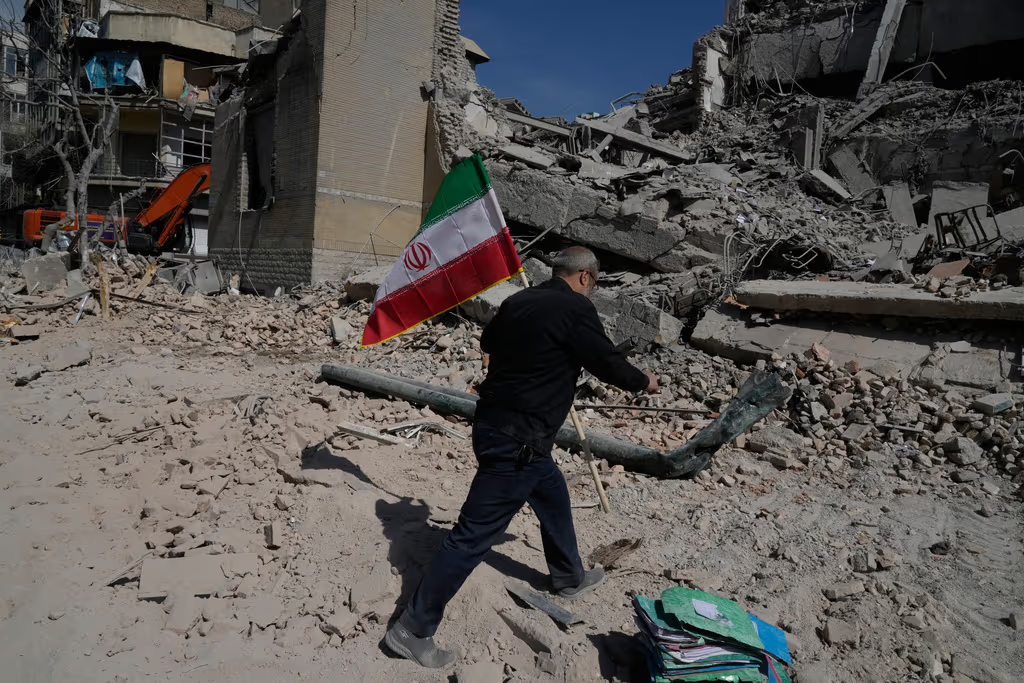
Escalating Tensions in the Middle East: U.S. And Israeli Actions Prompt Concerns of Wider Conflict
The situation in the Middle East remains highly volatile, with escalating military actions by the United States and Israel against targets in Iran and surrounding regions. Recent days have seen a surge in hostilities, prompting international concern and raising fears of a broader regional conflict. Whereas the full extent of the military operations remains fluid, reports indicate a significant increase in firepower directed towards Iran, coupled with heightened security measures across the region. The United States has affirmed its support for Israel, while simultaneously warning against further escalation. The current crisis is rooted in a complex web of geopolitical tensions, including Iran’s nuclear program, its regional influence, and its support for proxy groups.
The recent escalation follows a period of heightened tensions between Iran and Israel, punctuated by covert operations and proxy conflicts. The current exchange of fire represents a significant intensification of these hostilities, with both sides demonstrating a willingness to employ substantial military force. The potential for miscalculation and unintended consequences is high, and diplomatic efforts to de-escalate the situation are ongoing, though currently appear to be yielding limited results. The international community is closely monitoring the developments, with calls for restraint and a return to negotiations.
U.S. And Israeli Military Actions
The U.S. Has indicated a substantial increase in its military capabilities in the region, with officials stating that “firepower over Iran” is set to “surge dramatically,” according to the BBC report. This includes the deployment of additional naval assets and air defense systems. Israel, for its part, has declared a “next phase” in its ongoing conflict, launching attacks against Hezbollah targets in southern Beirut, as reported by Al Jazeera reports. The closure of the Al-Aqsa mosque in Jerusalem further adds to the escalating tensions.
Reports from the region indicate that over 30 Iranian warships have been destroyed, though this claim has not been independently verified and remains contested. The veracity of this claim is difficult to ascertain given the lack of independent access to the conflict zone. The U.S. Military has not confirmed this number, and independent analysts have expressed skepticism. The situation on the ground is rapidly evolving, and accurate information is often difficult to obtain.
Economic Impacts and Regional Displacement
The conflict is already having a significant impact on global markets, particularly the price of oil. As hostilities intensify, concerns about disruptions to oil supplies have led to a surge in prices. Former President Trump has reportedly promised actions to address the rising cost of oil, though the specifics of these actions remain unclear. The economic consequences of a prolonged conflict could be far-reaching, impacting energy markets, global trade, and economic stability.
The humanitarian situation is likewise deteriorating rapidly. In Lebanon, at least 123 people have been killed as a result of Israeli attacks, according to reports. The conflict is causing widespread displacement and creating a growing humanitarian crisis. Nearly 20,000 U.S. Citizens have reportedly returned from the Middle East since the start of the conflict, reflecting growing concerns about safety and security in the region. The U.S. State Department has issued travel advisories urging Americans to avoid travel to the region and has suspended consular activity at the U.S. Embassy in Kuwait due to security concerns.
Political Developments and International Response
The U.S. House of Representatives recently rejected a proposal to curtail President Trump’s war powers in relation to the conflict with Iran. This decision underscores the ongoing political divisions within the United States regarding the appropriate course of action in the Middle East. The rejection of the proposal suggests a continued willingness to support military action and maintain presidential authority in matters of foreign policy.
The international community is grappling with how to respond to the escalating crisis. Calls for de-escalation and a return to diplomacy are growing, but the prospects for a peaceful resolution remain uncertain. The United Nations Security Council has held emergency meetings to discuss the situation, but has been unable to reach a consensus on a unified response. The complexities of the regional dynamics and the conflicting interests of various stakeholders are hindering efforts to uncover a diplomatic solution.
Key Takeaways
- Military tensions between the U.S., Israel, and Iran are rapidly escalating, raising fears of a wider regional conflict.
- Economic impacts are already being felt, with oil prices surging due to concerns about supply disruptions.
- The humanitarian situation is deteriorating, with significant casualties and displacement reported in Lebanon and elsewhere.
- Political divisions within the U.S. And a lack of international consensus are complicating efforts to de-escalate the crisis.
The situation remains highly fluid and unpredictable. Further developments are expected in the coming days, including potential further military actions, diplomatic initiatives, and economic repercussions. The world watches closely as the crisis unfolds, hoping for a peaceful resolution and a return to stability in the Middle East. The next key event to watch will be the upcoming United Nations Security Council meeting scheduled for March 10th, where further discussion and potential resolutions will be considered.
We encourage readers to share their thoughts and perspectives on this critical issue in the comments section below. Your engagement is vital as we continue to provide comprehensive and unbiased coverage of this evolving situation.