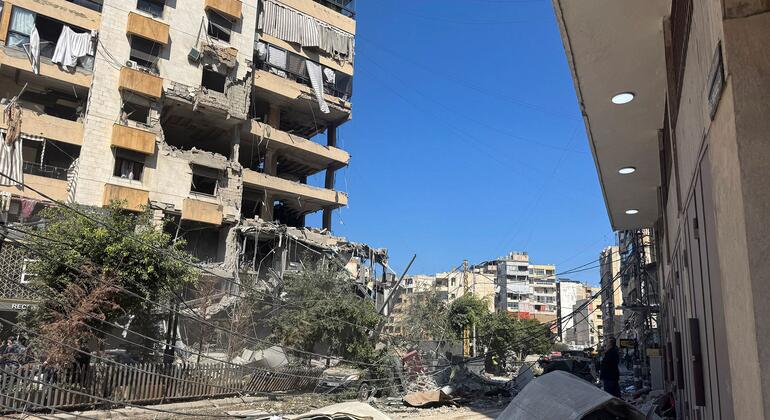
London, United Kingdom – The conflict in the Middle East continues to escalate, entering its sixth day with relentless attacks targeting Iran, Israel, Lebanon, and several Gulf States. Amidst the heightened tensions, reports emerged of a missile fired towards Türkiye allegedly intercepted by NATO forces, a claim vehemently denied by Tehran. The situation remains fluid and deeply concerning, raising fears of a wider regional war and exacerbating existing humanitarian crises. This ongoing instability underscores the urgent need for de-escalation and diplomatic solutions, even as military actions persist.
The current crisis stems from a complex web of geopolitical factors, including longstanding tensions between Iran and Israel, the ongoing conflict in Syria, and the involvement of various regional and international actors. Recent strikes attributed to Israel have targeted Iranian military facilities and personnel, prompting retaliatory actions from Iran and its proxies. The United States has also been drawn into the conflict, conducting strikes within Iran and offering unwavering support to Israel. The potential for miscalculation and unintended consequences is exceptionally high, making the current situation particularly dangerous.
Escalation and Conflicting Reports
Recent developments paint a grim picture of escalating hostilities. According to reports from CBS News, Defense Secretary Pete Hegseth stated the U.S. Is “accelerating, not decelerating” its military involvement in the region, with additional assets being deployed. CBS News also reported a U.S. Torpedo sank an Iranian warship in the Indian Ocean, a claim that has not been independently verified by other sources. The Iranian regime announced a postponement of Ayatollah Ali Khamenei’s three-day funeral, citing the ongoing escalation of the war. A U.S.-based organization reports that over 1,000 civilians have been killed in Iran, including more than 180 children, since the conflict began, though these figures remain difficult to independently confirm.
Adding to the complexity, Azerbaijan has lodged a “strong protest” after alleging that two Iranian drones struck its territory, injuring two civilians. CBS News reports that Azerbaijan’s foreign ministry condemned the attacks and reserved the right to retaliate. This incident highlights the potential for the conflict to spill over into neighboring countries, further destabilizing the region. The situation in Türkiye remains sensitive, with initial reports of a NATO interception of an Iranian missile being disputed by Iranian officials.
NATO’s Position and European Support
NATO Secretary General Mark Rutte has emphasized that while the Alliance is not directly involved in military operations, it stands ready to defend every inch of its member states. Eunews reports that Rutte noted widespread support among European allies for the U.S. And Israeli military campaign against Iran, with some nations providing various forms of support. Rutte also highlighted the positive sentiment surrounding the reported weakening of Iran’s nuclear and ballistic capabilities and the death of Ayatollah Ali Khamenei, stating, “I think we are all better off with the fact that Khamenei is now gone,” given his alleged responsibility for the deaths of thousands of protestors since January. He reiterated NATO’s goal of increasing military spending to 5% of GDP by 2035, emphasizing the need for increased investment and production to meet capability goals.
A YouTube interview with Mark Rutte, as reported by startpage, further details his perspective on the Iran crisis and the ongoing war in Ukraine, outlining NATO’s stance on these critical geopolitical challenges. The interview underscores the Alliance’s commitment to collective security and its readiness to respond to evolving threats. The level of European support for the U.S.-led campaign suggests a unified front against Iran’s perceived destabilizing activities, though the extent of that support varies among individual member states.
The Human Cost and Humanitarian Concerns
Beyond the geopolitical implications, the escalating conflict is taking a devastating toll on civilians. The reported death toll of over 1,000 civilians in Iran, including a significant number of children, is deeply alarming. Six U.S. Troops have also been killed since the war began, highlighting the direct human cost for all parties involved. The disruption of essential services, displacement of populations, and destruction of infrastructure are exacerbating existing humanitarian crises in the region. International organizations, such as the United Nations, are struggling to provide adequate assistance to those affected by the conflict.
The potential for Iran to enrich uranium to 90%, or weapons-grade, was reportedly a key concern before the recent strikes, according to Israeli officials. However, these officials also indicated that Iran’s weaponization program was “still far from producing a classic nuclear bomb.” This assessment suggests that while Iran’s nuclear ambitions remain a threat, the immediate danger of a nuclear weapon has been mitigated, at least temporarily. The long-term implications of the conflict for Iran’s nuclear program remain uncertain.
Looking Ahead: Uncertainties and Potential Scenarios
The future trajectory of the conflict remains highly uncertain. Several potential scenarios could unfold, ranging from a negotiated ceasefire to a full-scale regional war. The involvement of multiple actors, the complexity of the geopolitical landscape, and the potential for miscalculation all contribute to the unpredictability of the situation. The United States’ continued military involvement and its unwavering support for Israel are likely to be key factors shaping the outcome of the conflict.
Diplomatic efforts to de-escalate the crisis are ongoing, but their prospects for success remain limited. The deep-seated mistrust between Iran and Israel, coupled with the involvement of other regional powers, makes it difficult to find common ground. A lasting resolution to the conflict will require a comprehensive approach that addresses the underlying causes of instability and promotes regional cooperation. The international community must prioritize diplomatic solutions and humanitarian assistance to prevent further escalation and alleviate the suffering of civilians.
The next key development to watch will be the response from Iran following the recent U.S. And Israeli strikes. Further escalation is likely if Iran retaliates, while a de-escalation could occur if Iran chooses to exercise restraint. The international community will be closely monitoring the situation and urging all parties to exercise caution and prioritize diplomatic solutions.
What are your thoughts on the escalating conflict in the Middle East? Share your comments below and join the conversation.
Related reading