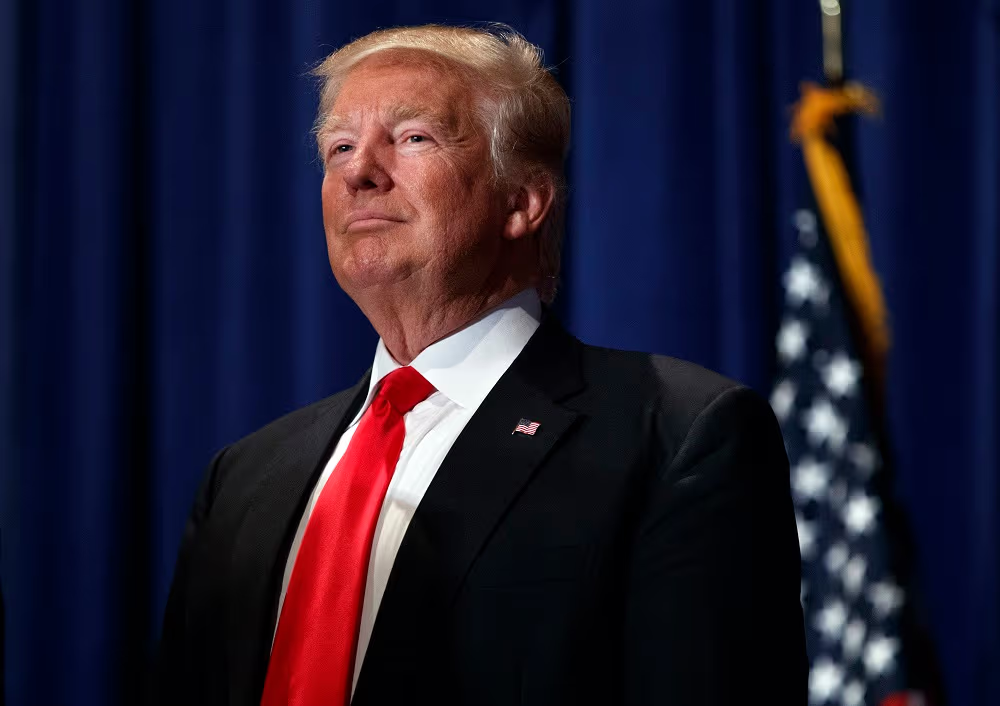
Lisbon, Portugal – Amidst escalating military operations in Iran, United States President Donald Trump has signaled a potential shift in foreign policy focus towards Cuba, suggesting the island nation could see political change “very soon.” The pronouncements, made during a White House event on March 5, 2026, have reignited debate about the future of U.S.-Cuba relations and the potential for further intervention in the region. This comes as the U.S. And Israel continue what Trump described as efforts to “totally demolish the enemy” in Iran, a conflict that has dominated international headlines.
Trump’s comments, reported by CNBC, BBC News, and Al Jazeera, indicate a belief that the Cuban government is increasingly open to negotiations with the United States. He suggested that economic pressure, international isolation, and a deepening crisis within Cuba are driving Havana to seek a resolution with Washington. The President also indicated his intention to involve Secretary of State Marco Rubio in any potential discussions, highlighting Rubio’s long-standing critical stance towards the Cuban regime. This renewed focus on Cuba follows a year of significant geopolitical shifts in Latin America, including the removal of Nicolás Maduro from power in Venezuela earlier in 2026.
The timing of these statements is particularly noteworthy, occurring as Cuba grapples with a severe energy crisis. A recent 24-hour nationwide blackout crippled the island, exacerbating existing economic hardships and fueling discontent among the population. Trump’s assertion that Cuba is “ready to fall” echoes similar sentiments expressed in the past, suggesting a long-held belief within his administration that the Cuban government is vulnerable to collapse. The situation in Cuba is further complicated by the loss of its primary oil supplier, Venezuela, following Maduro’s removal, a consequence of increased U.S. Pressure.
A History of Tensions: U.S.-Cuba Relations
The relationship between the United States and Cuba has been fraught with tension since the 1959 Cuban Revolution, which brought Fidel Castro to power. The revolution led to the nationalization of U.S.-owned businesses and properties, prompting Washington to impose a comprehensive economic embargo that remains in effect today. As the BBC reported, this embargo, coupled with various other sanctions, has significantly impacted the Cuban economy for over six decades, making it one of the longest-standing conflicts in U.S. Foreign policy.
Throughout the years, numerous attempts have been made by both governments to initiate dialogue and normalize relations. The Obama administration, for example, took steps to ease restrictions on travel and remittances, and re-established diplomatic ties in 2015. However, these efforts were largely reversed under the subsequent administration, with tighter sanctions reimposed and diplomatic relations scaled back. The current situation represents a continuation of this cyclical pattern of engagement and estrangement, with Trump signaling a return to a more confrontational approach.
Trump’s Strategy: Pressure and Potential Negotiation
President Trump’s strategy appears to center on intensifying economic and political pressure on Cuba, with the aim of forcing a change in government. He believes that the island’s current economic woes and internal unrest create a favorable environment for such a shift. The involvement of Secretary of State Marco Rubio, a Cuban-American politician known for his staunch opposition to the Cuban regime, underscores the administration’s commitment to this approach. Rubio has consistently advocated for a hardline stance towards Havana and has been a vocal critic of the Cuban government’s human rights record.
Although Trump has indicated a willingness to negotiate with Cuba, his rhetoric suggests that any such negotiations would be conducted from a position of strength. He has implied that the Cuban government is actively seeking a deal, but has not provided specific details about the terms or conditions of such an agreement. The President’s comments also raise questions about the potential for military intervention, although he has emphasized that the focus remains on completing operations in Iran first. The “Operation Epic Force” in Iran, as it has been dubbed, remains the immediate priority, but Trump’s statements clearly indicate that Cuba is next in line for increased scrutiny.
The Cuban Response and International Implications
As of March 6, 2026, the Cuban government has not issued an official response to President Trump’s recent statements. However, given the historical context and the ongoing tensions between the two countries, it is likely that Havana will view these pronouncements with skepticism and concern. The Cuban government has consistently condemned the U.S. Embargo and has accused Washington of interfering in its internal affairs.
The potential for increased U.S. Pressure on Cuba also has broader implications for the region. Cuba remains a key ally of several Latin American countries, and any significant political upheaval on the island could have ripple effects throughout the region. The situation is further complicated by the ongoing economic and political instability in Venezuela, which has already created a humanitarian crisis and contributed to regional migration flows. The removal of Maduro earlier this year, as reported by multiple news outlets, significantly altered the geopolitical landscape in Latin America, leaving Cuba increasingly isolated and vulnerable.
Economic Crisis and Fuel Shortages in Cuba
Cuba is currently facing one of its most severe economic crises in decades, characterized by widespread shortages of food, medicine, and fuel. The island’s economy is heavily reliant on tourism and remittances, both of which have been negatively impacted by the COVID-19 pandemic and the U.S. Embargo. The loss of Venezuelan oil, a crucial source of energy for Cuba, has further exacerbated the situation, leading to frequent power outages and transportation disruptions. The BBC detailed the recent 24-hour nationwide blackout as a symptom of this deeper systemic crisis.
These economic hardships have fueled growing discontent among the Cuban population, leading to sporadic protests and calls for political change. The Cuban government has responded by tightening its grip on dissent and restricting access to information. However, the underlying economic problems remain unresolved, and the situation is likely to worsen unless significant reforms are implemented or external assistance is provided.
Rubio’s Role and Potential Negotiations
Secretary of State Marco Rubio’s potential involvement in any negotiations with Cuba is a significant development. Rubio, a first-generation Cuban-American, has been a consistent and vocal critic of the Cuban government throughout his political career. He has advocated for maintaining a firm stance against Havana and has called for greater support for the Cuban people. His appointment as a key negotiator would signal a clear message that the U.S. Is not willing to compromise on its core principles regarding human rights and democracy in Cuba.
However, Rubio’s involvement could also create challenges. His strong anti-Castro views may make it difficult for him to engage in constructive dialogue with the Cuban government. It remains to be seen whether he will be able to bridge the gap between the two sides and find a path towards a mutually acceptable resolution. The success of any negotiations will likely depend on the willingness of both governments to compromise and address the underlying issues that have plagued U.S.-Cuba relations for decades.
The situation remains fluid, with the outcome uncertain. The immediate focus remains on the ongoing military operations in Iran, but President Trump has made it clear that Cuba is next on his administration’s agenda. The coming weeks and months will be crucial in determining the future of U.S.-Cuba relations and the fate of the Cuban people.
Key Takeaways
- President Trump has indicated a shift in focus towards Cuba following military actions in Iran.
- He believes Cuba is on the verge of political change and open to negotiations with the U.S.
- Secretary of State Marco Rubio is expected to play a key role in any potential discussions.
- Cuba is currently facing a severe economic crisis and energy shortages.
- The U.S. Embargo and the loss of Venezuelan oil have significantly impacted the Cuban economy.
The next significant development to watch will be any official statement from the Cuban government responding to President Trump’s remarks. Further updates on the situation in Iran and the potential for Secretary Rubio’s involvement in Cuba are also expected in the coming days. World Today Journal will continue to monitor these developments and provide timely and accurate reporting. Share your thoughts on this evolving situation in the comments below.
Related reading