Sofia, Bulgaria – A recently completed, classified intelligence assessment by the U.S. National Intelligence Council (NIC) casts doubt on the likelihood of regime change in Iran following the recent joint military actions undertaken by the United States and Israel. The assessment, finalized approximately one week before the commencement of strikes on Iranian soil on February 28th, suggests that even a large-scale offensive would likely fail to topple the current theocratic government and its military apparatus. This finding raises critical questions about the long-term strategy and objectives of the ongoing conflict in the Middle East.
The report, as detailed by The Washington Post and corroborated by three informed sources, indicates that a scenario involving the Iranian opposition seizing power is considered improbable. This conclusion stems from an analysis of potential succession scenarios, both in the event of targeted attacks against Iranian leadership and broader campaigns aimed at the country’s political infrastructure. The NIC assessment anticipates that the Iranian religious and military establishment would react to the potential elimination of Supreme Leader Ayatollah Ali Khamenei through established protocols designed to ensure continuity of power. This assessment underscores the deeply entrenched nature of the Iranian regime and its capacity to withstand significant external pressure.
Intelligence Assessment Preceded Escalation
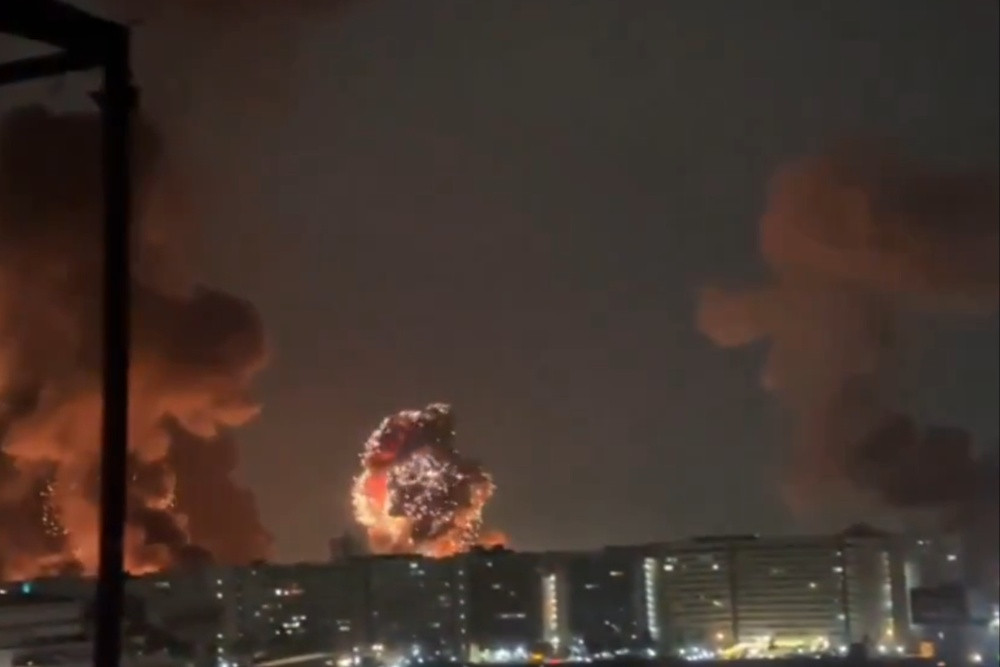
The timing of the NIC’s report is particularly noteworthy. Completed just days before the U.S. And Israel launched a series of strikes against Iranian targets, the analysis provided policymakers with a sobering assessment of the potential outcomes of military intervention. The strikes, which began on February 28th, 2026, included attacks on a compound belonging to Ayatollah Khamenei in Tehran, as documented by satellite imagery and video footage published by The Washington Post. These images reveal the extent of the damage inflicted on various targets across Iran, including infrastructure related to its ballistic missile program and naval capabilities.
The NIC, comprised of experienced analysts from all 18 U.S. Intelligence agencies, plays a crucial role in providing objective assessments to policymakers. Its reports are intended to reflect a consensus view across the intelligence community. The fact that this assessment was completed prior to the escalation of hostilities suggests a deliberate effort to anticipate potential consequences and inform strategic decision-making. But, the extent to which the Trump administration considered these findings before authorizing the military operation remains unclear. The White House has not publicly disclosed whether President Trump was briefed on the NIC’s conclusions.
Operation Epic Fury and U.S. Objectives
Despite the intelligence assessment’s pessimistic outlook regarding regime change, the Trump administration has publicly maintained a firm stance on its objectives in Iran. A White House spokesperson stated that “Operation Epic Fury” aims to dismantle Iran’s ballistic missile capabilities, eliminate its navy, halt its support for allied militias and prevent the country from acquiring nuclear weapons. The spokesperson further asserted that the Iranian regime is “on its knees,” a claim that remains to be independently verified.
The initial phase of the conflict has seen a rapid escalation of hostilities. Following the U.S. And Israeli strikes, Iran retaliated with missile and drone attacks targeting Israel and U.S. Bases in the Persian Gulf region. This reciprocal exchange of attacks has raised concerns about a wider regional conflict, potentially drawing in other actors and destabilizing the already volatile Middle East. The situation remains highly fluid, and the potential for further escalation is significant.
The Role of the National Intelligence Council
The National Intelligence Council (NIC) serves as a critical component of the U.S. Intelligence apparatus. Established to provide long-term strategic analysis, the NIC draws upon the expertise of analysts from across the intelligence community to produce comprehensive assessments on a wide range of global issues. Its reports are intended to be objective and non-partisan, offering policymakers a clear-eyed view of the challenges and opportunities facing the United States. The NIC’s assessment regarding Iran highlights the complexities of attempting to influence political outcomes through military intervention, particularly in countries with deeply entrenched authoritarian regimes.
The NIC’s reluctance to comment on the specifics of the classified report underscores the sensitivity of the information and the ongoing nature of the situation. The U.S. Intelligence community generally maintains a policy of not commenting on classified assessments, particularly those related to ongoing military operations. This practice is intended to protect sources and methods and to avoid potentially compromising national security.
Implications for Regional Stability
The assessment that a large-scale offensive is unlikely to topple the Iranian regime has significant implications for regional stability. It suggests that the U.S. And its allies may need to reassess their strategies for dealing with Iran, potentially shifting away from a focus on regime change towards a more containment-oriented approach. However, such a shift could also be interpreted as a sign of weakness, potentially emboldening Iran to pursue its regional ambitions more aggressively.
The ongoing conflict also raises concerns about the potential for unintended consequences. A prolonged and escalating conflict could lead to a humanitarian crisis, destabilize neighboring countries, and disrupt global energy markets. The risk of miscalculation and escalation is particularly high, given the complex geopolitical dynamics of the region and the involvement of multiple actors.
Iran’s Response and Internal Dynamics
The Iranian regime’s response to the U.S. And Israeli strikes has been characterized by a combination of defiance and retaliation. While the regime has vowed to avenge the attacks, it has also signaled a willingness to engage in diplomatic negotiations, albeit on its own terms. The internal dynamics within Iran are also likely to play a significant role in shaping the country’s response. The death of Ayatollah Ali Khamenei, as initially anticipated in the NIC assessment, would likely trigger a power struggle within the Iranian establishment, but as the report suggests, this is unlikely to result in the collapse of the regime. Instead, the existing power structure is expected to adapt and consolidate its control.
The potential for internal unrest within Iran remains a concern. The country has been grappling with economic challenges and social grievances for years, and the recent military escalation could exacerbate these tensions. However, the regime has a proven track record of suppressing dissent and maintaining control through a combination of force and propaganda.
Looking Ahead
The situation in the Middle East remains highly volatile and unpredictable. The U.S. And Israel are continuing to assess the impact of their strikes on Iran, and the Iranian regime is likely to continue its retaliatory actions. The NIC’s assessment suggests that a quick and decisive victory is unlikely, and that a prolonged period of instability is the most probable outcome.
The international community is closely monitoring the situation, and calls for de-escalation and diplomatic negotiations are growing. However, the deep-seated mistrust and animosity between the U.S., Israel, and Iran make a peaceful resolution challenging to achieve. The coming weeks and months will be critical in determining the future of the region and the potential for a wider conflict.
The next key development to watch will be the United Nations Security Council’s scheduled emergency session on March 15th, 2026, where the escalating conflict in the Middle East will be discussed. Further updates and analysis will be provided as the situation unfolds.
What are your thoughts on the current situation? Share your perspectives in the comments below.