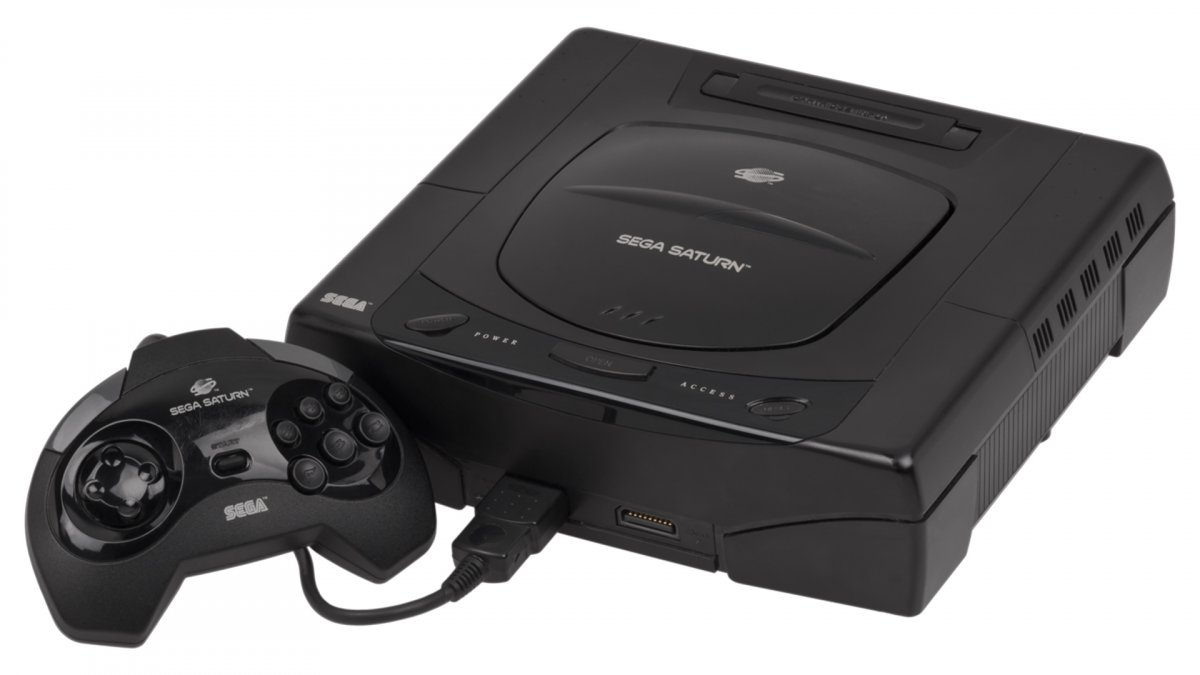
The Sega Saturn’s Secret Weapon: Uncovering the Story of the Canceled Accelerator
For decades, a tantalizing rumor circulated among Sega Saturn enthusiasts: the existence of a powerful graphics accelerator designed to boost the console’s capabilities and better compete with the Sony PlayStation and Nintendo 64. Often dismissed as an urban legend, the story persisted, fueled by the Saturn’s struggles in the marketplace and the desire for a “what if” scenario. Now, that long-held secret appears to have been confirmed. Recent reports indicate that Sega was, in fact, developing an enhancement for the Saturn, codenamed “TRIP,” aimed at bridging the performance gap with its rivals. This revelation sheds new light on a critical period in gaming history and the challenges faced by Sega as it navigated the turbulent fifth generation of video game consoles.
The Sega Saturn, released in Japan in November 1994, North America in May 1995, and Europe in July 1995, was a technically ambitious machine. Featuring a dual-CPU architecture and a complex array of processors, it offered unique capabilities but proved difficult for developers to master. While successful in Japan, the Saturn failed to gain significant traction in the United States and Europe, largely due to a combination of factors including a surprise launch and strong competition from the PlayStation. The PlayStation, with its simpler architecture and aggressive marketing, quickly became the dominant force in the console market, leaving the Saturn to struggle for relevance. The story of the accelerator, represents a fascinating “what could have been” moment for Sega fans.
The TRIP Project: A Response to Arcade Advancements
The confirmation of the accelerator project comes from Junichi Naoi, a former Sega developer who played a key role in its conception. According to reports, Naoi proposed the development of the accelerator when it became apparent that games being developed for Sega’s Model 3 arcade hardware were too advanced to be faithfully reproduced on the Saturn. The Sega Saturn, while capable, was beginning to present its limitations when compared to the cutting-edge graphics and processing power of Sega’s own arcade systems. The Model 3, known for titles like Virtua Fighter 3, pushed the boundaries of 3D graphics, and replicating that experience on a home console proved a significant challenge.
The TRIP accelerator, intended to utilize the Hitachi SH-3 chipset, was envisioned as a way to expand the Saturn’s capabilities and enable more faithful conversions of arcade titles. The SH-3 was a 32-bit RISC processor that offered improved performance over the Saturn’s existing Hitachi SH-2 processors. The goal was to provide a significant boost to the console’s graphics processing power, allowing it to handle the complex polygons and textures of games like Virtua Fighter 3 with greater fidelity. Beyond arcade conversions, the accelerator was also considered for ambitious projects like a Saturn version of Shenmue, a groundbreaking open-world RPG initially conceived for the platform.
A Shift in Focus: The Rise of the Dreamcast
Despite the potential benefits, the TRIP project was ultimately canceled. The decision came as Sega shifted its focus towards the development of its next-generation console, the Dreamcast. Launched in 1998 in Japan and 1999 in North America and Europe, the Dreamcast represented a fresh start for Sega, featuring a new architecture and a focus on online gaming. As detailed in Wikipedia, the Dreamcast ultimately became the successor to the Saturn, and Sega redirected its resources towards ensuring the success of its new platform. The planned Saturn accelerator was deemed no longer necessary, as the Dreamcast offered a more substantial leap forward in terms of hardware capabilities.
The cancellation of TRIP also coincided with internal restructuring at Sega. Naoi himself transitioned to Sega’s AM Hardware Research and Development division, where he worked on the Sega Hikaru arcade board. He later left Sega to join Sony Computer Entertainment, where he contributed to the development of the PlayStation 3. This move highlights the shifting landscape of the gaming industry during this period and the movement of talent between competing companies. Naoi’s involvement in the PlayStation 3’s development is a particularly intriguing footnote, given his earlier work on a potential Saturn upgrade.
The Saturn’s Legacy and the Allure of Unreleased Hardware
The story of the Saturn accelerator serves as a reminder of the intense competition and rapid innovation that characterized the 1990s gaming industry. Sega’s willingness to explore hardware enhancements for the Saturn demonstrates its commitment to competing with Sony and Nintendo, even as it faced mounting challenges. While the TRIP project never came to fruition, it remains a fascinating piece of gaming history, sparking the imagination of enthusiasts and fueling speculation about what might have been. The Saturn, despite its commercial struggles, holds a special place in the hearts of many gamers, known for its unique library of titles and its innovative hardware.
The allure of unreleased hardware and canceled projects is a common phenomenon in the gaming world. These “lost” technologies often represent ambitious ideas that were ahead of their time or fell victim to changing market conditions. The Saturn accelerator is just one example of a promising concept that never saw the light of day, leaving fans to wonder about its potential impact on the console’s legacy. The confirmation of its existence, thanks to Naoi’s revelations, provides a valuable glimpse into the inner workings of Sega during a pivotal moment in gaming history.
The Sega Saturn sold approximately 9.26 million units worldwide, with 5.75 million units sold in Japan, 1.8 million in the United States, and 1 million in Europe, according to data available on Wikipedia. While these numbers are respectable, they pale in comparison to the PlayStation’s sales of over 102 million units. The Saturn’s failure to achieve mainstream success in North America and Europe ultimately contributed to Sega’s decision to exit the console hardware market in 2001.
The story of the Sega Saturn and the canceled TRIP accelerator is a compelling example of how technological innovation, market forces, and strategic decisions can shape the course of gaming history. It’s a reminder that even the most ambitious projects can be derailed by unforeseen circumstances, and that the path to success in the gaming industry is often fraught with challenges.
As the gaming community continues to explore and preserve the history of classic consoles, stories like this serve as a valuable reminder of the creativity and ingenuity that drove the industry forward. The confirmation of the Saturn accelerator project is a significant development for enthusiasts, offering a new perspective on a beloved console and the challenges faced by Sega during a critical period in its history.
Looking ahead, the legacy of the Sega Saturn continues to inspire developers and enthusiasts alike. The console’s unique library of games and its innovative hardware have earned it a dedicated following, and its influence can still be seen in modern gaming. The story of the TRIP accelerator serves as a testament to Sega’s ambition and its willingness to push the boundaries of what was possible, even in the face of adversity.
The next major event related to Sega’s history will likely be further archival discoveries and potential interviews with other key figures from the era. As more information comes to light, our understanding of the Sega Saturn and its place in gaming history will continue to evolve. We encourage readers to share their own memories and insights about the Saturn in the comments below.
Worth a look