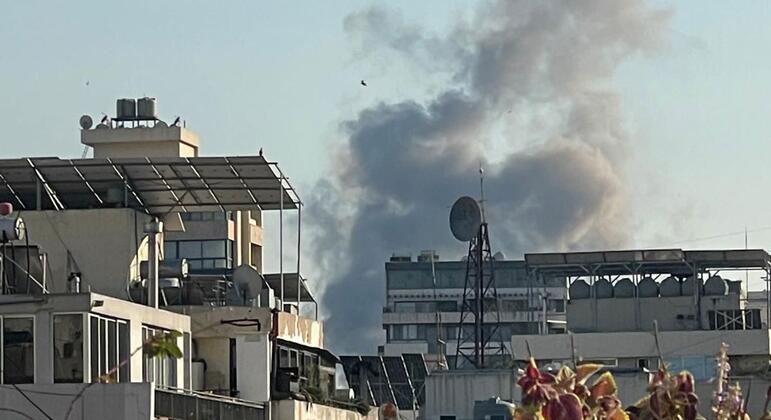
Beirut, Lebanon – A fragile sense of optimism surrounding Lebanon’s tentative steps toward stability has been shattered, as escalating violence threatens to plunge the nation back into a prolonged period of turmoil. Just last week, the country appeared to be on a path toward recovery, with progress reported in economic reform, preparations for legislative elections, and even a warming of relations with Syria. However, a surge in hostilities early this week has abruptly halted this momentum, leaving communities reeling and raising fears of a wider regional conflict.
The dramatic shift in Lebanon’s fortunes was underscored by a statement released on March 7th by Jeanine Hennis-Plasschaert, the United Nations Special Coordinator for Lebanon. Hennis-Plasschaert noted that while challenges remained – including persistent airstrikes, political infighting, and institutional stagnation – there had been tangible progress. This progress, she warned, has now reach to a “screeching halt,” as Lebanon finds itself once again embroiled in violence. Families who had recently returned to their homes are now displaced, and public sentiment is shifting from disbelief to outrage, fueled by hardening rhetoric and a rising number of direct hits from ongoing military actions.
Escalating Tensions and the Risk of Wider Conflict
The current crisis stems from a recent escalation of regional tensions, with Hezbollah reportedly launching missiles at Israel on Monday, triggering a retaliatory response. This has drawn Lebanon directly into the expanding Middle East crisis, reversing the positive trajectory observed just days prior. The UN Special Coordinator emphasized that continued military action will not yield a lasting victory for any party involved, but will instead deepen instability and inflict further suffering – a pattern tragically repeated throughout Lebanon’s history. The situation is particularly concerning given the recent reports of injuries to UN peacekeepers serving with the UN Interim Force in Lebanon (UNIFIL).
On Friday, three Ghanaian peacekeepers with UNIFIL were injured inside their position in Al Qawzah amid heavy fire, according to a statement released by UN Secretary-General António Guterres. Guterres condemned the incident, stressing that UN personnel and installations “must be respected at all times” and urging all parties to de-escalate and adhere to their obligations under UN Security Council Resolution 1701. This resolution, passed in 2006, remains the internationally recognized framework for ending the cycles of violence that have plagued Lebanese and Israeli citizens for decades, though its implementation has been incomplete and hampered by a lack of trust.
Resolution 1701: A Fragile Framework
Adopted in the wake of the 2006 Lebanon War, UN Security Council Resolution 1701 called for a ceasefire, the withdrawal of Israeli forces from Lebanon, and the deployment of UNIFIL to monitor the cessation of hostilities and assist the Lebanese government in asserting its authority over its territory. The UN News Centre provides a detailed overview of Resolution 1701, highlighting its key provisions and the challenges in its implementation. While the resolution initially brought a period of relative calm, it has been repeatedly tested by subsequent flare-ups of violence and a persistent lack of full compliance from all parties.
Hennis-Plasschaert’s statement underscores the urgency of returning to the principles enshrined in Resolution 1701, emphasizing that it remains the only viable path toward a sustainable resolution. However, she also acknowledged the deep-seated mistrust that has hindered its full implementation, warning that the current situation is poised to worsen if hostilities continue. “As bad as things are today, they are set to get even worse,” she cautioned, stating that the choice is clear: “stay on a path of death and destruction, or commit to restraint, engagement and dialogue.”
Economic and Political Progress Briefly Gained
The recent deterioration in security comes at a particularly sensitive time for Lebanon, which had been experiencing a glimmer of hope on the economic and political fronts. Prior to the escalation of violence, the Lebanese armed forces were reportedly making strides in extending state authority, and long-promised reforms were finally gaining traction. Preparations for legislative elections were underway, offering a potential opportunity for a renewed mandate and a more stable political landscape. A significant World Bank loan was poised to kick-start reconstruction efforts, offering a much-needed boost to the country’s battered economy.
Perhaps most surprisingly, a warming diplomatic track with Syria was opening up new avenues for bilateral cooperation. This development, while controversial for some, represented a potential step toward addressing long-standing regional tensions and fostering greater stability. However, these positive developments have now been overshadowed by the renewed violence, casting a shadow over Lebanon’s prospects for recovery. The UN Special Coordinator’s assessment paints a stark picture of a nation on the brink, where hard-won gains are rapidly being eroded by escalating conflict.
The Role of UNIFIL
The UN Interim Force in Lebanon (UNIFIL) plays a crucial role in monitoring the cessation of hostilities and supporting the Lebanese Armed Forces in maintaining stability in southern Lebanon. UNIFIL’s official website provides detailed information about its mandate, operations, and ongoing efforts to promote peace and security in the region. The recent injuries sustained by Ghanaian peacekeepers underscore the risks faced by UN personnel operating in a volatile environment. The Secretary-General’s condemnation of the incident highlights the importance of respecting the safety and security of UNIFIL troops and upholding their mandate.
The Blue Line, demarcated by the United Nations in 2000, serves as a boundary between Lebanon and Israel. UNIFIL emphasizes the need for constructive re-engagement regarding the Blue Line to ensure stability. However, disputes over the precise alignment of the Blue Line and allegations of violations by both sides continue to fuel tensions and contribute to the risk of escalation.
Looking Ahead: A Call for Restraint and Dialogue
The situation in Lebanon remains highly volatile and unpredictable. The immediate priority is to halt the ongoing hostilities and prevent further escalation. A return to the framework of UN Security Council Resolution 1701, coupled with a renewed commitment to dialogue and restraint from all parties, is essential to de-escalate the crisis and pave the way for a sustainable resolution. The international community must also step up its efforts to provide humanitarian assistance to those affected by the violence and support Lebanon’s long-term recovery.
The next critical development to watch will be the response of the UN Security Council to the escalating crisis. A meeting is expected in the coming days to discuss the situation and consider potential measures to de-escalate tensions and support UNIFIL’s efforts. The outcome of this meeting will be crucial in determining the future trajectory of the conflict and the prospects for peace in Lebanon.
We encourage readers to share their thoughts and perspectives on this critical situation in the comments below. Your insights are valuable as we continue to monitor and report on developments in Lebanon and the wider region.
Related reading