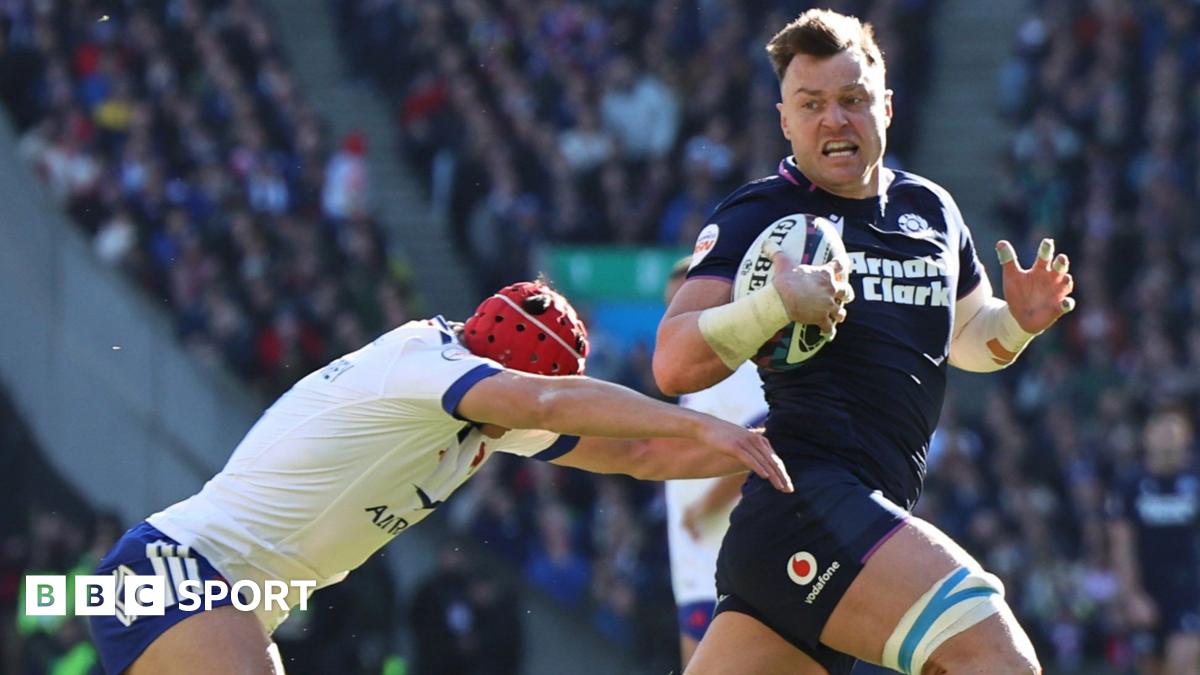
The narrative surrounding Scottish rugby has undergone a dramatic shift in recent weeks. From facing potential relegation battles to standing on the precipice of Six Nations glory, Gregor Townsend’s squad has defied expectations, fueled by a newfound resilience and a commitment to consistent performance. This resurgence, highlighted by recent victories against Wales and France, sets the stage for a monumental clash with Ireland in Dublin, a fixture that could very well decide the championship’s fate. The journey to this point hasn’t been without its challenges, but the team’s ability to overcome adversity and maintain focus has been the defining characteristic of their campaign.
Central to Scotland’s transformation has been the return to fitness of key players, most notably Jack Dempsey. The Australian-born flanker, now representing Scotland through ancestry, has proven to be a pivotal figure in the back row, bringing physicality and dynamism to the team’s attack. His presence adds another layer of complexity to an already formidable Scottish side, and his impact was keenly felt in the hard-fought victory over France. The ability to consistently field a strong and healthy squad has been a luxury Scotland hasn’t always enjoyed, but this year, they appear to be benefiting from a bit of good fortune.
From Setbacks to Strength: A Turning Point for Scottish Rugby
Scotland’s current form represents a significant departure from past Six Nations campaigns, often marred by inconsistency and heartbreaking defeats. Historically, the team has struggled to build momentum, frequently faltering after promising starts. But, this year, a clear emphasis on maintaining focus and executing their game plan has yielded impressive results. The victory over England at Twickenham in February served as a crucial confidence booster, but it was the subsequent wins against Wales and France that truly demonstrated Scotland’s ability to compete with the best teams in Europe. According to reports, the team made a conscious decision to avoid the pitfalls of previous seasons, vowing to maintain a high level of intensity throughout the tournament.
The resilience of the squad has been particularly noteworthy. Injuries, a common occurrence in the brutal world of rugby, threatened to derail their campaign. Dempsey’s initial bicep injury, sustained in the win over England, cast a shadow over their prospects. However, his swift recovery and return to the starting lineup against France underscored the team’s medical staff’s effectiveness and Dempsey’s own determination. This ability to overcome setbacks and maintain a positive mindset has been a key factor in their success. The Irish Times reported on March 5th, 2026, that Dempsey had been passed fit to return for the crucial match against France.
Dempsey’s Impact and the Evolution of Scotland’s Game
Jack Dempsey’s journey to representing Scotland is a compelling story in itself. Born in Sydney, New South Wales, on April 12, 1994, Dempsey qualified for Scotland through his maternal grandfather’s lineage. Wikipedia details his career, noting his previous experience playing for the Waratahs and Glasgow Warriors. His arrival in Scotland in 2021 brought a new dimension to the Glasgow Warriors’ back row, and he quickly established himself as a key player. Dempsey’s physicality and work rate have been instrumental in Scotland’s success, providing a platform for the team’s attacking prowess.
Beyond Dempsey’s individual contribution, Scotland’s improved performance can be attributed to a more cohesive and strategic approach to the game. Townsend has instilled a clear identity, emphasizing prompt-paced, attacking rugby with a strong emphasis on quick ruck speed. This style of play suits Dempsey’s strengths, allowing him to exploit space and create impactful carries. The team’s ability to maintain possession and build phases of attack has been particularly impressive, wearing down opponents and creating scoring opportunities. The focus on a “one game at a time” mantra, as highlighted by Matt Fagerson, has also helped the team stay grounded and avoid complacency.
The Road to Dublin: A Test of Scotland’s Resilience
The final hurdle in Scotland’s quest for Six Nations glory is a daunting trip to Dublin to face Ireland. Ireland, currently ranked among the top three teams in the world, have been a dominant force in the Six Nations for several years. Scotland has not defeated Ireland in nine years, losing all 11 encounters since 2017. This historical disadvantage adds another layer of complexity to the challenge. However, Ireland’s recent form has been somewhat inconsistent, and their 42-21 victory over England, while impressive, doesn’t necessarily guarantee success against a determined Scottish side.
The match in Dublin will be a true test of Scotland’s newfound resilience and belief. The team will need to replicate the intensity and focus they have demonstrated in recent weeks, while also adapting to the unique challenges posed by playing away from home against a formidable opponent. The selection of a 6-2 bench split, with an emphasis on forward power, suggests that Townsend is preparing for a physical battle. The inclusion of Freddy Douglas, a burgeoning Edinburgh backrower, in the squad for the first time provides additional depth and competition for places.
Key Takeaways
- Scotland has achieved three consecutive wins in the Six Nations for only the second time in history.
- Jack Dempsey’s return from injury has been a significant boost for the team, adding physicality and dynamism to the back row.
- Scotland’s success is built on a foundation of resilience, consistent performance, and a clear strategic identity.
- The upcoming match against Ireland in Dublin will be a crucial test of Scotland’s championship credentials.
- Ireland, despite recent form, remains a formidable opponent and Scotland has not beaten them in over nine years.
The stakes are incredibly high in Dublin. With the Six Nations championship on the line, both teams will be desperate to secure a victory. Scotland’s players, buoyed by their recent successes and fueled by a desire to end their long losing streak against Ireland, are relishing the challenge. As Matt Fagerson eloquently stated, “If you can’t gain up for that, you’re in the wrong place.” The match promises to be a thrilling encounter, and the outcome will undoubtedly have a significant impact on the future of Scottish rugby. The next confirmed checkpoint will be the final Six Nations standings following the Ireland vs. Scotland match on March 15th, 2026.
What are your predictions for the Scotland vs. Ireland match? Share your thoughts in the comments below, and don’t forget to share this article with fellow rugby fans!
Keep reading